How-tos

Access step-by-step repair and maintenance guides to keep your off-road equipment running smoothly with our expert tips!

All

What Is Duty Cycle in the Welder? A Complete Guide 2026
Sep 16, 2026

What Is Duty Cycle in the Welder? A Complete Guide 2026

A welder’s duty cycle is a key performance specification. The duty cycle, usually expressed as a percentage, measures how long your machine can weld continuously at a specific amperage before it needs to cool down. For example, if your welder has a duty cycle of 200 Amps @ 30%, that means it will operate at 200A for 3 minutes within 10 minutes. For the other 7 minutes, your machine will switch to thermal overload to cool down.


Hydraulic Pump Replacement: What Specs Should You Compare?
Sep 16, 2026

Hydraulic Pump Replacement: What Specs Should You Compare?

Hydraulic pump replacement: what specs should you compare? A loader hydraulic pump replacement should match more than the bolt pattern. To keep lift speed, bucket response, and system force close to normal, compare flow, displacement, pressure rating, operating RPM, pump type, control style, rotation, shaft, mount, and port details before buying. Skip that check, and a pump can fit the machine but still run slow, hot, noisy, or weak. Flow controls speed. Pressure supports force. If the flow is too low, the boom and bucket slow down. If pressure capacity is too low, the loader loses lifting force. Physical fit gets the pump on the loader. Hydraulic fit keeps it working. Check suction hoses, filters, and oil condition before startup. Wrong rotation can damage the pump immediately.

How Much Does a Backhoe Weigh? A Practical Guide
Sep 15, 2026

How Much Does a Backhoe Weigh? A Practical Guide

How much does a backhoe weigh? A practical guide. It depends. A small compact backhoe can weigh under 5,000 lbs. A big loader backhoe can weigh over 25,000 lbs. Most machines doing daily work sit somewhere between 13,000 and 18,000 lbs. But the machine is only part of it. Add a rear bucket and you are up another 400 lbs or so. Add a hammer, a ripper, a coupler, and counterweights, and the number keeps climbing. On a Cat 420, the stock bucket alone is 1,642 lbs. Swap in one with fold-over forks and it is 2,017 lbs. Add the extendible stick and that is 595 lbs more. Air conditioning is another 99 lbs. ROPS and FOPS add 320 lbs. So the spec sheet number is just a starting point. If you are hauling, weigh the machine with everything on it.

Briggs & Stratton Valve Clearance Chart: Specs and Adjustment Guide
Sep 14, 2026

Briggs & Stratton Valve Clearance Chart: Specs and Adjustment Guide

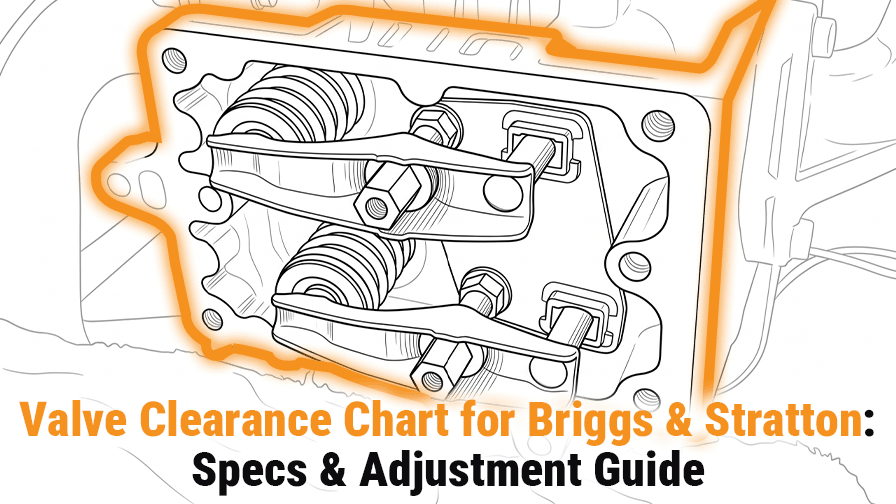
Briggs & Stratton valve clearance chart: specs and adjustment guide. A Briggs & Stratton valve clearance chart only works if the engine family is matched correctly first. Some series use L-head layouts. Others use OHV designs. Several have different values for horizontal and vertical shaft versions. L-head aluminum singles often use 0.005 to 0.007 intake. L-head cast iron singles use 0.007 to 0.009 intake and 0.017 to 0.019 exhaust. OHV singles often use 0.004 to 0.006. OHV twins commonly use 0.004 to 0.006. The adjustment procedure starts with a cold engine. Remove the spark plug, find the compression stroke, and set the piston about 1/4 inch past TDC. Measure with a feeler gauge. Adjust slowly. Tighten and recheck. Tight valves cause hard hot starting and power loss. Loose valves cause tapping noise and rough running.

Golf Cart Dashboard Upgrades: A Complete Guide 2026
Sep 13, 2026

Golf Cart Dashboard Upgrades: A Complete Guide 2026

Ready to upgrade your golf cart dash? Here’s where to start.  At FridayParts, we carry a wide selection of golf cart replacement parts for E-Z-GO, Yamaha and other reputable brands. Browse our full range of golf cart accessories for a successful dash upgrade. Looking for model-specific parts? Check out our replacement Yamaha golf cart parts and E-Z-GO golf cart parts to find everything you need in one place. Your perfect golf cart setup is a few clicks away.

Kohler Valve Clearance Chart: How to Check and Adjust by Engine Series
Sep 13, 2026

Kohler Valve Clearance Chart: How to Check and Adjust by Engine Series

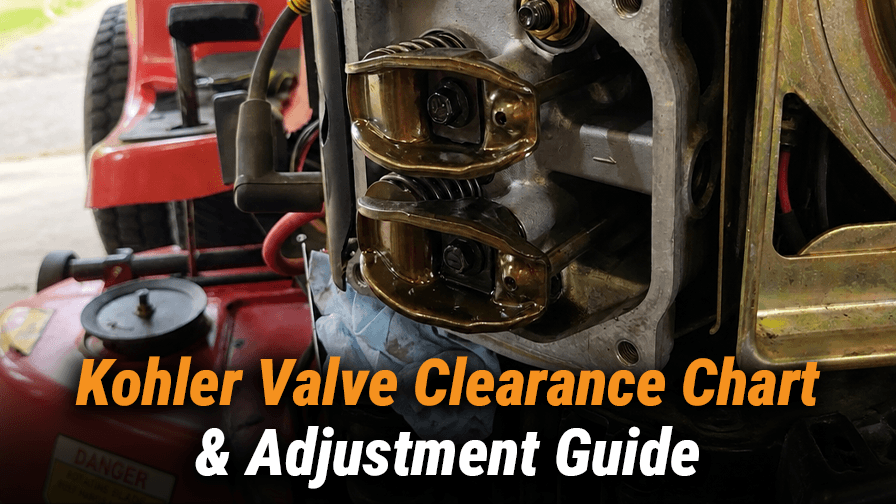
Kohler valve clearance chart: how to check and adjust by engine series. A good Kohler valve clearance chart helps you narrow the job fast, but it should never replace the engine tag. Start with the model and spec number. Then match the series and valve train style. K-Series engines use different specs than Magnum or Courage. KT17 and KT19 use 0.003 to 0.006 intake. Command and Aegis LH engines use hydraulic lifters and are not adjusted with a feeler gauge. The most important step is finding the compression TDC. If you land on the wrong stroke, the reading is wrong, and the adjustment will be off. Check clearance on a cold engine. Adjust slowly. Recheck after tightening the lock nut. Record the final setting for future service.

Greenworks Battery Flashing Red and Not Charging: Causes and Fixes
Sep 12, 2026

Greenworks Battery Flashing Red and Not Charging: Causes and Fixes

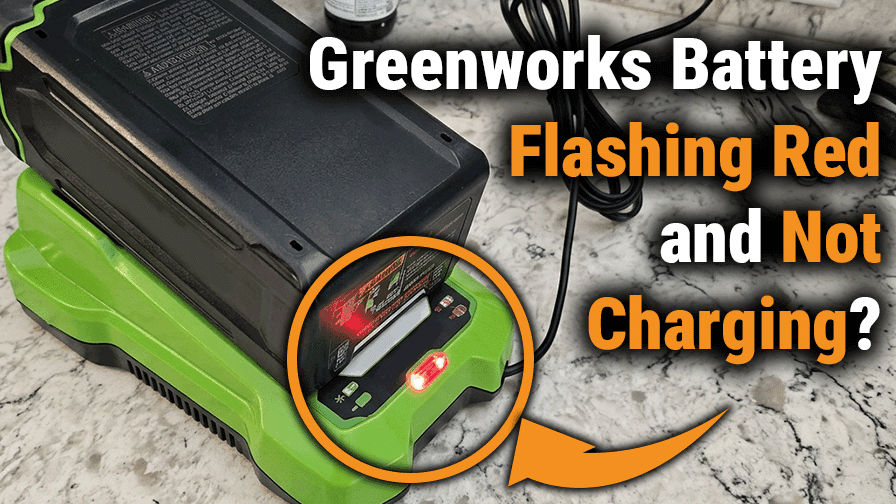
Is your Greenworks battery flashing red and not charging? Before you buy a replacement, try our simple fixes. This guide explains what the light means and how to solve issues like temperature faults or a deeply discharged battery.

Kohler Spark Plug Cross-Reference Chart and Gap Guide
Sep 12, 2026

Kohler Spark Plug Cross-Reference Chart and Gap Guide

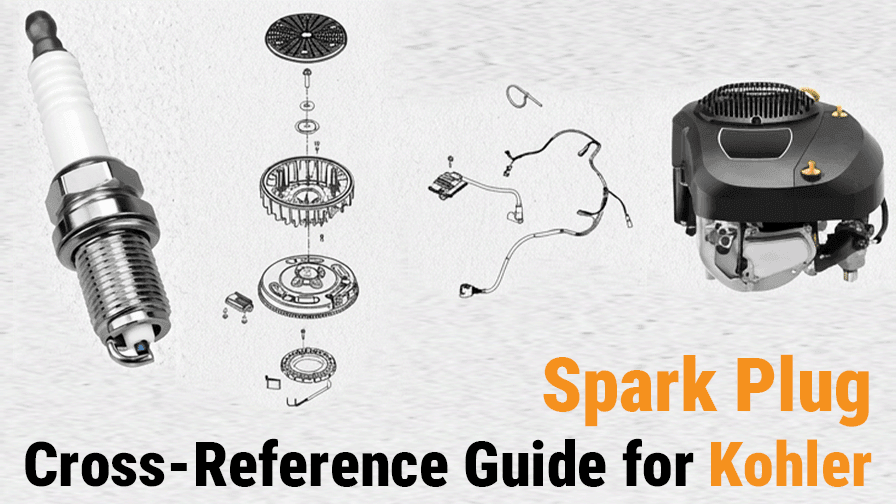
Kohler spark plug cross-reference chart and gap guide. Need a Kohler spark plug cross-reference you can actually use in the field? This guide gives you a clean chart, the plug selection logic behind it, common gap ranges, and simple installation tips for Kohler engines. The final match should always come from the engine model, spec number, ignition type, and fuel type. K Series magneto engines often use a 0.025 gap. Battery or breakerless versions use 0.035. Command and Courage engines commonly use RC12YC plugs. LPG engines often need an RC78PYP instead of the standard gasoline plug. Gap should never be guessed. Check the old plug before installing the new one. Tighten it properly and test the engine.

Briggs and Stratton Spark Plug Chart: A Complete Guide
Sep 11, 2026

Briggs and Stratton Spark Plug Chart: A Complete Guide

Briggs and Stratton spark plug chart: a complete guide. If you are searching for the right spark plug for a Briggs engine on a pressure washer, generator, or utility machine, this is the place to start. Flathead engines take an RJ19LM plug. OHV engines take an RC12YC plug. Both gap at 0.030 inches. The chart covers part numbers, NGK, Champion, and Autolite cross-references, torque specs, and the Quantum date code rule that catches most people off guard. The thread reach mistake is also covered. A long OHV plug will screw into a flathead engine, but the projected tip can hit the piston. Short plugs in OHV heads cause carbon buildup and misfires. Match the plug to the engine family first.

How to Fix a Ryobi Battery Charger Flashing Red and Green?
Sep 10, 2026

How to Fix a Ryobi Battery Charger Flashing Red and Green?

If your Ryobi charger is blinking red and green, it’s signaling a charging fault. This guide walks you through easy fixes, from cleaning contacts and checking battery temperature to identifying if the battery or charger is truly faulty.

DEF Crystallization Causes and Fixes: A Complete Guide 2026
Sep 10, 2026

DEF Crystallization Causes and Fixes: A Complete Guide 2026

DEF crystallization appears when DEF loses water through evaporation or degradation, leaving behind solid urea crystals. These DEF crystals form white, chalky deposits that can restrict or block critical SCR components. DEF is a precise mixture of 67.5% purified water and 32.5% high-purity urea. If that balance is disrupted, the urea can no longer stay dissolved. Over time, white DEF crystals build up in the tanks, lines, injectors, and sensors, significantly affecting proper DEF dosing and emissions control.

John Deere 3-Point Hitch Parts Diagram & Troubleshooting Guide
Sep 10, 2026

John Deere 3-Point Hitch Parts Diagram & Troubleshooting Guide

John Deere 3-point hitch parts diagram and troubleshooting guide. Crooked, loose, or missing something? A John Deere 3-point hitch diagram is where to begin. It shows how the linkage should be put together and where things go wrong. The main parts include the center link, lower lift arms, lift links, sway links or turnbuckles, and rockshaft linkage. The center link sets implement angle. Lower arms carry the load. Lift links level the implement side to side. Sway links limit side movement. If the implement leans, check the lift link. If it tips forward or back, adjust the center link. If it sways too much, check the turnbuckles. Slow lift or no lift often points to the hydraulic side or rockshaft linkage.