

This guide walks you through all you need to know about the 5-pole ignition switch diagram. You’ll learn how to read terminal labels and wiring connections to test and diagnose common failures.
What Is An Ignition Switch on A Lawn Mower?
A lawn mower ignition switch is a device that controls the electricity flow from the battery to the engine’s spark plug. When turned to the “ON” position, the ignition switch sends power to the starter solenoid, which makes the starter motor turn the engine over. So, it’s essential to ensure the ignition switch is in good condition and properly maintained.
5 Pole Ignition Switch Wiring Diagram
Here we show you an example of a 5-pole ignition switch wiring diagram and help you read the symbols on the switch.
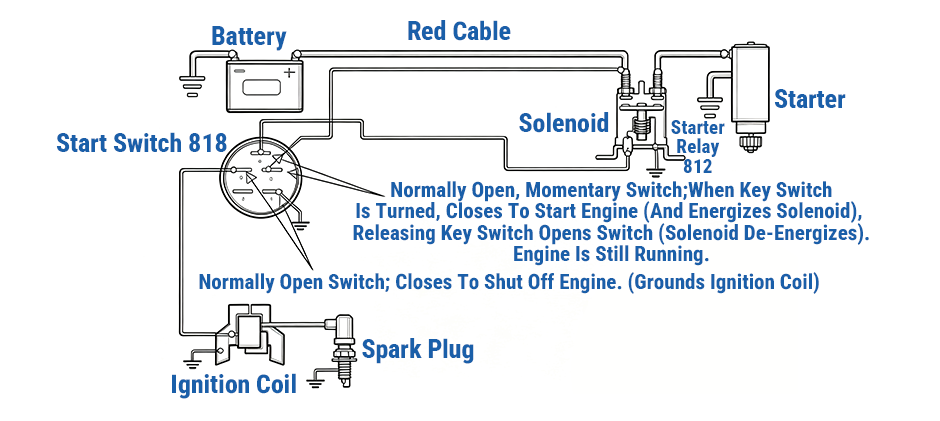
Terminal Labels on 5 Prong Ignition Switch Wiring Diagram
A standard 5-wire ignition switch typically uses letter-coded terminals labeled B, S, I, G, M to identify connections.
- B for battery – The 12V main power input from the battery
- S for solenoid – Triggers the starter solenoid to crank the engine
- I for ignition – Supplies power to the ignition coil when the key is in the ON position
- M for magneto or kill circuit – Connects to the magneto kill wire to shut off the engine when the key is turned to OFF
- G for ground – Must be connected to the chassis/frame ground for the system to function properly
Understanding these labels is the first step in troubleshooting or replacing a switch without a manual. While many switches look identical, their internal wiring can vary greatly depending on the equipment and engine type, so it is essential to verify each terminal function before wiring. See the complete guide on what wires go to the ignition switch here.
How to Wire A 5 Pole Ignition Switch?
To wire it correctly, you’ll need to connect your main 12V power source to the battery post and the trigger wire to the starter solenoid terminal. Mapping your specific wire colors to these functions is the key to getting the engine to crank and shut off properly.
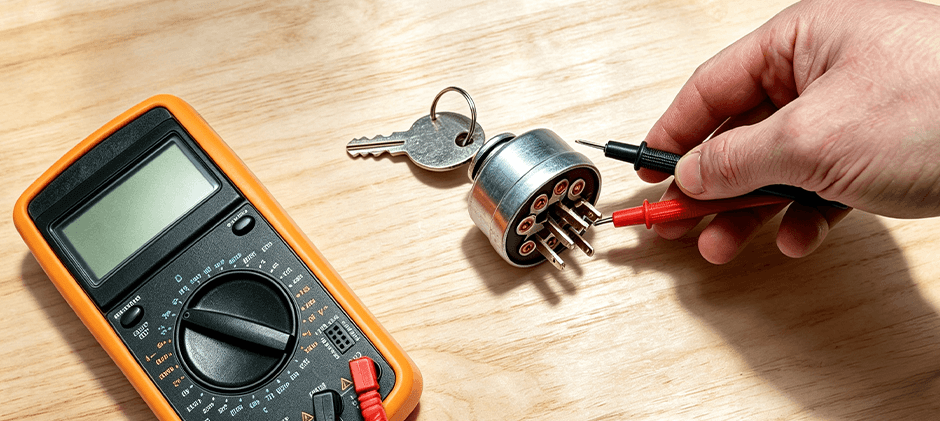
How to Test A 5 Pole Ignition for A Lawn Tractor/ Mower?
Testing the ignition switch is a critical step in diagnosing why a lawn tractor won’t start or shut off properly. You only need a multimeter with Ohms or continuity testing capabilities to complete this task. Here’s a YouTube video to help you better understand. The steps are as follows:
Setting Up Your Multimeter
First, set up your multimeter to the Ohms setting. If your device supports a continuity test, it will emit a beeping sound when the two probes touch, indicating that the circuit is “closed” or connected.
Testing the “OFF” Position
When the key is in the off position, the engine needs to ground out the magneto to shut down. You should touch one probe to G (Ground) and the other to M (Magneto), and you should hear a beep (continuity), indicating the switch is functioning correctly to kill the engine.
Test the “RUN” Position
Turn the key one click forward to the run position; in this mode, the battery should provide power to accessories. You should touch one probe to B (Battery) and the other to L (Lights). Also, you may hear a beep, confirming the switch is successfully distributing battery current to the light system.
Test the “START” Position
This is the most critical test, as it simulates the moment you turn the key to start the engine. You should secure one probe to B (Battery) and the other to S (Solenoid), then turn and hold the key in the “Start” position. If the switch is healthy, you will hear a beep. If there is no sound when the key is turned, it cannot send a signal to the solenoid, which is why your lawn tractor won’t start.
Final Judgment
If the switch fails to produce the expected beep during any of these steps, the ignition switch fails and needs to be replaced with a new one.
Common Signs You Need An Ignition Switch Replacement
There are several signs of a bad lawn mower ignition switch, including:
- Engine fails to start
- No power to accessories
- Engine stalls
- Key won’t turn
- Engine runs with key off
If you notice any of these signs, you must have a check on your ignition switch and replace it when necessary. Shop quality lawn mower ignition switch here.
How to Tell If It’s A Starter or Ignition Switch?
Both a faulty starter and an ignition switch can cause mower starting issues. Here are a few tips to help you diagnose the issue:
- Listen for clicking noises: If you turn the key in the ignition and hear a clicking noise but the engine does not turn over, it is usually due to a starter motor not receiving enough power from the battery. This results from a faulty ignition switch, a problem with the battery or the starter motor.
- Check the battery: A weak or dead battery can also prevent the starter motor from receiving enough power to start the engine. You can inspect the battery voltage with a multimeter and ensure it’s fully charged.
- Test the starter motor: If the battery and ignition switch are both working well, the problem may lie in the starter motor itself. You can test the starter motor using a voltmeter to check for power at the starter solenoid when you turn the ignition key.
Following these tips can help diagnose common issues with the starting system of your lawn mower. Whether it’s a faulty ignition switch or a problem with the starter motor or battery, you must take prompt action for smooth operation all season long. See How to Test A Starter Motor here.
Final Thoughts
A working ignition switch is the backbone of your lawn mower’s electrical system. By understanding the terminal labels and being able to test it with a basic multimeter, you can quickly identify and resolve most starting issues on your own. Regular inspection and timely replacement of a faulty ignition switch will keep your lawn tractor running reliably season after season. At FridayParts, you can explore a vast range of quality mower ignition switches to keep your back to its peak performance.
Related Articles
Toro Ignition Switch Wiring Diagram
