Bobcat Hydraulic Hose Diagram Across Popular Skid Steer Models
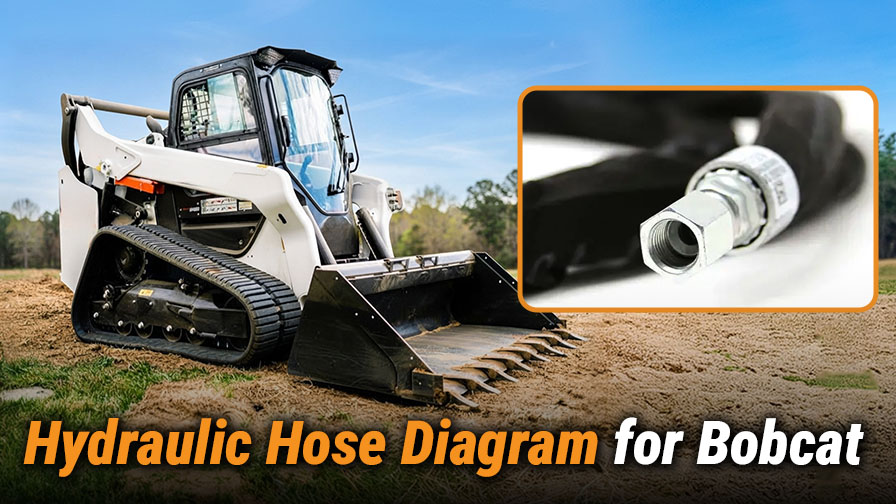
Bobcat hydraulic hose diagram across popular skid steer models. Bobcat hydraulic hose diagrams use circled numbers for individual hoses and letters for routing reference points. Once you understand the pattern, a leaking lift or tilt line can be swapped in about 20 minutes instead of turning into guesswork. Rod end hoses retract the cylinder. Bore end hoses extend it. Pivot hoses cross the arm pin and flex every cycle, so they wear fastest. Serial number matters because Bobcat changed fitting sizes and routing mid-production on several models. A hose that fits a 753F may not fit a 753G. Confirm the S/N before ordering. The 600 Series uses four numbered hoses. The 753 family uses five or six. The 853 uses five. The S550 and T630 share the same numbering. Before pulling the old hose, write down the serial number. Measure the fitting type and thread with calipers on both ends. Take overall length from sealing face to sealing face. Note bend radius and clamps. Match the pressure rating to the original 5000 or 5500 psi spec. Check for cover cracks, damp film, bulges near the crimp, and sluggish lift response. When fitting the new hose, wipe threads clean. Use a light coat of hydraulic oil on O-rings. Torque JIC fittings to spec. Overtightening cracks the flare. Cycle the loader through full lift and full curl at low idle after any hose change.