

As the chill of winter approaches, it’s time to think about preparing your lawn mower for the colder months. Winterizing your lawn mower can extend its service life and ensure a reliable spring start. The mower winterization includes cleaning your mower deck and blades, replacing the oil and other critical parts like air filter, spark plug and more as well as storing it in the dry places that are away from dust and rain. Read on to discover the benefits and how to winterize your lawn mower in 9 simple steps.
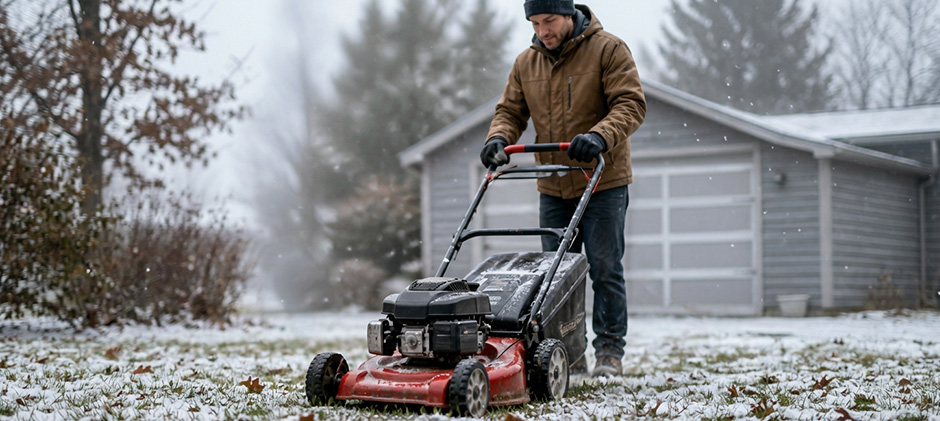
What Is Mower Winterization &Why Should You Winterize It?
Winterization is the process of preparing something for the winter. With the first chill of winter impending, it’s time to prepare your mower and other lawn equipment for the cold days. Just as our bodies need ample preparation to change with the seasons, so do your mowers. When left unattended during the cold winter, wet grass remnants can rust the deck while stale gasoline can harm the engine or make it difficult to start in spring. Preparing your lawn mower for the long sitting days will prolong its service life and save you on potentially costly future repairs. Besides, starting next season’s mowing with well-maintained equipment ensures a smoother operation and healthier-looking lawn in spring.
Step-by-Step Guide to Winterizing Your Lawn Mower
1. Clean Your Mower
Over a season of mowing, damp grass clippings, leaf mulch or mud can build up on your mower’s deck underside, causing rust or a freeze-thaw cycle and thus weakening the metal. You’d better clean off these contaminants before winter storage, as it can be much harder to clean months from now.
You can spray the deck, remove and clean the blades, and if necessary, scrape off grass clumps and organic matter that won’t loosen with water. We recommend spraying the underside with a light coating of WD-40 or cooking oil to create a moisture barrier that will protect the deck from corrosion during winter storage.
2. Remove the Battery (if equipped)
Start by disconnecting the negative cable (marked with a minus sign) carefully, then the positive cable. After that, use a metal brush or battery cleaner to clean the battery terminals. For proper protection, we recommend coating the terminals with a terminal protector. At last, dry it up and store the battery in a cool, dry place. Remember to keep it away from heat sources like gas cans, water heaters or your Carrier furnaces.
3. Add Stabilized Fuel
If you’re going to store your mower indoors, you should stabilize the fuel with a full tank of gas to prevent the fuel from degrading, which can clog the fuel system in less than 30 days. Besides, this can help prevent moisture from condensing inside the tank, which can lead to rust and clog the carburetor. After filling the tank with stabilized fuel, run the mower for a few minutes to ensure the treated fuel circulates through the entire fuel system.
4. Change the Oil
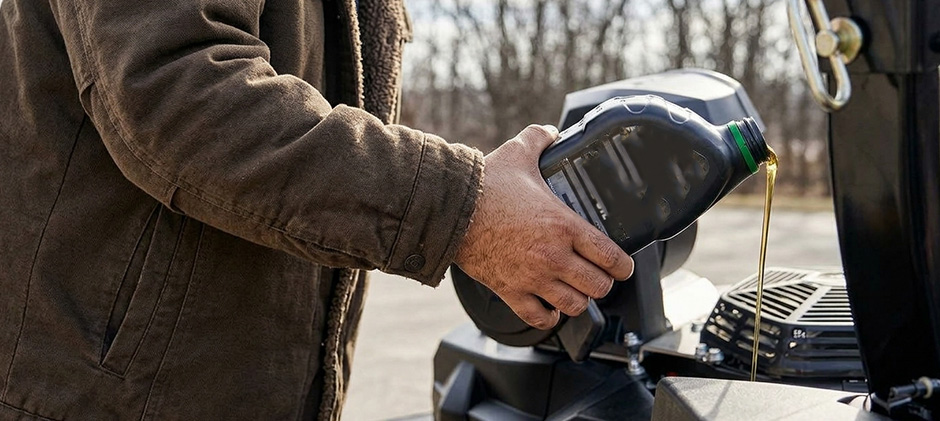
Changing the oil will ensure your lawn mower is in great shape throughout the winter months. Get your engine warm to thin the oil and drain the old oil into a suitable container. Then, replace it with fresh oil that meets your mower’s specifications. Always refer to your owner’s manual for the correct type and amount of oil. Want to know how to dispose of your diesel gas more environmentally friendly? Read our blog by clicking the bold blue link.
5. Inspect the Blades
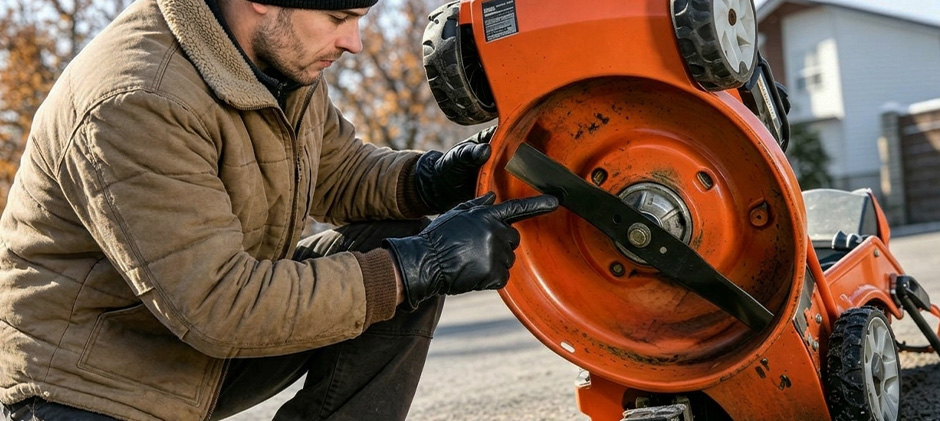
Remove the mower blades carefully and sharpen the blades using a file or a sharpening tool. Replace your mower blades if you notice signs of damage or wear. If you’re new to lawn mowers, the mower blade sharpening guide can help you out.
6. Replace the Spark Plugs
Your mower’s spark plugs deteriorate over the mowing season, which can lead to hard engine starts, decreased fuel efficiency and engine misfire. It’s recommended to change the spark plug every autumn. When choosing spark plugs, make sure to select compatible ones. At FridayParts, you can explore a vast selection of quality mower spark plugs for various brands.
7. Check the Air Filter
Inspect the air filter for dirt and debris. If it is dirty, clean it according to your manufacturer’s instructions or replace it with a new air filter when necessary. Shop for quality air filters for your mower at an affordable price here.
8. Inflate the Tires
Check your mower tires and inflate them to their proper pressure. This prevents damage to the tires, because they can lose pressure over the winter. You should also protect your mower tires from cold concrete by parking the mower on cardboard or other insulating material. See how to check and adjust your lawn mower tire pressure here.
9. Use Mothballs and Mower Cover
If you’re going to store your mower in a shed or a garage, place a few mothballs near the engine. This helps avoid those nesting rodents. If you plan to park it in your yard or garden, use a mower cover to protect it from dust and moisture. Ensure the storage area is dry to prevent rust and corrosion.
How to Store Your Mower?
The way of mower storage during this winter depends on where you would store it.
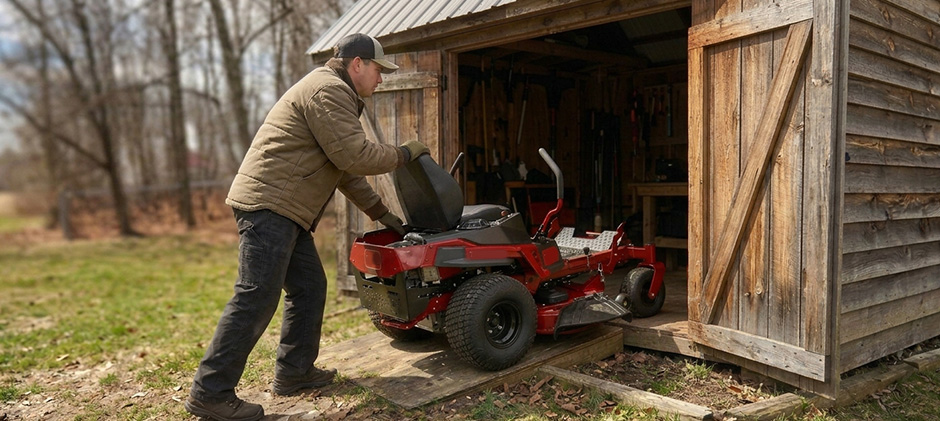
If you’re going to store it in a garage or shed, which is free of rain, snow and freeze/thaw cycles, you can protect it with a cover or tarp to prevent dirt and dust from reaching important components. Do not store your mower near fertilizers and other corrosive materials, because these can eat away at metal when airborne. Also, keep it away from items that can cause sparks.
If you have to store your mower outdoors, make sure to cover it completely. If you use a tarp instead of a mower cover, tuck loose edges under your machine and ensure that the tarp will not blow away. Park your mower on level ground and keep it away from muddy places, as it can get stuck when the mud dries or freezes.
*Note: Be sure to read your operator’s manual for full details before performing any of the maintenance mentioned above on your mower.
FAQs about Mower Winterizing
Q1: Should I run my lawn mower dry or leave it full of gas for winter?
A: If you use ethanol gas, run it dry to avoid gum and varnish buildup. If you use ethanol-free gas with stabilizer, keeping the tank full prevents condensation and rust. Never leave it half full.
Q2: Why won’t my mower start in spring even though I added fuel stabilizer?
A: Stabilizer slows fuel breakdown but can’t fix clogged jets or a stuck float. Most spring no-start issues come from varnish in the carburetor bowl, so a quick carb clean or rebuild kit usually solves it.
Wrapping up
Lawn mower winterizing is essential for reliable starts when the next spring comes. By following the steps mentioned in this blog, you can enjoy hassle-free winter mower storage and spring starts. Ready to winterize your lawn mower? At FridayParts, we are committed to providing a vast selection of quality lawn mower replacement parts, including filters, belts, spark plugs and more. Explore our extensive inventory today and find your ideal mower parts to winterize
You Might Also Like
How To Change Oil In Lawn Mower?