

Have you sharpened the blade, cleaned the deck and adjusted the proper cutting height and ready to enjoy your mowing? You might have overlooked one key factor for the quality of your cut this summer. That’s lawn mower tire pressure. In this guide, we’ll walk you through how to find the right pressure to efficient mowing and an impeccably manicured lawn.
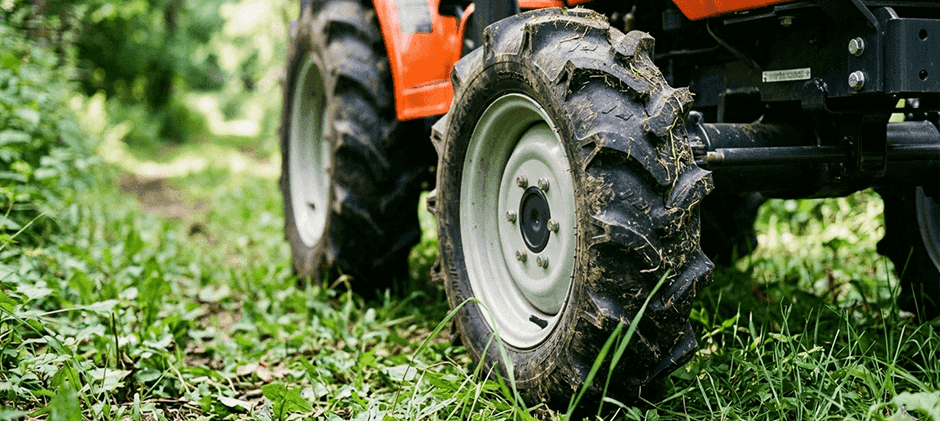
Why Is Tire Pressure Important
Improper tyre pressure can reduce the quality of your cut by affecting the following aspects:
- Affect steering and lead to an unmanicured look
- Cause the deck sits unevenly and lacks airflow to disperse clippings
- Cause clumping and a mess to clean up, adding more labor hours
- Create crooked cuts and ruts, which can lead to customer complaints
- Tear your lawn and cause great loss
So, remember to check your lawn mower tire pressure regularly.
How to Check and Adjust Your Lawn Mower Tire Pressure
The good news? Getting your mower tire pressure right is a quick and simple job. Here’s all you need to do.
Step 1: Understand Your Mower’s Requirements
The first step is to find the right inflation for your lawnmower by consulting the owner’s manual. The manufacturer specifies the recommended tire pressure for optimal performance and longevity. You can find the information usually in the maintenance or specifications section of the manual.
Step 2: Collect the Tools
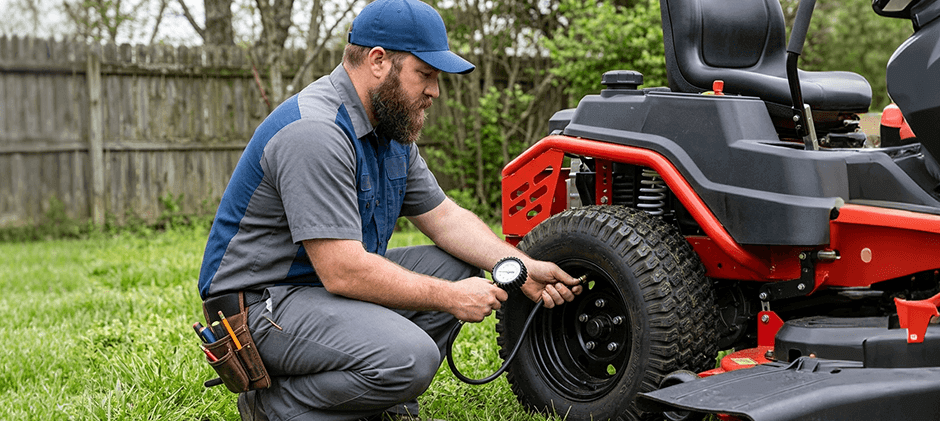
To facilitate the check, you’ll need a tyre pressure gauge and an air compressor or a hand pump. Make sure you get a well-conditioned and correctly calibrated gauge.
Step 3: Check the Tire Pressure
Just remove the valve cap from the tire and press the pressure gauge firmly onto the valve stem. Then, the gauge will displace the current pressure of your mower tire. Compare the reading to the recommended tire pressure on the tire pressure label or recommended by your owner’s manual.
Step 4: Adjust the Tire Pressure
If your tire pressure reads too low, use the air compressor or hand pump to add air to the tire. You should watch for the pressure readings regularly on your gauge and stop adding air when it reaches the recommended level. If the tire pressure is too high, you can press the valve stem with a tire pressure gauge pin or a pen to let some air out. Also, check the pressure till it reaches the right level.
Step 5: Replace the Valve Cap
After you adjust the tire pressure, it is advised to replace the valve cap on the tire. It can help prevent dirt and debris from coming into the valve stem and causing undesirable damage.
Factors Affecting Lawn Mower Tire Pressure
Several factors can contribute to the incorrect mower tire pressure. Understanding these variables is essential for the optimal performance of your mower.
Lawn Mower Type and Size
The tire pressures vary among different types and sizes of lawn mowers. For a walk-behind lawn mower, it typically has smaller tires and may need lower tire pressures than a riding lawn mower. A walk-behind mower often doesn’t need as much air pressure to bear the weight of the machine and provide stable traction, for it is often lighter and more maneuverable. But a riding mower is often heavier and requires higher tire pressures to handle additional load and prevent excessive tire wear.
Tire Type
The tire type also affects the appropriate tire pressure. Generally, there are two types of lawn mower tires: pneumatic and solid. Pneumatic tires offer better shock absorption, traction and a smoother ride and require more regular pressure checks and adjustment for the best performance. In contrast, solid tires do not require air inflation and regular maintenance. But they provide a harsher ride and less traction in some cases.
Terrain and Usage
The tire pressure can also be influenced by the use frequency and the terrain. If you usually mow on rough or uneven terrain, you need higher tire pressure to prevent tires from bottoming out and provide stability. Similarly, if you use your mower for an extended period, the tire pressure can increase as the tires can heat up. In this case, you should check the tire pressure when the tires cool down so you can get an accurate reading. See Hot vs. Cold Tire Pressure here.
Practical Tips for Mower Tire Usage and Maintenance
Check Tire Pressure Regularly
Lawn mower tire pressure changes with temperature and after prolonged use. It is essential to use a reliable tire pressure gauge to check the pressure before each mow. This is more important when your mower has been sitting idle for an extended period.
Perform Scheduled Maintenance on Tires
Doing regular maintenance is essential for your tire’s longevity. Check for leaks, punctures and wear regularly and deal with issues promptly to ensure the correct tire pressure. Replace your tires when necessary to keep your mower running smoothly.
Adjust Tire Pressure According to Terrain
Terrain can affect tire pressure greatly. You should adjust the tire pressure to match the specific conditions of the terrain your lawn mower’s working on. In hilly or uneven terrain, a slightly lower tire pressure can improve grip and stability, reducing the risk of slipping or tipping. On firm or drought-striken terrains, you can keep a firmer tire to prevent excessive wear.
Consider the Load during Operation
You should also consider the weight your mower needs to carry if you use attachments like grass collection bags. The added weight can put extra pressure on the tires. You can increase tire pressure to maintain optimal performance. Always adjust the pressure to your manufacturer’s recommended level to avoid overloading the tires and the mower’s suspension system.
Frequently Asked Questions for Lawn Mower Tires
Should I check my tyre pressure on my ride-on mower?
Yes. If any of your tyre is underinflated, the grass won’t be cut evenly, as the cutting deck will be lower to the ground on this side. Check your manufacturer’s manual to see what they should be like. Warm reminder: the front wheels may be different to the rear.
What should the tire pressure for my riding mower be?
The factory settings for the residential riding mower tires are generally at 10 psi for rear tires and 14 psi for front tires. But you’d better check the side wall of the tire itself, as the tires on some models may not be standard tires. The maximum tire pressure is embossed on each tire. Inflating tires to 2-3 psi under the maximum is acceptable, as long as you keep it the same for both your front tires and both your rear tires.
What are the different types of lawn mower tires?
Common tire types include turf, ribbed, lug and flat-free, each designed for specific conditions. Always match replacement tires to the size listed on the sidewall or in the owner’s manual. Front and rear mower tires often differ in size and tread to support steering and traction.
Final Words
Maintaining the right tire pressure is essential for your lawnmower’s optimal performance, safety and tire longevity. You should always consider the mower types, tire types, terrain and usage to adjust the pressure to the recommended level in your owner’s manual. So, you can ensure your lawn mower operates at its best performance. With FridayParts, you can get high-quality lawn mower replacement parts and helpful troubleshooting, maintenance and repair guides. Browse our website and blogs for more.
