

Keeping the right tire pressure in your excavators, tractors, and loaders is a simple job that saves big money. Getting it wrong can lead to costly blowouts, poor traction, and tires that wear out too fast, putting a machine out of action. This guide will show you the right way to measure tire pressure to keep your fleet working hard.
What Are Cold and Hot Tires?
This isn’t about the weather. It’s about whether the tire has been working. To get a good reading, you need to know the difference.
- Cold Tire Pressure: This is the pressure you measure before the machine starts its workday. For a tire to be “cold,” the machine needs to have been sitting still for at least three hours.
- Hot Tire Pressure: This is the pressure you measure after the machine has been running. As a tire works, it rolls and flexes, which creates heat and makes the air inside expand.
Why Tire Pressure Changes?
Air pressure changes with temperature. When air gets hot, it expands. This pushes out on the inside of the tire, and the pressure (PSI) goes up.
- Weather Changes: A good rule of thumb is that tire pressure changes by about 1 PSI for every 10°F change in the outside temperature.
- Work Changes: Working hard—driving, digging, or hauling heavy loads—creates a lot of heat inside the tire. It’s normal for the pressure to go up by 4 to 6 PSI or even more during a work shift.
Always Measure Your Tires Cold
Machine makers list tire pressures based on a “cold” measurement. Why? Because it’s the only consistent and reliable way to check. The heat from a morning of work is unpredictable. One tire might be hotter than another, depending on what the machine was doing. Measuring cold gets rid of this guesswork.
This also helps you keep good records. By always checking the cold pressure, you can spot real problems. If a tire’s cold pressure is lower this week than last week, you know you have a slow leak. If you measured it hot, you wouldn’t know if it was a leak or just a cooler day.
The Dangers of Getting It Wrong
Having the wrong tire pressure is the main reason heavy equipment tires fail early. Both low and high pressure cause serious problems.
The Risk of Low Pressure
Low pressure is much more dangerous than high pressure. When a tire is low on air, the tire’s sides bulge and flex way too much as it rolls. This creates so much heat that the rubber inside can start to break down and separate. Once that happens, the tire is ruined.
Low pressure also makes it easier for the tire to pop off the rim when turning or under a heavy load, causing a sudden blowout. On rocky ground, a low-pressure tire can get pinched between a rock and the metal rim, which can destroy both the tire and the rim.
The Risk of High Pressure
Over-inflating a tire makes it hard as a rock and shrinks the amount of tire touching the ground (the “contact patch”). This causes two big problems:
- Poor Traction: In soft dirt, a smaller contact patch means the machine sinks in more and loses grip. This makes the wheels spin, which wastes fuel and wears out the center of the tire tread.
- Impact Damage: A properly inflated tire can flex around a sharp rock. An over-inflated tire is too stiff and can’t absorb the hit. Instead, the impact can puncture or break the tire casing, turning a small rock into a big problem.
Our Simple Guide to Checking Tires
To keep your machines running right, follow these simple steps:
- Check Before the Sun Comes Up: The best time to check pressure is in the early morning. Direct sunlight can heat up a tire and give you a false high reading.
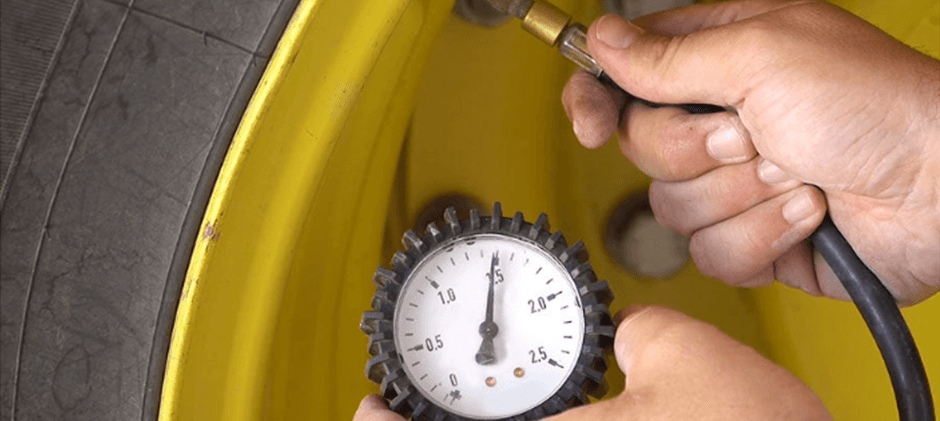
- Use a Good Gauge: Don’t use a cheap pencil gauge. Use a quality digital or dial gauge made for heavy-duty tires.
- Follow the Machine’s Placard: Look for a sticker in the cab or near the door with the recommended tire pressures. Use this number. The PSI listed on the tire’s sidewall is just the maximum the tire can hold, not the right pressure for your specific machine.
- Watch Out for “Sun-Side” Heat: A tire sitting in the sun can read up to 6 PSI higher than a tire on the shady side of the same machine. Always check in the shade if you can.
Never let air out of a hot tire. If you check a tire mid-day and the pressure seems high, that’s normal. If you bleed air out, the tire will be dangerously under-inflated once it cools down.
Adjusting for Winter and Summer
Your “cold” starting pressure will change with the seasons.
- In Winter: Cold air shrinks. You’ll notice your tire pressure is naturally lower. You need to add air to bring it back up to the correct cold PSI to prevent damage.
- In Summer: On very hot days, your starting “cold” pressure will be higher. When you start working, the pressure will climb even more. Don’t worry and don’t bleed the air. As long as you start with the right cold pressure, the tire is designed to handle this.
The Bottom Line
For the longest tire life and safest operation, always set your tire pressure when they are cold. Use the pressure listed on your machine’s placard, not the tire sidewall. Checking hot pressure is fine to see how things are running, but never bleed air from a hot tire. Keeping the right pressure is easier when you have quality hardware. As an aftermarket parts support, FridayParts offers high-quality tires and parts for a wide range of heavy equipment.
