

A coolant hose usually bursts for a simple reason: too much pressure, too much heat, or the hose was just too old and weak. Your off-road machine shakes, gets hot, and is covered in dirt. This is tough on parts, and a weak hose can suddenly pop. This guide will show you why your hose burst, what to check, and how to stop it from happening again. A burst coolant hose is a clue, not the real problem.
When to Shut Down Immediately
If you see the temperature gauge climbing or steam pouring out, shut the engine off. Right now. A hot engine can be wrecked in minutes. Also, stop if you see coolant spraying on belts or wires. It’s dangerous.
Stopping an overheating is your first job.
6 Clues from the Broken Hose
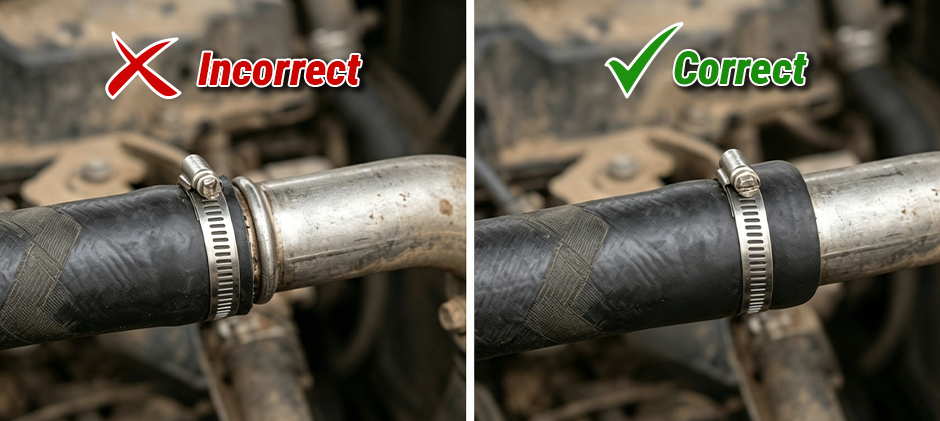
Look at how the coolant hose broke. It tells a story.
- A long split? → The hose was old, soft, or had too much pressure.
- Blown off the end? → The clamp was loose, or pressure spiked.
- A tiny pin-hole spray? → It rubbed against something until a hole formed.
- Burst near a bend? → The hose was kinked or bent too tightly.
- Feels mushy or swollen? → Oil or fuel probably leaked on it and ruined the rubber.
- Sucked flat when cool? → The hose is weak and collapsing from engine suction.
The way it broke tells you why.
12 Real Reasons Hoses Burst
Don’t just replace the hose and hope for the best. Find the real reason from this list.
1. Old and Worn Out
Heat and time make rubber weak. A hose can look fine on the outside but be rotten on the inside. If one hose is old, its neighbors are too.
2. Bad Clamps
A loose, rusty, or poorly placed clamp can let a hose pop right off. The clamp must be snug and placed behind the raised lip (the “bead”) on the pipe.
A clamp on the wrong spot is a leak waiting to happen.
3. Bad Radiator Cap
The radiator cap controls pressure. If it’s broken, it can let pressure build up until a hose gives way. It’s a cheap part that protects expensive ones.
4. Overheating
When an engine overheats, the coolant gets hotter and expands, creating more pressure. This heat also softens the hose, making it a double-whammy. Check for radiator fins clogged with mud or grass.
5. Stuck Thermostat
If the thermostat gets stuck closed, the coolant stops moving. Pressure and heat build up fast in one spot, and the nearest hose becomes the weak link.
6. Water Pump Problems
If the water pump isn’t moving coolant, you get hot spots and pressure spikes. This can quickly lead to an overheated engine and a burst hose.
No flow, no cooling.
7. Collapsed Hose
The big lower hose can get sucked flat by the water pump if it’s old and weak. This stops coolant flow, causing an overheat. If you see a hose collapse, it’s already failed.
8. Air in the System
Air bubbles trapped in the coolant can cause weird pressure spikes and hot spots. You have to “bleed” the air out properly after refilling.
9. Oil or Fuel Spills
Oil makes rubber hoses soft, spongy, and weak. If you find a mushy hose, look for an oil leak above it and fix that too.
10. Rubbing and Shaking
Vibration on your machine can make a hose rub against the frame or another part. Over time, this rubbing will wear a hole right through it.
If it rubs, it fails.
11. Bad Coolant
Coolant isn’t just for cooling; it also stops rust and gunk from building up. Old, dirty coolant can cause problems that stress your hoses.
12. Engine Problems (The Big One)
In rare cases, a serious engine problem (like a blown head gasket) can force high-pressure exhaust gas into your cooling system. If you replace a hose and it bursts again right away, you might have a bigger problem.
If it bursts twice, stop blaming the hose.
What to Check Next (9 Steps)
With the engine COLD, do this inspection to prevent another failure.
- Look at the broken hose to see how it failed.
- Check for sharp edges or rub spots where the new hose will go.
- Inspect the radiator cap. Is it clean, and does the seal look good?
- Think about the thermostat if the engine overheats suddenly.
- Clean the radiator fins. Get all the dirt, dust, and debris out.
- Check the fan and belts to make sure they are working.
- Feel all the other hoses. Are any soft, swollen, or cracked?
-
Pressure-test the system if you can. It will show hidden leaks.
- Refill with coolant and bleed the air out correctly.
5 Mistakes to Avoid
Don’t let the new hose fail. Avoid these traps.
- Reusing old, weak clamps.
- Putting the clamp in the wrong spot.
- Letting the new hose rub on something.
-
Forgetting to bleed the air out of the system.
- Ignoring the real cause of the first burst!
New parts won’t fix old problems.
7 Ways to Stop It from Happening Again
- Replace hoses in sets, not just one at a time.
- Use protective sleeves where hoses might rub.
- Clean your radiator often.
- Check your clamps and cap regularly.
- Fix oil leaks before they ruin your hoses.
- Use the right kind of coolant.
- After a repair, run the engine, let it cool, and re-check the coolant level.
Stable temperature is hose life.
Summary
A burst hose is almost never just about the hose. It’s a sign of another problem, like a bad radiator cap creating too much pressure, a stuck thermostat causing hot spots, or just old, tired rubber giving up. Finding that root cause is the only way to fix it for good. Once you know the real problem, FridayParts has everything you need to do the job right—from high-quality coolant hoses and the right hose clamps, to the parts that fix the source of the trouble, like new radiator caps and thermostats.
