

Too much pressure in your cooling system is a silent but serious threat. It can burst hoses, damage radiators, and even destroy your engine. A cooling system pressure test is the best way to find leaks and identify the cause of high pressure before they cause costly downtime. In this guide, we break down how to perform a simple pressure test, what the results mean, and how to keep your heavy machinery safe on the job site.
What Causes Too Much Pressure in a Cooling System?
Understanding what causes high pressure helps you fix the problem faster. While it may sound complicated, most issues come down to a few main reasons.
1. The Most Common Culprit: A Blown Head Gasket
A blown head gasket is the most serious cause.
When the seal between the engine block and cylinder head fails, combustion gases enter the cooling system.
These gases skyrocket system pressure far beyond what your radiator cap can handle, risking warped heads or even a cracked engine block.
2. A Simple But Critical Failure: The Radiator Cap
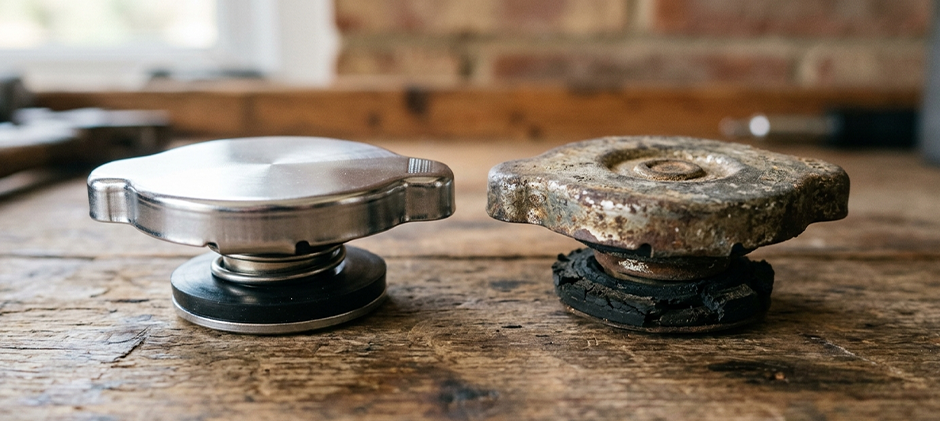
If the spring weakens or the rubber seal wears out, it can’t maintain proper pressure.
A bad cap may either release pressure too soon (causing boil-over) or trap too much pressure (risking component failure).
“Don’t guess — test. Replacing parts without proper diagnosis wastes time and money.”
3. Hidden Blockages in the System
A blocked radiator, collapsed hose, or stuck thermostat can trap coolant and create dangerous pressure points.
When the water pump pushes against a blockage, pressure builds behind it, stretching hoses and possibly bursting them.
3 Telltale Signs You Need a Pressure Test
Your machine will often warn you before something serious happens.
Here are three easy-to-spot signs that it’s time to run a cooling system pressure test.
1. Mysterious Coolant Loss
You keep adding coolant, but you never see drips or puddles.
2. Swollen or Rock-Hard Hoses
If your radiator hose feels rock-hard when the engine is warm, your system is under too much pressure.
3. Unexplained Overheating
The temperature gauge climbs high even though the coolant reservoir is full.
This may suggest a blockage or internal leak preventing coolant from flowing properly.
How to Pressure Test Your Cooling System in 5 Steps
A cooling system pressure test is a simple, safe way to find leaks before they turn into big problems.
You’ll need a pressure tester, which is a small hand pump with a gauge and an adapter that fits your radiator or coolant tank.
“A pressure tester doesn’t lie — it turns invisible leaks into visible problems.”
Step 1: Start with a Cold Engine
Always test when the engine is completely cool.
Opening a hot cooling system can cause serious burns. Park on level ground before starting.
Step 2: Remove the Radiator Cap and Check the Coolant
Once it’s cool, remove the radiator cap and make sure the coolant is full.
Top off if needed — you want to test coolant pressure, not air pressure.
Step 3: Attach the Pressure Tester
Choose the right adapter for your radiator neck or tank.
Attach it firmly to make an airtight seal, then connect the tester.
Step 4: Pressurize the System
Pump the tester slowly until the gauge matches your radiator cap’s rated pressure (usually 13–16 PSI).
Never exceed the rating — more pressure can damage parts.
Step 5: Watch the Gauge and Look for Leaks
Hold the pressure for a minute or two and watch the gauge.
- If the needle stays steady: No leaks — your cooling system is well-sealed.
- If the needle drops slowly, you have a small leak. Look and listen around the hose ends, the radiator, water pump, and heater core for dripping or hissing.
- If the needle drops quickly: There’s a large leak — coolant should be visible dripping or spraying from somewhere.
If the pressure holds but you still have symptoms like white smoke or milky engine oil, test for combustion gases in the coolant — that may mean a head gasket issue.
Final Words
A pressure test helps you find cooling system problems before they lead to overheating or engine failure. If you find a worn radiator cap, a leaking water pump, or a cracked hose, replace it immediately to avoid future downtime.
Keeping your heavy equipment’s cooling system in top shape ensures reliable performance and longer engine life. For dependable, tough cooling system parts — including radiator caps, water pumps, hoses, and thermostats — visit FridayParts. Our durable components are built for off-road conditions, helping your machinery stay cool, strong, and always ready for work.
