

If you see white or green powdery buildup on battery terminals, that’s usually battery corrosion. So what causes battery terminal corrosion? The battery gases leaking, the alternator overcharging, constant vibration, or working in wet and dusty environments, are maybe reasons.
This corrosion can lead to bad electrical connections, hard starting, and a shorter battery life.If you spot it, clean it off and fix the root problem so it doesn’t come right back.
What Does Battery Terminal Corrosion Look Like?
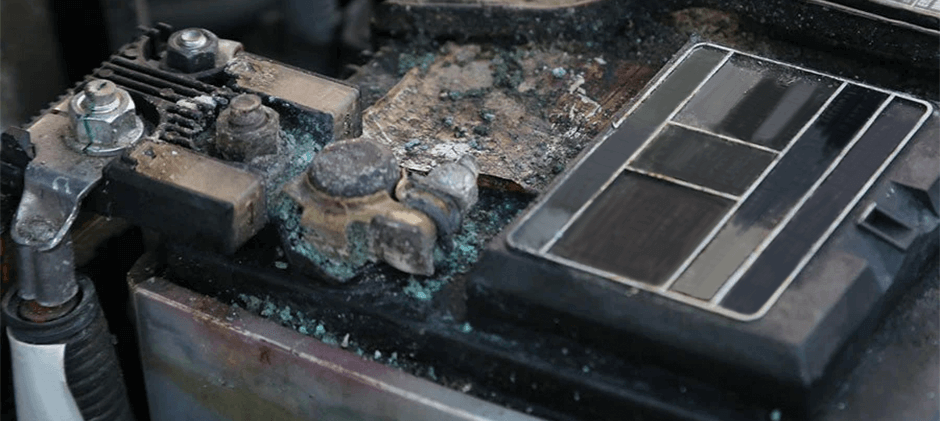
Open up the battery compartment, then check for weird crusty stuff on or around the battery posts and cable connectors. You could have one type of corrosion, or both. Battery terminal corrosion usually looks flaky, powdery or ashy. The color is the biggest clue, and it helps you figure out what’s going wrong at a quick glance.
- White or pale gray buildup: You’ll mostly see this on the negative (-) terminal. It’s zinc sulfate, made when the battery releases gas and mixes with zinc from the connectors. It still causes issues, and it usually means the battery isn’t getting charged enough.
- Blue or blue-green gunk: This crusty layer almost always shows up on the positive (+) terminal. It’s copper sulfate, formed when battery acid fumes mix with copper cable clamps — the kind used on most heavy equipment batteries. This is a clear sign of a chemical reaction, and it points to an overcharging issue.
What Causes Corrosion on Battery Terminals?
Battery terminal corrosion is just a chemical reaction. In heavy equipment, the battery is usually a lead-acid type. Inside, it has a mix of sulfuric acid and water. When the machine is running—especially while charging—the battery lets out hydrogen gas through small vents.
That’s where the problem starts. The gas can carry tiny bits of acid with it. When it reaches the metal terminals and mixes with air, it slowly eats away at the metal. Some working conditions can make this happen faster or more severely, like:
Overcharging
It’s a top cause of battery trouble on heavy equipment. If the alternator or voltage regulator breaks, it sends too much voltage to the battery. The battery heats up and releases lots of acidic gas. This harsh gas leaks out through vent holes, eats away at the positive terminal, and leaves that typical blue-green copper sulfate buildup.
Undercharging
If you run your machine only for short jobs or start and shut it down often, the battery never gets fully charged. It stays low on power all the time. Over time, this creates a white, dusty corrosive layer on the negative terminal.
Constant Vibration
Off-road machines like excavators, dozers and farm tractors work on rough ground with nonstop heavy shaking. Strong vibration can crack the plastic battery case or create small gaps around the terminals. Battery fluid leaks out through these gaps, touches the metal posts directly, and causes bad corrosion.
Aging and Wear
Every battery only lasts so long. As it gets old, internal parts break down, and the seals around terminals wear out. For most hard-working equipment, batteries start to fail after 3–5 years. Old batteries leak gas and tiny amounts of acid easily, which leads to steady corrosion.
External Dirt and Grime
Construction and job sites are full of dust, moisture and mud. All this dirt builds up on the battery surface. When mixed with acidic gas from the battery vents, it forms a conductive layer between terminals. This speeds up corrosion and makes the damage worse.
What’s the Difference Between Corrosion and Sulfation?
Getting this straight matters a lot. Fixing it early might only need a quick clean, but if you ignore it, you’ll have to buy a whole new battery.
Corrosion
As we talked about, this only happens on the outside. Battery acid fumes mix with the metal on battery posts and cable clamps. That reaction creates the white, blue or green dusty gunk you see on the battery. It’s just a regular maintenance issue, and you can easily clean it off.
Sulfation
This problem happens inside the battery. It is because the battery stays undercharged for a long time. When a battery runs down, it makes soft sulfate buildup inside. If it never gets a full charge, this buildup hardens and sticks to the internal plates. That hard layer blocks the battery from charging properly and holding power. You can’t see this damage from the outside. Once it gets bad, the battery won’t work well, and you’ll need to replace it.
Corrosion is outside and affects the connection. Sulfation is inside and affects how well the battery stores power. So if you clean the terminals and the battery still won’t hold a charge, it’s usually sulfation.
How to Clean Battery Corrosion?
Cleaning corroded battery terminals is easy, but Heavy equipment uses 12V or 24V battery systems with strong electric current. If you handle it wrong, it can spark badly and hurt you.
Safety Prepare
- Turn off the machine and take out the key.
- Put on safety glasses and acid-resistant gloves. Battery acid burns skin easily.
- Work in an open, well-ventilated spot.
- Set the parking brake tight to keep the machine from moving.
Tools You’ll Need
- Wrench or pliers to loosen battery clamps
- Wire brush or special battery cleaner tool
- Baking soda
- Water
- Clean dry cloth
- Dielectric grease or petroleum jelly
Step-By-Step Process
1. Take off the battery cables in the right order: To stop short circuits. Always disconnect the negative (-) black cable first. Move it far from the battery, then unplug the positive (+) red cable.
2. Check your battery wires: Heavy equipment shakes nonstop, which wears out cables and cracks the rubber covering near the clamps. If any wire is broken or frayed, swap it out for a new one to keep power flowing steady.
3. Clean off battery corrosion: Stir some baking soda with a bit of water to make a thick paste. Spread it on crusty battery posts and clamps. You’ll see it bubble up — that’s the acid getting neutralized. Let it sit for one minute, then scrub hard with a wire brush. Clean every spot, including the inside of clamps, until the metal is nice and shiny.
4. Wash and dry all parts: Lightly rinse everything with clean water to wash away leftover baking soda and grime. Wipe every piece dry with a rag. No moisture should stay behind, or new corrosion will pop up fast.
5. Protect the battery posts: Smear a thin coat of dielectric grease, petroleum jelly, or anti-corrosion spray on the posts. This simple layer keeps moisture and acid fumes out, so rust and buildup come back much slower.
6. Hook the cables back up: Work in reverse order: attach the positive (+) cable first and tighten it tight. Finish with the negative (-) cable. This easy trick stops risky sparks if your wrench hits the machine’s metal frame by accident.
Battery Terminal Corrosion Prevention
Cleaning corrosion is just fixing a problem after it happens. If you stop it before it starts, you’ll save way more time and hassle down the line. Here’s the easiest way to keep your off-road equipment’s battery in good shape:
Check and Clean Regularly
Make checking the battery terminals part of your regular machine check. A quick look once a week is all it takes to catch corrosion early—before it gets so bad your machine won’t start.
Use Anti-Corrosion Stuff
After cleaning the battery, or when you put in a new one, always put on dielectric grease or terminal protector spray. This one simple step works better than anything else to stop corrosion.
Keep the Battery Tight
Vibration is one of the biggest problems for batteries. Check now and then that the bracket holding the battery is tight. If the battery doesn’t shake around, it’s less likely to crack or leak.
Check Your Charging System
If you keep getting corrosion—especially that blue-green gunk on the positive terminal—have a mechanic test your alternator. Stopping overcharging is key to breaking this cycle.
Keep Fluid Levels Right (for Non-Sealed Batteries)
If your battery isn’t sealed (you can add fluid to it), check the electrolyte level every now and then. If it’s low, only add distilled water—and don’t fill it too full. Too much fluid will leak out of the vents.
In Conclusion
Battery terminal corrosion isn’t just a dirty look—it can directly affect how reliable your heavy equipment is. The best way to deal with it is to prevent it early. Regular checks and a simple protective coating can go a long way in stopping buildup. If you do need to replace the battery or cables, FridayParts has a one-stop selection for many heavy equipment brands, with good quality parts at affordable prices.
