

Engine mounts play an important role in keeping your engine running smoothly. These small parts support the weight of the engine, keep it securely in place, and help reduce noise and vibration. So, do you know what the bad engine mount symptoms are? Keep reading to find out.
What Is an Engine Mount?
Think of an engine mount as a strong, flexible link between the engine and the equipment frame. It’s more than just a basic bracket. Most are built with tough metal combined with thick rubber or polyurethane.
First, they firmly hold the heavy diesel engine in place. The engine won’t shift back, forth or side to side when you speed up, slow down or drive over rough ground. Second, they work like shock absorbers to dampen strong engine vibrations. Without them, vibrations would travel straight to the cab and other parts, making the ride bumpy and wearing components out early.
Simply, engine mounts keep the engine steady and cut down vibration. This lets your equipment run smoothly and protects parts from extra strain.
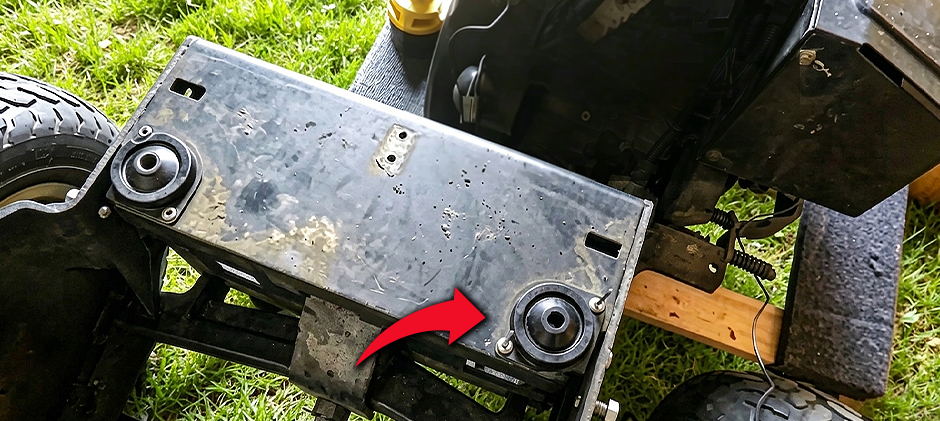
What Are the Engine Mount Failure Symptoms?
Engine mounts are built to take impact, so they wear out over time. Faulty mounts show symptoms from mild to serious, so catch issues early. Here are the common warning signs on your off-road gear:
1. Too Much Vibration
Excavators and tractors always vibrate a little, but worn mounts can’t dampen engine shake anymore. You’ll feel strong vibration through the cab floor, seat and controls, most noticeably at idle. Good mounts block engine vibration from reaching the frame. Once they fail, the whole cab will rattle badly.
As the damage gets worse, vibration happens at all engine speeds, making the machine run rough and unstable.
2. Loud Clunks, Thumps and Bangs
Good mounts hold the engine tight. Worn ones let it shift around and hit the frame or other parts — these noises mean real trouble.
- Loud knocks when starting or shutting off the engine, as torque makes the engine rock.
- Banging sounds when driving over rough ground, from the engine jostling inside the compartment.
- A sharp jolt when shifting gears or running hydraulic tools that load up the engine.
These are metal hitting metal, which means the mounts no longer cushion movement at all.
3. Visible Engine Movement
Do a quick visual check to confirm the problem. Park the machine safely, set the parking brake, then have someone start and stop the engine while you watch from a safe distance. A healthy engine barely moves. If the engine rocks, lifts or shifts a lot, your mounts aren’t holding it firmly.
4. Signs of Wear on the Mounts
You can spot failing mounts early during regular maintenance. Check for these issues:
- Cracks or peeling: Rubber or polyurethane parts turn brittle over time, cracking and flaking off.
- Separation: The rubber pulls away from its metal base.
- Rust: Corrosion weakens the metal structure.
- Fluid damage: Oil, diesel or hydraulic fluid soaks into the rubber, making it soft, swollen and worn out fast. Any sticky or bloated mount is damaged.
What Causes Worn Engine Mounts?
Engine mounts are built tough, but they still wear out eventually. Here are the main reasons they go bad:
- Age & usage hours: Just like tires, the rubber wears down after thousands of hours of heat and nonstop vibration. It turns hard and brittle, and can no longer absorb shocks well.
- Rough operation: How you run the machine greatly shortens mount life. Speeding over bumpy ground, sudden starts, hard stops and overloading all put heavy stress on the mounts and wear them out fast.
- Fluid leaks: Off-road gear often develops leaks. Engine oil, hydraulic fluid and diesel ruin the rubber on mounts. The rubber softens and falls apart, so even a small leak dripping on a mount will make it fail early.
- Bad installation: Mounts have to be fitted properly. If they’re misaligned or bolts aren’t tightened to standard specs, they stay under constant stress and break quickly. Always use quality parts and follow the service guide.
- Impact damage: Hitting big obstacles or getting into a crash delivers a strong jolt that can crack or break a mount right away.
Knowing these causes helps you stay ahead of issues. With proper maintenance and smart operation, you can prevent mount problems before they happen.
What Happens if I Don’t Change Engine Mounts?
Once an engine mount breaks, the engine won’t stay firmly in place. The extra vibration and movement will trigger a chain of problems for other key parts.
- The engine can shift out of line with the transmission, putting huge strain on the driveshaft and transmission casing.
- Moving engine parts will pull, rub or even cut radiator hoses, fuel lines and wiring. This leads to coolant leaks, fuel spills and electrical faults.
- In the worst cases, fully failed mounts let the engine drop or shift sharply. It can crack the oil pan, smash the fan cover or punch a hole in the radiator.
- Face high costs and long downtime. What’s more, a bad mount is a big safety risk on the job site. Sudden engine movement can make the machine unstable, and a broken fuel line may even start a fire.
Summary
It’s best to replace all engine mounts at once. Replacing them means taking apart surrounding parts, and you’ll also need to support or lift the engine. The whole job takes a lot of time and work. Also, once one mount fails, the rest have to bear extra vibration and stress, so they’ll wear out much faster. Swapping all mounts in one go saves time, and keeps your engine running steady and smooth. With years of experience, FridayParts can get you the right engine mounts for your equipment. Get in touch with us today.
