

Replacing a serpentine belt is simple and saves you from big breakdowns. This belt runs your alternator, water pump, and steering system. If you hear squealing, see cracks, or notice missing ribs, it’s time to change it. Follow this easy guide to learn how to replace it with basic tools and safe steps.
When Should You Replace the Serpentine Belt?
Most belts last about 60,000–100,000 miles or 1,000–1,500 working hours.
Off-road conditions—dust, oil, and heat—make belts wear out faster.
What Tools Do You Need
You don’t need many tools, just the right ones:
- ½” breaker bar or belt tensioner tool
- Ratchet and socket set
- Gloves and safety glasses
- Straightedge (helps check pulley alignment)
- Correct replacement serpentine belt
Clear reminder: Using the wrong belt length or rib count will cause noise and slipping.
Safety First
Always keep safety in mind:
- Turn off the engine and let it cool before starting.
- Keep your hands clear of pulleys and moving parts.
- Watch the tensioner—it’s spring-loaded and can snap back fast.
How to Check the Belt Path
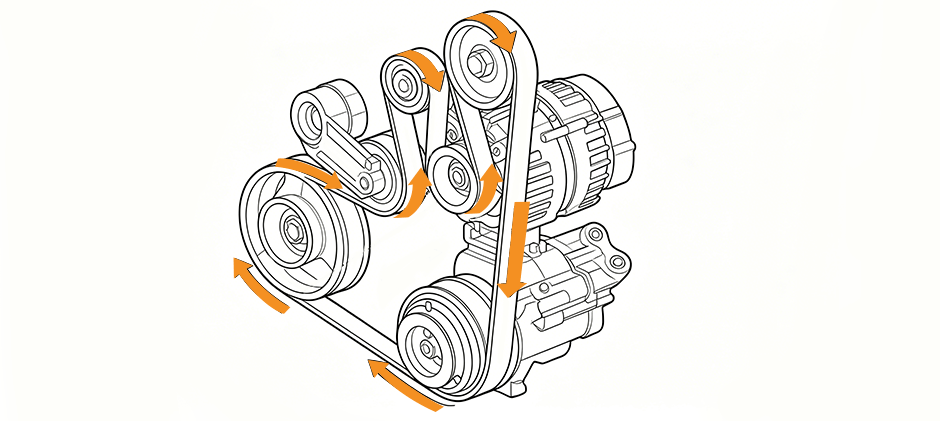
Before you take the old belt off, record how it’s routed.
Take a few photos from different angles. Many machines also have a routing sticker near the hood or cover.
“If you guess the routing, you’ll usually get it wrong once—and do it twice.”
How to Remove the Old Belt
- Find the tensioner pulley. It keeps tension on the belt.
- Use your wrench or breaker bar to rotate the tensioner and create slack.
- Slip the belt off the nearest easy pulley.
- Slowly release the tensioner back to its rest position.
Two common tensioner types:
- A square hole for a ½” drive tool
- A bolt head on the pulley arm
Never put fingers between a belt and a pulley when the tensioner is loaded.
Check These 6 Parts Before Installing the New Belt
A new belt won’t fix bad pulleys or misaligned brackets. While the old belt is off, check:
- Tensioner pulley – spin it; it should turn smoothly, no noise
- Idler pulleys – no grinding or wobble
- Accessory pulleys – check alternator, A/C, and hydraulic pump for wobbling
- Pulley alignment – use a straightedge across pulley faces
- Pulley grooves – clean dirt or grit that can chew ribs
- Leaks – wipe away oil or coolant near the belt area
How to Install the New Belt Step by Step
Step 1: Route the Belt
Match the new belt with your photo or routing diagram.
Start around the crank pulley and any hard-to-reach lower pulleys.
Step 2: Leave the Easiest Pulley for Last
Usually, this is a top idler or a smooth pulley.
Step 3: Apply Tension
Use your wrench or tensioner tool to pull the tensioner back again.
Slip the belt over the last pulley, then slowly release tension.
Step 4: Check the Fit
Make sure the belt sits in every groove, straight and centered.
If the belt isn’t seated correctly, don’t start the engine.
What to Do After Installation
Run the engine at idle speed and watch the belt for 60 seconds.
You should see a smooth, steady movement—no wobbling or squeaking.
If it squeals, shuts off-center, or drifts, shut it down and check alignment or tensioner bearings.
Why a New Belt Might Still Squeak
Sometimes the new belt isn’t the problem.
Squealing often means trouble with:
- A weak tensioner spring
- A worn idler bearing
- Dirty or oily pulleys
Off-road machines work in dust, mud, and moisture, which can cause belt slip. Keep everything clean and dry.
“A belt that slips wears faster every hour you run it.”
7 Tips to Make Your Belt Last Longer
- Look at the belt during every oil change.
- Listen for noises that change with RPM.
- Keep pulleys clean, especially after heavy work.
- Fix oil or coolant leaks early.
- Replace noisy idlers or tensioners before they fail.
- Use the correct belt type and size.
- Recheck the belt after the first run—it should track straight.
Summary
Replacing a serpentine belt is easy if you confirm the belt routing, control the tensioner safely, and check that every pulley is healthy and aligned. Get these right, and you’ll stop the squeal, save time, and keep your machine working in any terrain.
When you’re ready for new parts, visit FridayParts.com for serpentine belts, belt tensioners, and idler pulleys designed for off-road machines. Keep it simple—maintain your belt, and your machine will always be ready to work.
