

When an idler pulley starts to fail, the first “symptom” is often lost time: a squeal that turns into belt damage, a sudden smell of hot rubber, or a machine that can’t keep accessories or cooling working the way it should. This guide helps you spot the warning signs early, understand what’s happening inside the pulley, and decide when to service it versus replace it—specifically for off-road machinery that runs in dust, mud, heat, and heavy load cycles.
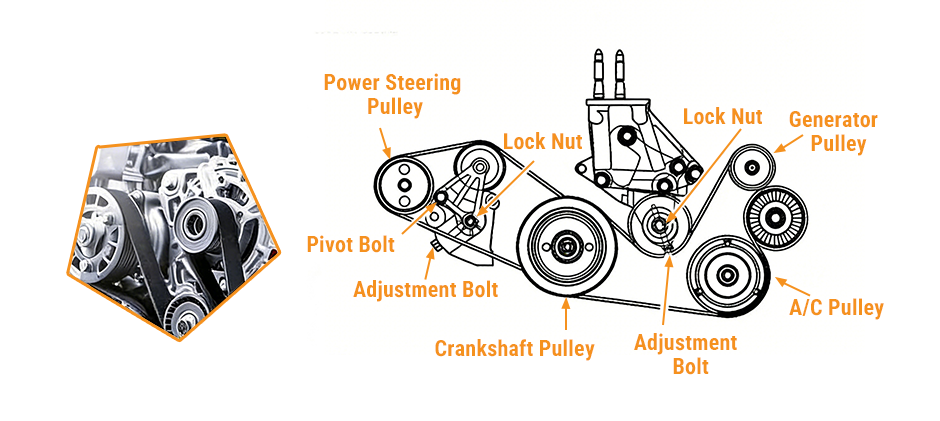
How Does an Idler Pulley Work?
An idler pulley is a guide and support wheel in a belt-driven setup. In off-road machinery, belts often transfer engine power to key components (cooling fan, alternator, water pump, hydraulic-related accessories on some machines, and other driven units). The idler pulley’s job is to:
- Guide the belt so it wraps around other pulleys at the correct angle
- Maintain stable belt routing and reduce belt flutter
- Help keep the operation smooth and quiet by supporting alignment
Internally, an idler pulley spins on a sealed bearing. That bearing is the usual failure point. Once the bearing loses grease, becomes contaminated, or wears from heat and load, the pulley stops spinning smoothly. That creates friction, heat, noise, and belt wear—then the rest of the belt system begins to suffer.
A quick way to think about it:
- The belt is the “power path.”
- The idler pulley is the “traffic control” that keeps that path stable
- If the pulley wobbles or drags, the belt gets damaged, and the whole system becomes unreliable
If you want a broader view of where this part sits in the power transfer chain, it helps to review the overall belt drive system’s layout (more on that later).
10 Symptoms of a Bad Idler Pulley
Below are 10 practical signs that point to idler pulley trouble on off-road machinery. Some symptoms overlap with belt or tensioner issues, so the key is pattern + inspection.
1) Squealing or chirping from the belt area
A high-pitched squeal or chirp often means the pulley bearing is creating drag or the belt is slipping due to unstable tracking. In dirty environments, the noise may come and go as debris shifts.
What to check: listen at idle and under load; noise that changes with RPM is a strong clue.
2) Grinding, rumbling, or “dry bearing” sound
This is a more serious sound than squeal. A grinding or rumble usually means bearing damage is already happening.
Why it matters: once the bearing surface is damaged, it can overheat quickly and seize—then the belt can burn or shred.
3) Visible pulley wobble
An idler pulley should rotate flat and true. If the pulley face wobbles, the belt can’t stay centered.
Common root causes:
- Worn bearing
- Bent pulley
- Loose mounting bolt/bracket wear
4) Belt misalignment or “walking” on the pulley
A belt that rides to one side, polishes one edge, or keeps drifting is a classic symptom of pulley alignment problems.
Look for:
- Belt edge fraying
- Shiny, uneven wear marks
- Rubber dust around the pulley
5) Belt tension fluctuations
If the belt span visibly flutters or snaps during throttle changes, the idler pulley may be binding intermittently, or the bearing may have flat spots.
What you’ll feel: inconsistent accessory functionality, unstable charging, or swings in cooling performance depending on the machine.
6) Burning smell or heat near the pulley
A hot rubber smell is friction. A failing idler bearing makes the belt slide instead of rolling smoothly, generating heat.
Safety note: if there’s a burning smell, shut down and inspect. Heat can damage adjacent components and shorten belt life quickly.
7) Cracks, glazing, or rapid belt wear
If belts keep failing “too soon,” stop blaming the belt first. A bad idler pulley can:
- create constant misalignment
- cause belt slip and glazing
- Cut the belt edges
Rule of thumb: a belt is often the victim; the pulley is the cause.
8) Pulley surface damage
A healthy pulley surface is consistent. Damage can show up as:
- grooves or scoring
- chips on the lip
- uneven polish bands
These signs suggest the belt has been tracking incorrectly or the pulley has been wobbling.
9) Excessive play when rocked by hand
With the engine off and safe access, try rocking the pulley. There should be minimal/no play. Any noticeable looseness points to bearing wear or mounting issues.
Tip: also check the mounting hardware and bracket surface—off-road vibration can loosen fasteners over time.
10) Pulley binds, stops abruptly, or doesn’t spin smoothly
A good pulley spins smoothly and stops gradually. A pulley that feels “notchy,” binds, or stops abruptly is usually contaminated or damaged internally.
High-risk outcome: bearing seizure → belt burn-off → system stall.
How to Maintain the Idler Pulley?
Maintenance for an idler pulley is mostly about inspection and protecting the belt path, because most idler pulleys use sealed bearings (not meant to be greased in the field). The goal is to prevent contamination, catch wear early, and avoid belt damage.
1) Inspect during every belt or service interval
Whenever the belt guard is off, add a quick pulley check:
- spin test (smooth, no noise)
- rock test (no play)
- visual check (no wobble, no scoring)
If the machine is used in dust, sand, or mulch-like debris, shorten the inspection interval.
2) Keep belt routing clean and guards installed
Debris trapped near the belt can get pulled into the pulley bearing seals over time. Cleaning the belt path and keeping shields in place reduces contamination.
3) Replace as a set when the system shows pattern wear
In belt-driven systems, components wear together. If the belt is being replaced due to abnormal wear, it is often smart to check (and sometimes replace) related pulleys at the same time—especially if any noise or wobble is present.
4) Avoid “temporary fixes” that create bigger failures
Common mistakes that raise risk:
- Reusing a wobbling pulley because “it still spins.”
- Running an over-tightened belt to stop squealing
- Ignoring the slight misalignment because the machine still works
How Much Does an Idler Pulley Replacement Cost?
Replacement cost depends on equipment class, pulley size, and whether you replace only the pulley or also related belt drive parts. From the FridayParts page content, key cost guidance is:
- OEM replacements can cost significantly more due to branding and distribution margins.
- Aftermarket idler pulley replacements can often be 30–60% lower than OEM cost, while still targeting equivalent or better quality.
- Labor and downtime can outweigh the part price if the pulley fails mid-job.
Cost drivers, you should plan for
- Access time (guard removal, tight compartments, seized hardware)
- Whether the belt is also replaced (often recommended if it’s glazed, cracked, or heat-damaged)
- Any collateral damage (belt shredded, bracket wear, adjacent pulley damage)
Smart purchasing approach
If the symptoms above match what you’re seeing, it’s usually better to replace the pulley before it takes out the belt. You can browse compatible options here: idler pulley.
For selection help and assembly-type guidance, this reference can shorten your decision time: idler pulley guide.
And because the pulley is only one piece of the belt path, it’s often useful to shop the full category of related parts (belts, tensioners, pulleys, kits): belt drive systems.
Conclusion
A failing idler pulley usually gives clear warnings—noise, wobble, belt tracking issues, heat smell, and repeated belt wear. On off-road machinery, dust and vibration speed up bearing wear, so short inspection cycles matter. Replacing the pulley before seizure protects the belt path and prevents downtime. As an aftermarket parts supplier, FridayParts offers high-quality products at affordable prices, a vast inventory, and wide compatibility across many heavy equipment brands—helping you get the right part fast and keep working.
