

A serpentine belt problem rarely starts with a full breakdown—it starts with small clues: a short squeal on cold start, a weak alternator charge, or rising coolant temperature under load. For off-road machinery owners, spotting bad serpentine belt symptoms early can prevent stalled jobs, overheated engines, and damage to belt-driven accessories. This guide covers what the belt does, the 8 warning signs that matter most in heavy equipment, and how to extend belt life with practical checks.
Why Serpentine Belt Matters?
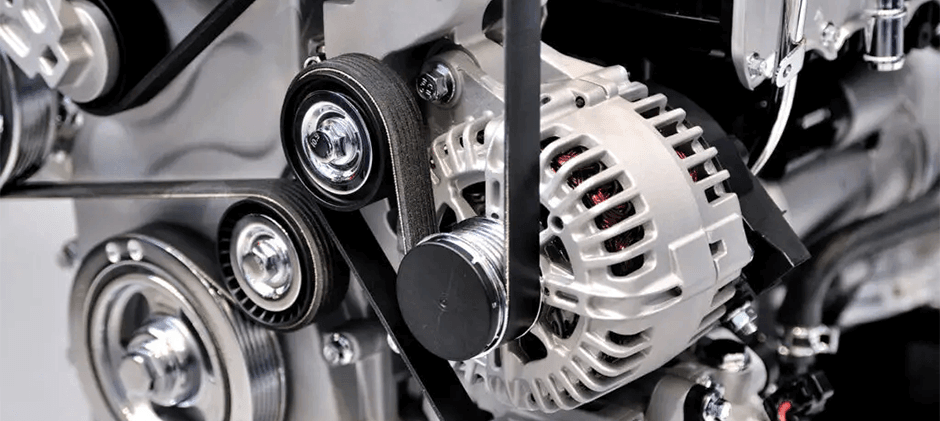
On many off-road machines, the serpentine belt is the “one belt that keeps the day moving.” It transfers engine power to belt-driven accessories that the machine depends on during long hours at low speed, high load, and dusty conditions. Depending on the engine layout, that can include:
- Alternator (battery charging and electrical stability)
- Water pump and/or cooling fan drive (coolant circulation and airflow)
- A/C compressor (cab comfort, defogging)
- Other accessory pulleys and idlers that guide the belt path
When the belt slips, stretches, or breaks, accessory speed drops immediately. That can mean low charging voltage, poor cooling, and eventually an overheat or shutdown—exactly the kind of “simple part, big downtime” failure that hurts production.
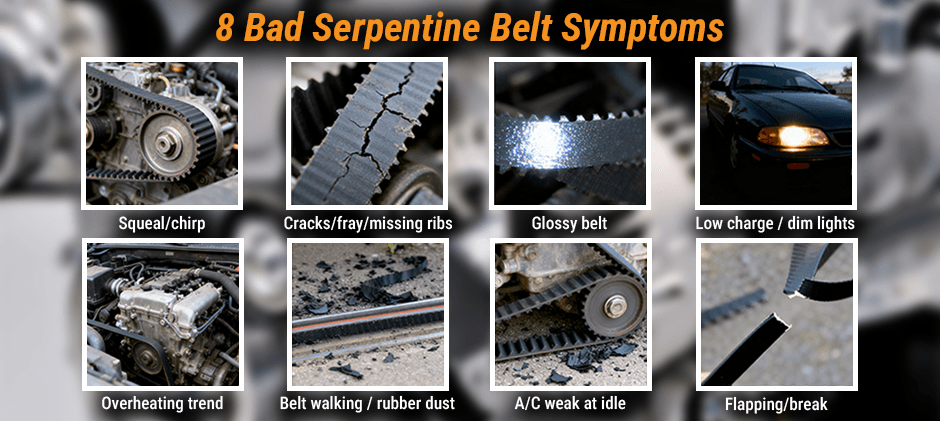
8 Bad Serpentine Belt Symptoms
Below are the most useful signs of a bad serpentine belt for off-road equipment. Each symptom includes what it usually means and what to check next.
1) Squealing or chirping from the belt area
What you notice: A high-pitched squeal, chirp, or brief screech when starting the engine or when loads change (lights, A/C, fan engagement).
What it often means:
- Belt slips from low tension
- Belt glazing (hard, shiny surface)
- Misalignment across pulleys
- A tensioner that can’t hold steady pressure
How to do next:
- Inspect belt ribs for shiny glaze and micro-cracks
- Check tensioner movement and spring force (don’t ignore a “bouncy” tensioner)
2) Visible cracks, fraying, rib separation, or missing chunks
What you notice: Cracks across the ribs, frayed edges, missing rib sections, or “stringy” rubber fibers.
What it often means:
- Age/heat cycling
- Misaligned pulley or damaged pulley grooves
- Foreign debris or a pulley edge cutting the belt
How to do next:
- Use a flashlight and inspect the full belt length
- Rotate the engine by hand only if safe and allowed by your service procedure
- If pieces are missing, check nearby hoses/wiring for belt slap damage
3) Shiny glazed belt surface or “polished” ribs
What you notice: The belt looks glossy instead of matte, sometimes with a burnt-rubber smell.
What it often means:
- Prolonged slipping (belt is heating up)
- Tensioner weakness
- Pulley drag (bearing resistance), forcing slip
How to do next:
- Spin idlers/pulleys by hand (engine off, safe access) to feel roughness
- A new belt on a bad pulley often fails fast—fix the cause first
4) Battery not charging well / electrical instability under load
What you notice: Slow cranking, low voltage, lights dimming at idle, intermittent electrical resets, or frequent dead battery complaints.
What it often means:
- The alternator isn’t spinning at the right speed because the belt is slipping
- Belt tension is unstable due to a weak tensioner or a bouncing idler
How to do next:
- Check the charging voltage and the belt condition together
- If the voltage drops when the accessories load up, treat the belt drive as a suspect—not only the battery
5) Engine running hot or temperature creeping up during work
What you notice: Coolant temperature rises faster than normal, especially when pushing hard, climbing, or operating in high ambient heat.
What it often means:
- Belt slip reduces water pump speed and/or fan speed (system-dependent)
- The belt drive system can’t maintain the correct accessory RPM under load
How to do next:
- Do not keep working through an overheat trend
- Inspect the belt, tensioner, and pulleys before assuming the cooling system is the only issue
6) Belt “walks” off-center, wobbles, or has dust buildup around pulleys
What you notice: Belt tracks toward the edge of a pulley, rides up, or leaves black rubber dust near the front cover.
What it often means:
- Misalignment (bent bracket, worn bearing, incorrect pulley)
- Pulley wobbles from a failing bearing
- Wrong belt width/profile for the pulley system
How to do next:
- Sight down the pulley faces for alignment
- Look for uneven rib wear (one side more worn than the other)
7) Accessory performance drops
What you notice: Cab A/C fades at idle, fan noise changes, or accessory response feels inconsistent when the engine speed changes.
How it often means:
- Belt slips under changing load
- Tensioner damping is worn (it can’t absorb vibration)
- Pulley bearing drag increases required drive torque
What to do next:
- Check for pulley bearing noise/roughness
- Confirm the belt routing matches the diagram for the engine setup
8) Slapping/flapping noise or sudden belt break
What you notice: A flapping sound, ticking, or sudden loss of multiple accessories at once.
What it often means:
- The belt is shredded or has partially broken
- A pulley seized or a tensioner failed catastrophically
- Debris got into the belt path
How to do next:
- Shut down safely and inspect immediately
- A broken belt can whip and damage nearby components—do not “limp it” if temperature/charging is affected
Quick diagnosis table
| Symptom | Common cause(s) | What to check next |
|---|---|---|
| Squeal/chirp | Slip, weak tensioner, glaze | Belt surface + tensioner stability |
| Cracks/fray/missing ribs | Age, heat, misalignment | Pulley edges + rib wear pattern |
| Glossy belt | Overheat from slip | Pulley drag + tensioner |
| Low charge / dim lights | Alternator under-driven | Belt tension + pulley alignment |
| Overheating trend | Water pump/fan under-driven | Belt + tensioner + fan drive |
| Belt walking / rubber dust | Misalignment, wobble | Pulley runout + bracket condition |
| A/C weak at idle | Slip under load | Belt + tensioner damping |
| Flapping/break | Severe wear or a seized pulley | Inspect pulleys for seizure |
What Affects Belt Life?
Off-road machines punish belts differently than road vehicles. Even when engine hours are “low,” belt aging can be “high” because of the operating environment.
Key factors that shorten serpentine belt life:
1. Heat and temperature swings
Engine bay heat hardens rubber. Cold starts add extra load because the rubber is stiffer.
2. Dust, grit, and debris
Fine dust acts like an abrasive paste on the ribs and pulley grooves.
3. Fluid contamination (oil, diesel, coolant, hydraulic mist)
Fluids can swell rubber, soften it, or cause slip. A belt soaked in oil often won’t recover.
4. Tensioner fatigue and weak damping
A tensioner can look “okay” but still allow vibration and slip. That accelerates glazing and rib wear.
5. Idler and accessory pulley bearing drag
A rough bearing forces the belt to transmit more torque and heat, which can strip ribs.
6. Misalignment and incorrect parts
A slightly misaligned pulley can quickly destroy a belt edge. A wrong belt profile/length creates chronic tension problems.
Serpentine Belt Hot Questions
1) Can you keep running the machine with a squealing belt?
Squeal usually means slip. Slip creates heat, glazing, and faster failure. If cooling or charging is belt-driven on your engine, continuing to run increases the chance of an overheating or a dead battery event. Inspect as soon as practical.
2) Should the belt tensioner be replaced with the belt?
Often yes—especially if there is belt noise, glazing, bouncing tensioner movement, or uneven wear. A weak tensioner can ruin a new belt quickly. If the belt is being replaced due to age alone and pulleys spin smoothly, the tensioner still deserves inspection.
3) What should be replaced together as a “belt drive service”?
A smart package approach includes:
- New serpentine belt (correct length/profile)
- Tensioner if the spring force/damping is weak
- Idler pulleys, if bearings feel rough or noisy
This is where browsing complete belt drive systems can save time, because it groups the parts that work as one system rather than isolated pieces.
4) Where to buy replacement belts and tensioners for heavy equipment?
If you have already confirmed the part number or machine model fitment, these pages are direct starting points:
- belt (engine belts for off-road machinery)
- belt tensioner (tensioners for tractor, forklift, excavator, and more)
In the mid-life stage (noise + minor cracks), replacing the belt and correcting tension often prevents the “belt break + downtime” scenario.
5) How do you inspect belt condition fast in the field?
Use a simple routine:
- Engine off, keys controlled, safe access confirmed
- Look for cracks, fraying, missing ribs, and glazing
- Check tracking: belt centered on pulleys
- Listen during start-up and under load changes
- If safe, feel pulley wobble and spin idlers for roughness
Conclusion
The clearest bad serpentine belt symptoms are noise, visible rib damage, glazing, belt dust, charging issues, and overheating trends. Treat them as a system warning, not a “belt-only” problem. If a replacement is due, pairing the right belt with a healthy tensioner and smooth pulleys cuts repeat failures. As an aftermarket parts supplier, FridayParts offers high-quality parts at affordable prices, broad compatibility across heavy equipment brands, and a large inventory to keep downtime short.
