

Choosing the right wrench is the first step to fixing your machine quickly and safely. If you own or service machinery built in the USA, you’ll need to understand SAE wrench sizes. Using the wrong size can damage bolts, waste time, and make a simple repair much harder. This guide explains what SAE wrenches are, why the right fit matters, and which sizes you’ll use most.
What Are SAE Wrenches?
SAE stands for Society of Automotive Engineers.
These wrenches are measured in inches, not millimeters, using fractions like 1/2″, 5/8″, or 3/4″.
They are the standard tools used on American-made machines — such as John Deere, Caterpillar, and Bobcat.
If your equipment is American-made, you’ll need SAE (inch) wrenches.
If it’s from Asia or Europe, you’ll likely need metric wrenches, which are measured in millimeters.
Why Is Using the Right Wrench Size So Important?
The right size wrench keeps your repair quick and safe.
A wrench that’s too loose can slip and strip the bolt head, making it almost impossible to remove.
When this happens, a short job can turn into hours of frustration or costly repair work.
A tight, proper fit spreads the force evenly, protects the bolt, and prevents injuries like bruised knuckles.
Always check the fit before you apply pressure.
“A stripped bolt can turn a 10‑minute fix into a half‑day job — always make sure your wrench fits snugly.”
5 Most Common SAE Wrench Sizes
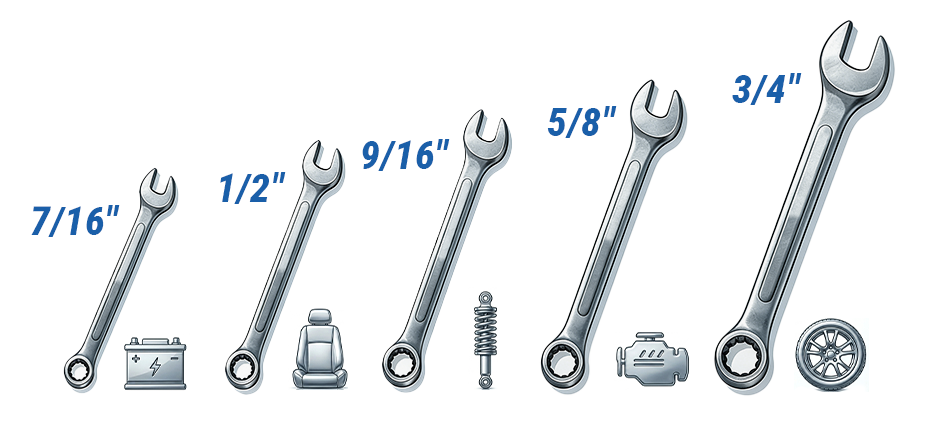
You don’t need every size to start.
These five sizes will cover most off‑road equipment repairs and maintenance jobs.
1. 7/16″
Used for smaller tasks like battery terminals, engine covers, and light brackets.
2. 1/2″
One of the most common wrench sizes — perfect for seats, frames, and body panels.
3. 9/16″
Great for medium-duty parts such as suspension bolts and frames.
4. 5/8″
Used for engine mounts and other mid-size hardware parts.
It bridges the gap between the 9/16″ and 3/4″ wrenches.
5. 3/4″
A must-have for heavy-duty bolts, hydraulic fittings, and even small lug nuts on compact equipment.
How to Read SAE Wrench Sizes
SAE wrench sizes are easy to identify.
You’ll find the size number stamped or engraved on the tool — for example, “1/2” means the opening measures half an inch across the flat sides.
A bigger fraction means a larger wrench.
What Is the Difference Between a Wrench and a Socket?
- Wrench:
A single-piece tool (like a combination wrench with one open end and one closed end).
Best for tight spaces or when you need to hold one end of a bolt steady.
- Socket:
Great for speed when bolts are easy to reach — perfect for repetitive tasks.
Having both gives you flexibility for all types of jobs.
Summary
Knowing your SAE wrench sizes helps you work faster, safer, and more confidently on your off-road equipment. The 7/16″, 1/2″, 9/16″, 5/8″, and 3/4″ sizes are the ones you’ll reach for most.
When your tools fit right, you prevent damage, save time, and get the job done efficiently. To keep your machine ready for any repair, explore durable and reliable hand tools and hardware in the FridayParts Tools category — built to handle the tough conditions your off-road equipment faces every day.
