

The right spark plug socket size is the one that fits your plug’s hex head, not your mower’s brand name. Most mowers use 5/8 in (16 mm) or 13/16 in (21 mm) sockets, but older or special engines can differ. This guide shows you how to find the right socket size fast, protect your spark plug, and finish tune‑ups with less downtime.
Why Socket Size Matters
The wrong socket damages plugs and wastes time.
A loose socket can round the plug, crack the ceramic, or get stuck in the plug well.
A correct fit also protects the cylinder head threads. It keeps the plug straight during removal and installation.
Clear note: A rounded spark plug usually starts with the wrong socket or a worn one.
What Socket Size Really Means
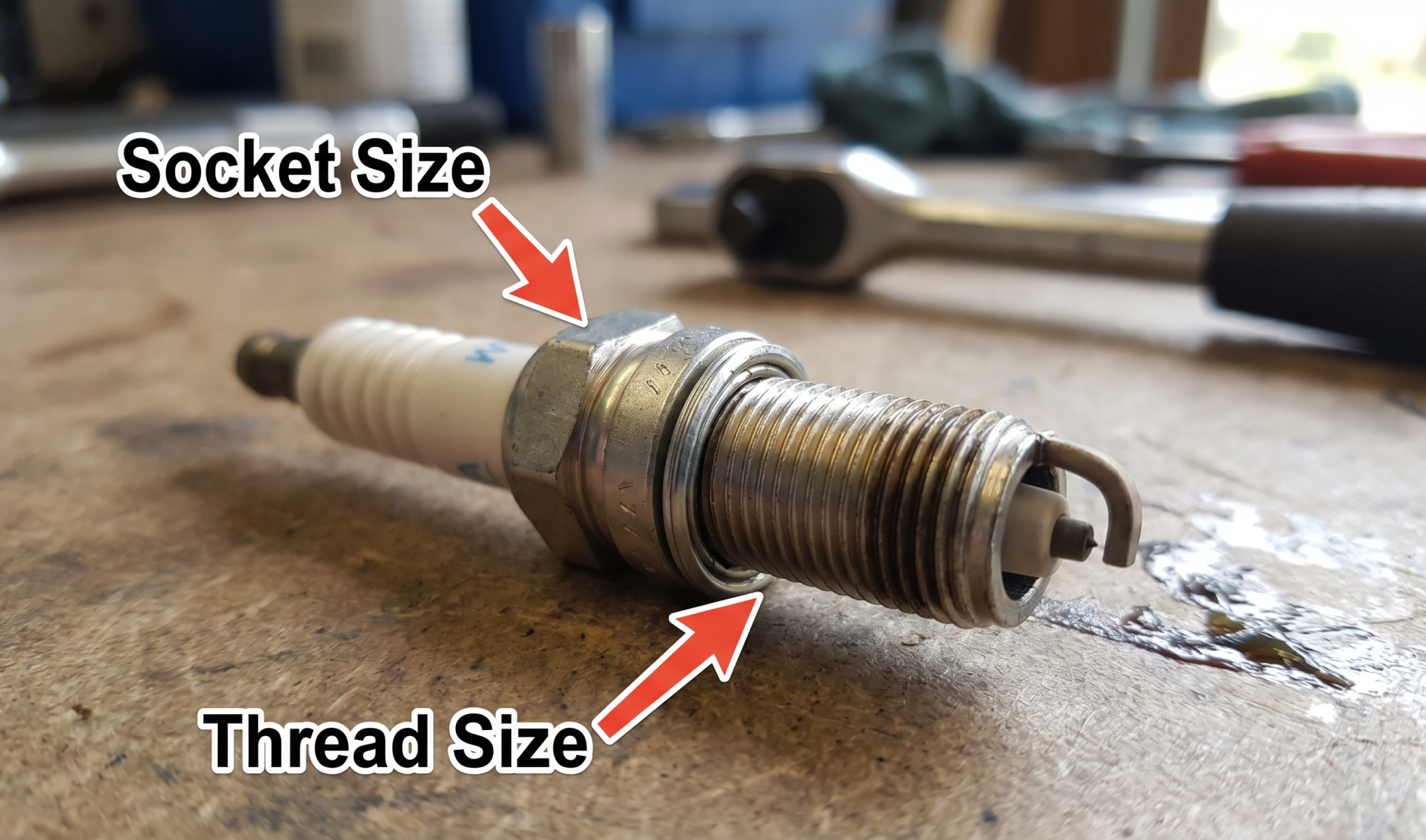
“Socket size” is the hex size across the flats of the plug.
It’s not the thread size (like “14 mm plug”) and not the gap measurement.
Spark plug sockets are usually deep and have a rubber insert or magnet to hold the plug safely.
Clear note: Thread size and socket size are two different things.
Common Lawn Mower Socket Sizes
Most mowers take 5/8 in (16 mm) or 13/16 in (21 mm).
These cover most walk‑behind mowers, riding mowers, and small engines.
Some older or specialty engines may use 3/4 in (19 mm) or other sizes.
Never guess—always check the plug hex.
“Assume nothing—verify the hex.”
Quick Socket Size Reference
| Socket Size | Fits Plug Hex | Common Use | Notes |
|---|---|---|---|
| 5/8 in (16 mm) | 16 mm hex | Most modern small engines | Standard size for many mowers |
| 13/16 in (21 mm) | 21 mm hex | Older mowers or larger engines | Feels almost right on worn plugs—confirm fit |
| 3/4 in (19 mm) | 19 mm hex | Some specialty or vintage engines | Don’t force it if it doesn’t seat cleanly |
| Thin‑Wall Socket | Same hex as above | Tight plug wells on OHV engines | A standard socket won’t fit the hole |
| Swivel + Extension | Any size | Hard‑to‑reach plugs | Keep alignment straight—don’t pry or twist |
Clear note: If the hex size is correct but the socket won’t fit in the hole, try a thin‑wall spark plug socket.
3 Fast Ways to Find Your Socket Size
1. Check the Spark Plug Itself
- Clean around the plug and read the plug number or brand.
- Use a socket that fits snugly with no wiggle before applying torque.
2. Measure the Hex
- Use a caliper to measure across the flats. Match it to 16 mm, 19 mm, or 21 mm.
- No caliper? Try test‑fitting a combination wrench to see what fits best.
3. Use the Right Socket Type
-
Choose a 6‑point deep socket whenever possible. It grips better than a 12‑point and protects a worn plug. When choosing a new plug, consider the differences between Copper vs. Iridium Spark Plugs.
Clear note: If the plug hex is already damaged, 6‑point sockets give you the best recovery chance.
When to Use Thin‑Wall or Special Sockets
Use a thin‑wall socket if access is tight — for example, when the plug sits in a deep or narrow tube.
Extensions and swivel joints help reach plugs under covers or tanks.
Keep the socket lined up straight on the hex before turning.
6 Safe Steps to Remove a Spark Plug
- Cool the Engine. Never pull a plug from a hot aluminum head.
- Disconnect the Spark Plug Wire. Hold the boot, not the wire.
- Clean Around the Plug. Brush or blow away dirt first.
- Seat the Socket Fully. Make sure it grips the hex solidly.
- Loosen Smoothly. Avoid sudden jerks or tilting.
- Finish by Hand. Once loose, unscrew by hand to protect threads.
Clear note: If the socket tilts or rocks, stop—check the size again.
5 Common Mistakes to Avoid
- Using the wrong socket size
- Using a shallow socket that slips off
- Skipping cleaning (dirt falls into the cylinder)
- Forcing threads with a ratchet instead of starting by hand
- Over‑tightening after install
Check More Than Just the Plug
A spark plug tune‑up often points to other maintenance needs.
If your mower runs rough, won’t start, or loses power:
- Check the air filter — clogged filters mimic spark issues.
- Check fuel quality — old fuel can misfire too.
- Inspect plug wire and connections.
Clear note: A new spark plug won’t fix a dirty filter or bad fuel.
Summary
The correct lawn mower spark plug socket size depends on the spark plug’s hex, not the engine brand. Most lawn mowers use 5/8 in (16 mm) or 13/16 in (21 mm) sockets, but always measure the hex or check with a caliper or wrench to be sure. A deep 6‑point socket gives better grip and protects the plug, while a thin‑wall socket helps when space is tight. Work carefully—never force or over‑tighten the plug to avoid damaging the head or insulator.
For high‑quality spark plugs, sockets, and tune‑up parts that fit your off‑road and lawn equipment, visit the FridayParts Lawn Mower Spark Plug category and get the right parts so your machine stays ready for work.
