

Wrenches are one tool you simply can’t do without. They come in all kinds of shapes and sizes, and each one is made for specific jobs. If you know the common types of wrenches for heavy machinery and pick the right one for the task, your repair work will be much easier and faster.
The Basic Hand Wrenches
These three wrenches are the core of any toolbox. You’ll use them all the time on heavy equipment—from removing covers to adjusting small parts.
Open-End Wrench
One of the most common types. It has a U-shaped opening on each end, usually in two different sizes. The big advantage is access—you can slide it in from the side, which is great in tight spaces where you can’t fit a wrench over the top. The downside is it only grips two sides of the bolt or nut, so it can slip if you use too much force, and may round off the edges.
Box-End Wrench
This wrench has a closed ring that wraps all the way around bolts and nuts.It usually has 6 or 12 gripping points, so it holds tighter than an open wrench.You can put on more force without it slipping off. It’s perfect for loosening rusted, tight bolts or fastening parts firmly.The only downside is you need enough clear space above the nut to slide the wrench on.
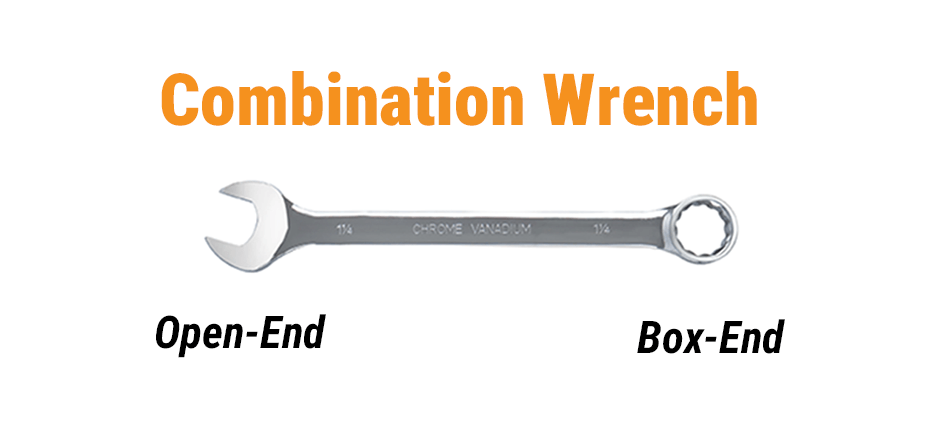
Combination Wrench
This one gives you both. One end is a box end, the other is an open end—and they’re the same size. It’s one of the most popular and useful tools for a reason. A common way to use it: start with the box end to break a tight bolt loose, then switch to the open end to spin it off faster. It’s a must-have for heavy equipment maintenance.
The Essential Adjustable Wrench
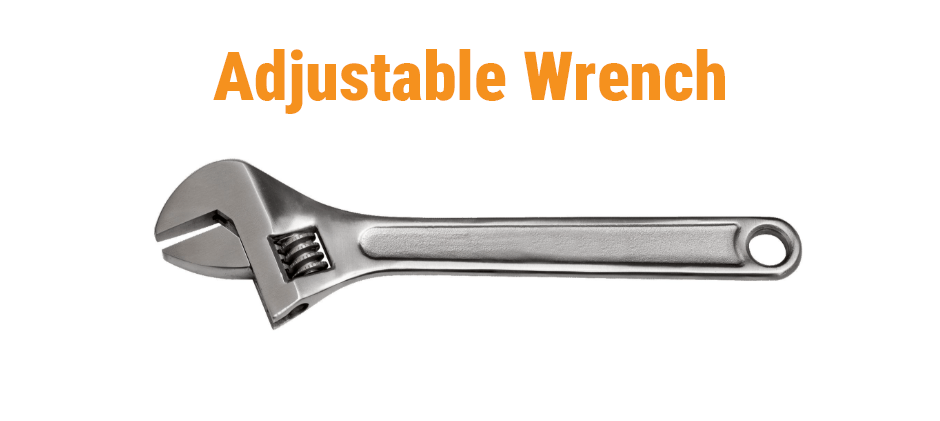
An adjustable wrench, also known as a crescent wrench, has one fixed jaw and one movable jaw. You just turn the small screw to change the jaw width, so this single wrench fits nuts and bolts of many different sizes.
Its biggest advantage is great versatility. You don’t need to carry a full set of regular wrenches, which is perfect for field repairs and quick, temporary jobs. It also works really well on old equipment or odd-sized bolts.
That said, always tighten the jaws firmly onto the fastener. If it’s loose, the wrench can slip easily. This will damage the bolts and may even cause hand injuries.
Wrenches for High-Force Applications
Regular hand tools work fine for most jobs, but heavy equipment takes heavy abuse. Its bolts and nuts are usually huge, badly rusted, and tightened extremely tight. To loosen these tough fasteners, you need heavy-duty tools with strong power.
Striking Wrench
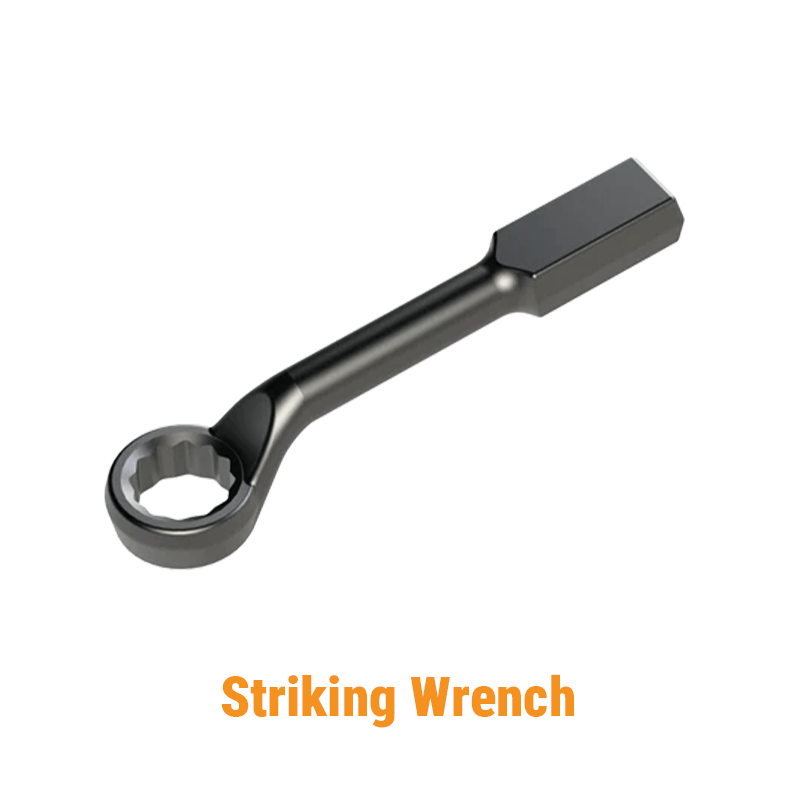
When large nuts on the chassis or bucket get completely stuck, standard wrenches just won’t cut it. That’s where a striking wrench, also called a slugging wrench, comes in.
It’s thick and heavy with a short handle. One end is a box socket, and the other has a flat, solid hitting surface. This wrench is made to be struck with a sledgehammer.
The hard blow creates massive instant torque, strong enough to break loose even the most rusted, frozen bolts. Built with tough forged steel, it can handle repeated heavy hits without cracking or breaking.
Impact Wrench
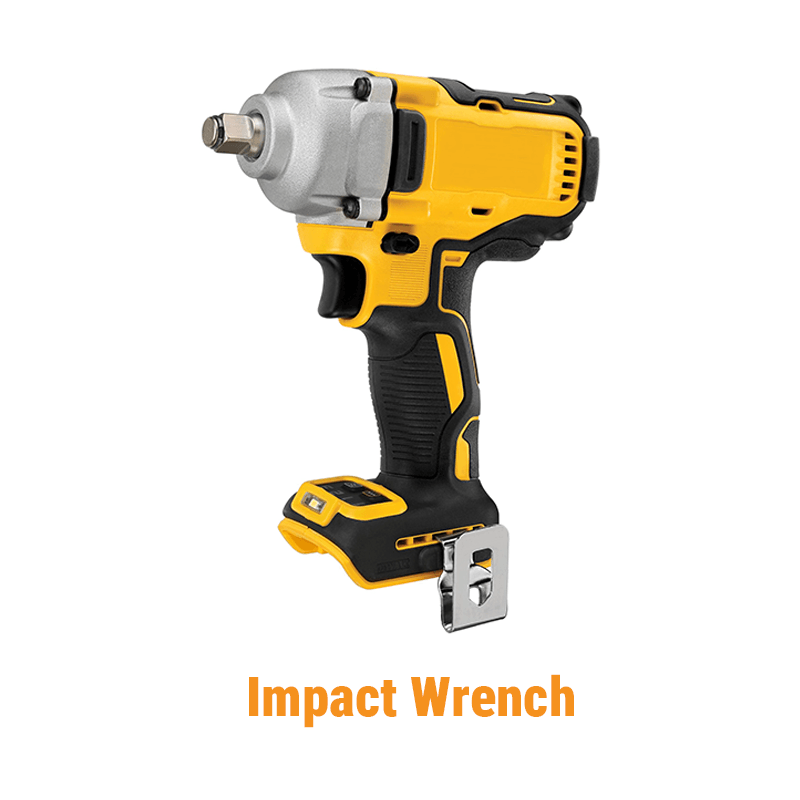
When it comes to speed and raw power, nothing beats an impact wrench. Inside, it has a hammer mechanism that delivers huge torque in seconds. It’s perfect for quickly removing and installing big bolts and lug nuts.
For off-road and construction equipment, this tool is a must-have. You can’t finish jobs like swapping large tires on wheel loaders or taking apart dozer track parts without it. There are two common types of impact wrenches:
- Air Powered (Pneumatic): This is the go-to choice for most repair shops. It hooks up to an air compressor and delivers strong, steady torque. It works harder and lasts longer for heavy, repeated daily work.
- Cordless (Battery Powered): Modern batteries are way better these days, so cordless impact wrenches pack plenty of power for fixing heavy equipment. The best part is they’re easy to carry around. They work perfectly for field repairs and outdoor jobs where you don’t have an air compressor.
When you pick an impact wrench, pay attention to two key points:
- Drive square size — common sizes for heavy equipment are 1/2 inch, 3/4 inch and 1 inch.
- Torque rating, measured in ft-lbs, which tells you how much turning power it has
Torque Wrench
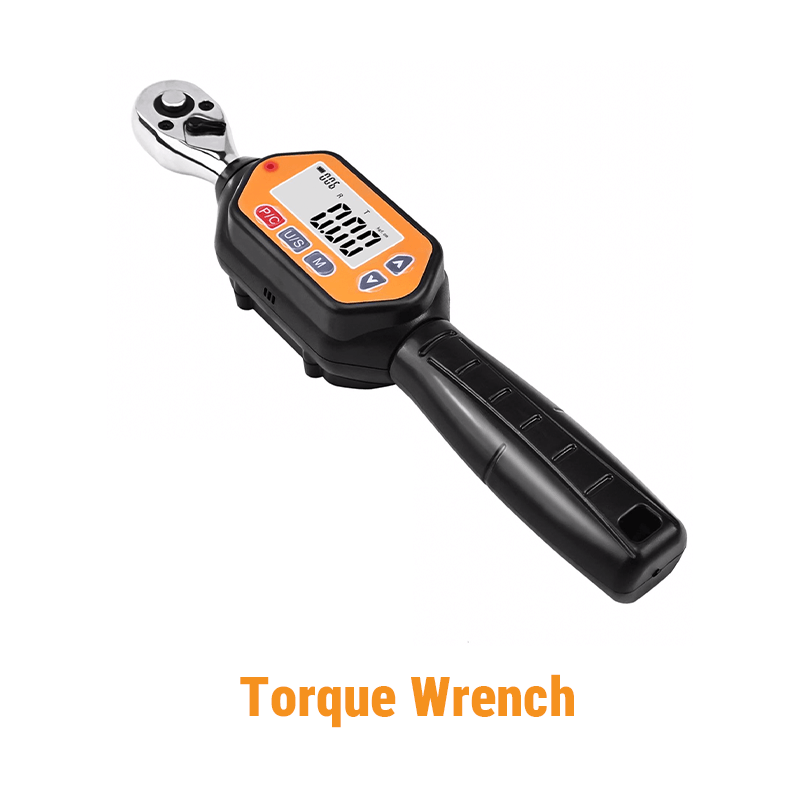
Raw strength isn’t everything—getting the tightness just right matters too.A torque wrench is a precision tool made to tighten bolts and nuts to an exact twisting force. Heavy equipment brands list clear torque specs for key bolts, like those on engines, transmissions and wheel hubs.
If you fasten them too loosely, constant vibration can make parts come loose and cause serious breakdowns. If you crank them too tight, bolts can stretch, snap, or crack the surrounding parts.
- Click-style torque wrench is the most common. You set it to your target torque, and it makes a clear clicking sound once it hits the right tightness.
- Digital torque wrenches have a screen to show exact torque numbers for more precise work.
Never use a torque wrench to loosen bolts. Doing this will throw off its calibration and accuracy.It’s only meant for tightening.
Socket Sets
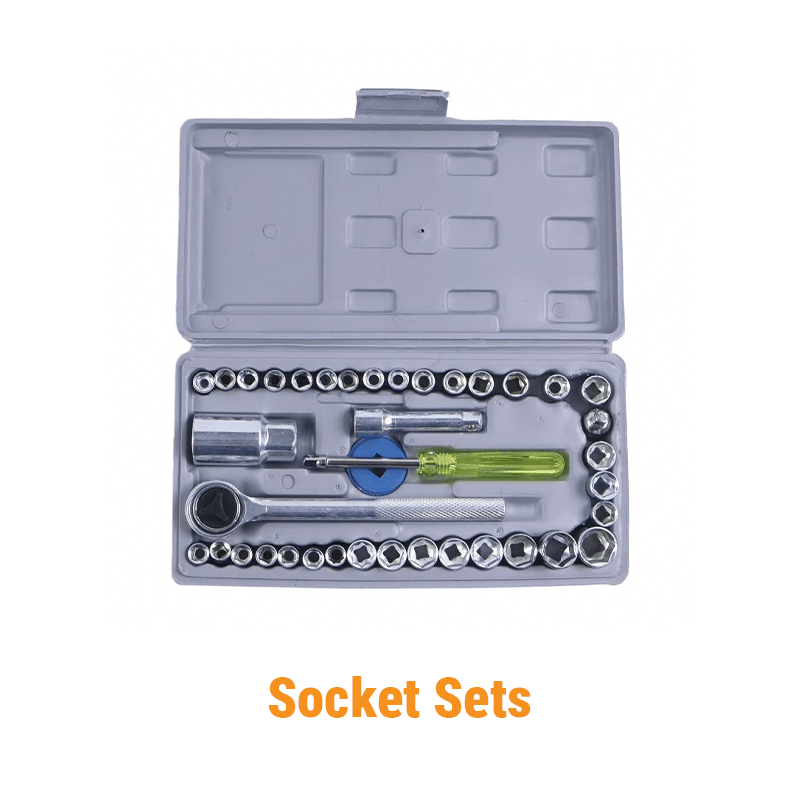
A ratchet wrench works with all kinds of removable sockets. The sockets are tube-shaped, and they fit right over bolts and nuts for easy use. You just swing the handle back and forth to tighten or loosen fasteners. There’s no need to take the socket off repeatedly. It saves a lot of time on repairs.
For heavy equipment jobs, go with larger drive sizes like 3/4-inch and 1-inch. You’ll also need both metric and SAE sockets to fit all kinds of hardware on different machines.
Don’t skip deep sockets either. They’re longer, so they reach nuts on long studs or tight, recessed spots where standard sockets can’t fit.
Specialized Wrenches for Tricky Spots
Here are practical specialty wrenches for tight, hard-to-reach spots on heavy-duty and off-road equipment.
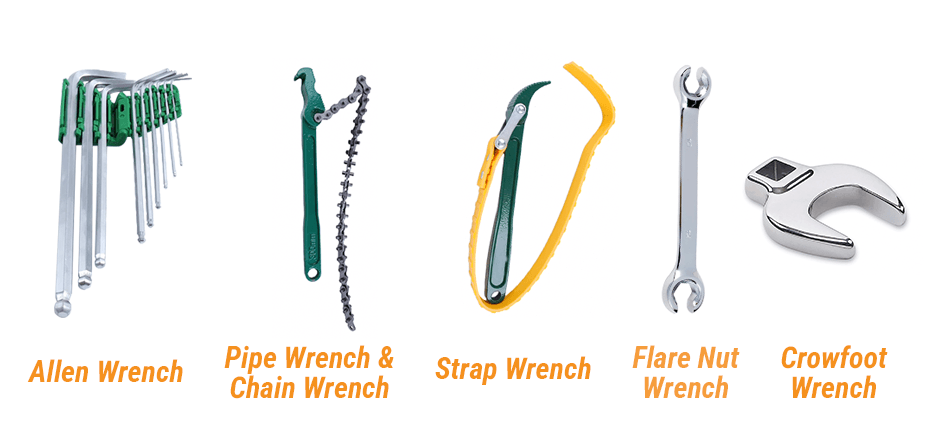
- Allen Wrench: A simple L-shaped tool for hex socket bolts. It’s commonly used inside equipment cabs to secure covers, service panels and electrical parts.
- Pipe Wrench & Chain Wrench: Heavy-duty tools for gripping round objects. The pipe wrench has sharp serrated jaws to hold tight on large hydraulic cylinders and thick, rusted pipes. The chain wrench uses a wrap-around chain, ideal for oversized parts that won’t fit a standard pipe wrench.
- Strap Wrench: Safe for round parts you don’t want to scratch. The rubber or fabric strap creates firm friction, letting you twist fuel and hydraulic filters without leaving dents or marks.
- Flare Nut Wrench: Made for hydraulic and fuel line fittings. Regular open wrenches easily strip soft line nuts. This wrench has a side cutout to fit over hoses, while fully gripping the nut to prevent slipping and damage.
- Crowfoot Wrench: A handle-less wrench head that attaches to ratchets or extensions. It’s perfect for super cramped spaces, such as dense hydraulic valve blocks, where standard wrenches cannot reach.
Final Thoughts
For repair jobs in tight, hard-to-reach spots, you’ll need torque wrenches, ratchets and socket wrenches to loosen and tighten fasteners easily. Shop reliable wrenches at FridayParts, and get all your equipment repairs done with less effort.
