

A skid steer angle broom is one of the most useful cleanup tools you can own. It turns your skid steer into a powerful sweeper for cleaning dirt, gravel, or even light snow.
This quick guide helps you choose the right attachment by focusing on what really matters—width, bristle types, angling system, and build quality—so you can work faster and more efficiently on any job.
What Is a Skid Steer Angle Broom?
A skid steer angle broom is a powered brush attachment that uses your skid steer’s hydraulic system to spin its bristles.
Unlike a simple push broom, it can angle left or right to move debris into a neat line (called a windrow) rather than just pushing it forward. This makes cleanups quicker and more controlled.
Why Do You Need an Angle Broom?
An angle broom helps you clean large areas faster—like job sites, roads, parking lots, and yards.
The adjustable angling lets you decide where debris goes, not just how much you move.
It’s ideal for clearing paths, cleaning along curbs, or preparing work areas for other jobs.
Simple takeaway: An angle broom isn’t just for moving dirt—it’s for controlling it.
5 Key Factors to Consider Before You Buy
Choosing the right angle broom means matching it to your machine and job type.
Here are the five main things to check before buying.
1. How to Choose the Right Broom Width
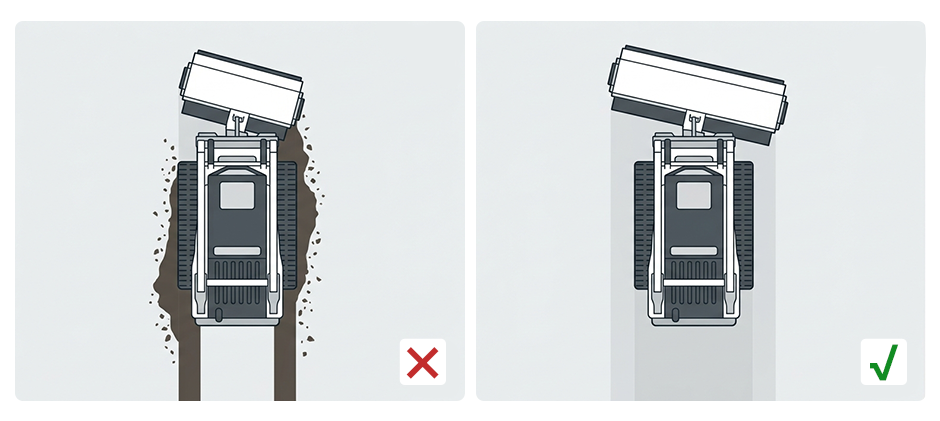
Your broom should always be wider than your skid steer’s tires or tracks.
This ensures the broom covers your machine’s width—even when angled—to avoid leaving tire tracks.
Tip: Add about 12 inches to your machine’s width to find the right broom size.
2. What Bristle Type Is Best for Your Job?
The bristles (or “wafers”) do the sweeping, so their material is key:
- Polypropylene (Poly): The most common choice. Great for general cleaning on pavement—strong, flexible, and gentle.
- Wire: For heavy-duty jobs like scraping dried mud, ice, or compact debris. Not for delicate surfaces.
- Poly/Wire Combo: A balanced option for mixed surfaces and tough conditions—good power with controlled sweeping.
3. Hydraulic vs. Manual Angling: Which Is Better?
The angling system affects your ease of use:
- Hydraulic Angling: Lets you change the broom direction from inside the cab. Best for frequent angle changes or complex job sites.
- Manual Angling: Requires adjusting the pin by hand. A simple and cheaper choice for straight runs or open areas.
Quote to remember: “Hydraulic angling is for efficiency. Manual angling is for simplicity.”
4. What Other Features Should You Look For?
High-quality angle brooms come with small details that make big differences:
- Direct-drive motors (less maintenance than chain drives).
- Integrated stands (keep bristles off the ground when stored).
- Optional water kits (reduce dust on dry sites).
These features help extend broom life and reduce downtime.
5. How to Judge Build Quality and Durability
Look for:
- Frames made from heavy-gauge steel.
- Reinforced pivot points for strength.
- Protected hydraulic hoses to avoid wear or leaks.
- Replaceable bristle wafers, since they’re the part that wears out fastest.
A solid, simple build means fewer breakdowns and lower long-term costs.
3 Common Mistakes to Avoid When Buying
- Choosing a broom that’s too narrow. It forces extra passes and hurts efficiency.
-
Always check your skid steer’s GPM rating—it must meet the broom’s motor requirements. Understanding how a hydraulic pump works can help you match your equipment correctly.
- Skipping maintenance planning. Make sure replacement bristles for your model are available and affordable.
Summary
Choosing the right skid steer angle broom is about getting the right fit—wide enough to cover your tracks, bristles suited to your work, and an angling system that matches your routine. A well-made broom saves time, protects your surfaces, and keeps your site cleaner with less effort.
To keep your equipment performing its best, explore skid steer parts, durable hydraulic components, and reliable attachment parts at FridayParts—so your machine is always ready to get the job done.
