

A dirty engine bay can make you want to grab a pressure washer and get it over with. But can you pressure wash your engine bay? Yes, you can, but using too much pressure or spraying the wrong areas can damage electrical connectors, the alternator, sensors, and other sensitive parts. A safer way is to use low pressure, keep your distance, and avoid vulnerable components. In this guide, we’ll show you what to watch out for and how to safely clean your engine bay and UTV.
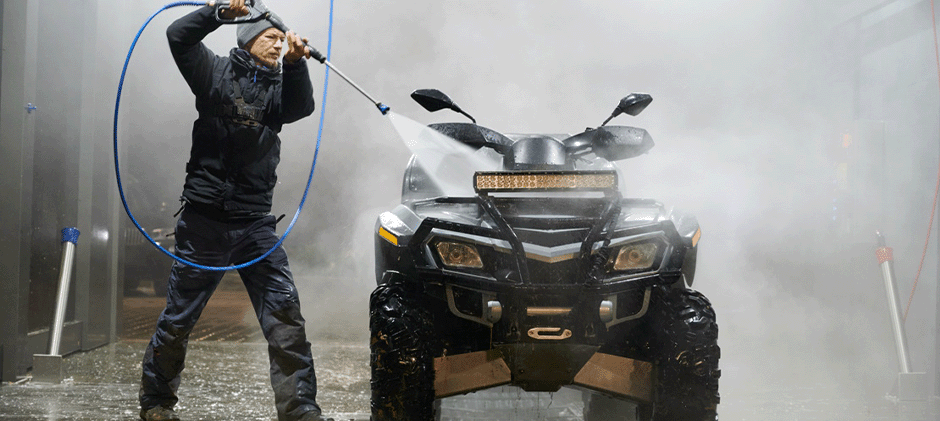
Can I Pressure Wash My Engine?
Sure, you technically can use a pressure washer on an engine. But the real question is, should you? Today’s engines are full of delicate electronics, sensors and wires. Those parts can stand splashes from rain or puddles when you drive, so they’re water-resistant. But they are NOT built to take a hard blast from a pressure washer.
High-pressure water can push past the rubber seals on electrical plugs, get inside the alternator and sneak into sensitive sensors. It might not break anything right away. Usually, the water gets stuck inside and slowly creates corrosion. Weeks or months later, you could get weird electrical faults, a check engine light, or your machine just won’t start. That’s why most pro detailers and mechanics don’t recommend this unless you really know what you’re doing.
Can You Pressure Wash Your Engine Bay?
Some fleet managers and seasoned detailers use pressure washers every day, but they follow a strict method. They use pro machines that let them turn the pressure down, wide fan nozzles to spread out the spray, and keep a safe distance away. Most of all, they’ve got years of experience and know exactly where all the fragile parts sit on many different machines.
For the average owner, it’s easy to mess up. One quick careless move can cut old wiring, soak a key electrical connector, or ruin your alternator. If you’re doing this at home, there’s a safer way that still works great, no big risks. All you need is good degreaser, soft brushes, and a normal garden hose. This method gets rid of all the grime, and you won’t blast your engine’s sensitive parts with harsh, high pressure.
What Parts to Avoid When Washing?
Whether you go for careful pressure washing or stick to the safer garden hose method, the number one thing is shielding your engine’s fragile parts. Before any water hits the engine bay, cover these parts with plastic bags and fasten them down with tape or rubber bands.
- Alternator: This part breaks easily. A direct jet of water can get inside its housing and wreck the bearings and electronics. Then it won’t charge your battery anymore.
- Air intake and air filter: Never spray water straight into the air intake. If water slips past the filter and into engine cylinders, you get hydrolock. That can bend pistons and total your engine. This matters even more if you have an exposed or aftermarket cold air intake.
- Fuse box and ECU: These are your car’s electronic brains. They sit inside plastic cases, but those cases don’t fully block high-pressure water. If water gets in here, you’ll get a chain of tricky electrical issues that cost a lot to fix and are hard to track down.
- Electrical connectors and wiring: This is the biggest risk zone. Every sensor and part connects through wiring harnesses. The rubber seals on these plugs can’t handle pressure washer spray. Water pushed inside corrodes the metal pins. That creates weak connections and random, intermittent faults. Watch out for old, cracked or brittle wiring in particular.
- Ignition system: On many engines, spark plugs sit deep inside wells in the block, with coil packs right on top. Water easily pools in those wells. It can short the coil and leave you with constant engine misfires.
How to Wash a UTV, How to Clean a Side-by-Side?
Cleaning a UTV or side-by-side is a little different. These machines are made for mud and dirt, so they’re tougher around water. But they still have weak spots that a pressure washer can damage easily. You can use a pressure washer on your UTV, but you have to do it the right way.
- Prep and rinse: First, let the rig cool all the way down. Scrape off big clumps of dried mud. Grab a wide 40-degree nozzle, stand at least two feet away, and rinse the whole machine to soften the leftover dirt.
- Degrease and scrub: Put a quality UTV degreaser on the engine, frame and suspension parts. Leave it for a few minutes, then scrub off the grime with a long-handled soft brush.
- Rinse carefully: Wash off the degreaser, and keep your distance again. Never blast these parts up close or head-on:
- Wheel bearings and seals: High pressure pushes water and grit past the seals. It ruins the grease and wears out bearings fast.
- CV boots: Those rubber covers over CV joints tear easily under strong spray. Once ripped, your CV joint will fail.
- Radiator fins: Thin aluminum radiator fins bend if you hit them directly. Bent fins block airflow and make the engine overheat.
- Electrical connectors: Same as on a car. They aren’t fully waterproof, so stay away.
Best Degreaser for UTV
Picking the right degreaser for your UTV depends on how dirty it is.
- For regular mud and grime: Go with a good biodegradable citrus degreaser. It cuts through most dirt well and won’t be too rough on plastics, rubber or decals.
- For thick oil and grease: If you’ve got oil leaks or built-up chain lube, grab a stronger solvent-based degreaser. Use it with care though — it can damage some plastic and rubber parts.
- All-Purpose Cleaners (APC): For just light dust and dirt, mix up an APC following the label directions. It works great and saves you money.
Always get a cleaner made for vehicles or powersports gear. Test it first on a small hidden spot, so you don’t accidentally fade or stain your parts.
How to Dry and Check After Washing?
Washing is only half the job. Drying matters just as much. Trapped water is your biggest enemy, so you need to get moisture out of every crack and crevice.
- Blow the water out: A leaf blower or compressed air works best. It’s the easiest way to push water out of electrical plugs, spark plug wells, the alternator housing and other tight spots.
- Wipe everything down: If you don’t have a blower, use plenty of clean, dry microfiber towels to wipe every surface you can reach.
- Fire up the engine: Take off all the plastic covers and dry the bay as much as you can, then start the engine. Let it run 10 to 15 minutes. The engine heat helps burn off any leftover moisture you couldn’t get to.
- Final check: Shut the engine down after it runs. Do one quick visual check to make sure everything looks dry and nothing got moved out of place.
Conclusion
So, can you pressure wash your engine bay? You can do it only if you’re careful and know exactly what you’re doing. But for most car owners, the risk of costly electrical damage just isn’t worth it. The safest and best way is to use good engine degreaser, some brushes, and lightly rinse with a garden hose. You’ll get a spotless engine bay and skip all the risks. And for parts that wear out from heavy use and tough working conditions, FridayParts carries high-quality replacement components. Shop with us.
FAQs
Can I blast my UTV engine and bearings straight with a pressure washer?
We highly recommend you don’t. You can use a pressure washer to clean your UTV, but keep the nozzle 12–24 inches away from all fragile areas. Hard, direct high-pressure spray pushes water and dirt past the seals on wheel bearings and engine parts. That leads to rust and early part failure.
Does riding through mud and water wear out UTV parts faster?
Yep, it sure does. Mud and fine silt work just like sandpaper, wearing down brake parts, suspension bushings and CV boots. Mud locks in moisture too, which speeds up rust on the frame and bearings. Wash your rig after every muddy ride — it’s one of the easiest ways to make your parts last longer.
Can I wash a hot engine?
No. Never spray cold water on a hot engine. Fast temperature shifts create thermal shock, which can crack metal pieces like the exhaust manifold or even the engine block. Cleaner will also evaporate right away and bake onto surfaces, leaving tough stains. Wait until the engine is cool or just slightly warm before cleaning.
