

On a muddy job site or a dusty field, clear visibility isn’t a luxury — it’s a necessity for safety and productivity. When your excavator, tractor, or loader’s windshield wipers start acting up — stuck mid-swipe, running endlessly, or refusing to park — it doesn’t always mean your wiper motor is dead. Before budgeting for a replacement, try this quick reset guide. With the right steps, you can often restore normal operation in just a few minutes.
Why a Wiper Motor Loses Its Park Position
Your wiper system has an internal “park” position — think of it as home base.
An internal switch or small controller tells the motor when to stop after each cycle.
When that reference signal is lost or misaligned, the wipers go out of sync.
Common reasons this happens:
- Power interruption: A dead or disconnected battery resets the wiper’s memory. This can be a simple fix, but it’s also important to know the difference between a bad alternator vs bad battery.
- Physical blockage: Mud, heavy snow, or debris forcing the wiper arms out of the path.
- Manual misalignment: Forcing wiper arms by hand can disrupt the internal gear set.
- Component wear: Over time, the park switch or sensor contacts wear down.
In most cases, you don’t need to replace the wiper motor — just help it recalibrate through a simple reset.
Symptoms Indicating a Reset Is Needed
If you see any of the following, a reset should be your first step:
- Wipers stop mid‑windshield when turned off.
- Wipers don’t return fully to the base of the glass.
- Wipers keep running even when switched off.
- Wipers move erratically, out of sync with switch settings.
These can also point to a failing switch or linkage — like the issues described in these ignition switch problems — but a reset costs nothing and solves 80% of cases.
Safety First
Heavy equipment has stronger electrical currents and moving parts than passenger vehicles.
Always take precautions before handling the wiper system:
- Park on level ground, engage the parking brake, and secure attachments.
- Turn off the engine and remove the ignition key.
- Disconnect the negative (-) battery terminal if you’ll touch any wiring or linkage. If you’re unsure, here’s how to identify positive and negative battery terminals correctly.
- Wear gloves and safety glasses.
- Check your operator’s manual for specific fuse or circuit details.
3 Methods to Reset the Wiper Motor
There are three reset methods, from easiest to most involved.
Start with Method 1 and move down the list as needed.
Method 1: The Soft Cycle Reset
This quick “re‑sync” often fixes glitches caused by temporary power loss.
- Sit in the operator seat and close all doors.
- Turn the ignition to ON (don’t start the engine).
- Turn the wipers on LOW speed — let them run one or two full cycles.
- Switch to HIGH speed — run for another one or two cycles.
- Turn the wipers OFF.
- Watch the wipers return to their base position.
- If they park correctly, you’re done!
If the issue persists, continue to the next method.
Method 2: The Power‑Down Reset
This “hard reset” clears any internal electronic confusion inside the wiper motor controller.
- Turn the ignition and all accessories OFF.
- Using a wrench, disconnect the negative battery terminal.
- Wait 5‑10 minutes for residual charge to dissipate.
- Reconnect the terminal securely.
- Turn the ignition ON and test the wipers.
In many machines, this returns the wiper system to factory default alignment.
Method 3: Mechanical Realignment
Use this if someone forced the wipers manually or if the arms stop far off‑position.
- Expose the linkage — remove the cowl or access panel at the windshield base.
- Mark the current arm positions on the glass (use masking tape).
- Turn ignition ON, run wipers through one cycle, then switch OFF: The motor shaft will stop at its true park position, even if the arms are wrong.
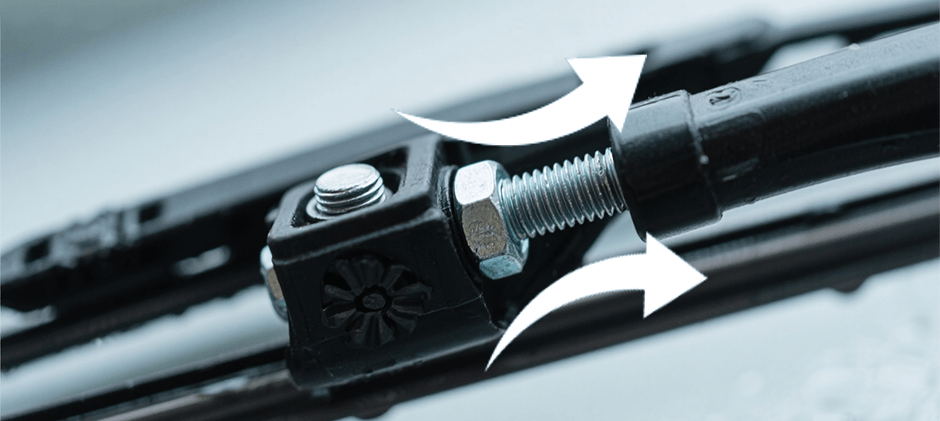
- Remove the wiper arms: Lift cap → loosen nut → gently pull arm off spline.
- Reinstall the arms aligned perfectly at rest (bottom of windshield).
- Tighten nuts (snug, not overtightened).
- Test operation — arms should now sweep and park properly.
Tip: If the linkage was jammed by mud or corrosion, clean and lubricate the pivots before reassembly.
What If the Reset Doesn’t Work
If none of these steps restore normal function, a component may truly be failing:
| Possible Cause | What to Check / Do |
|---|---|
| Blown Fuse | Replace with the same amperage fuse. |
| Worn Switch | Test continuity on the control stalk or dash switch. |
| Faulty Motor | The internal park switch or brushes may be damaged — it may be time to replace the motor. |
| Seized Linkage | Free up or replace corroded link rods and bushings. |
When replacement is unavoidable, choose high‑grade parts built for vibration and moisture resistance.
FridayParts offers durable, field‑tested wiper motors, switches, and linkage assemblies that keep your machine work‑ready even in harsh conditions.
Final Thoughts
A non‑parking or “possessed” wiper system isn’t just annoying — it’s a visibility hazard.
By performing these reset steps methodically, you can often fix the issue in under 10 minutes, no diagnostic tools required. Start simple. Stay safe. Keep your field of view crystal clear — so the weather never slows your job down again.
