

Serpentine belts drive key engine parts like the alternator, cooling fan, water pump, hydraulic system and AC compressor. Made of reinforced natural and synthetic rubber, these belts run millions of cycles on pulleys. But heavy daily use, worn-out belts or bad pulley parts often cause loud serpentine belt squeal. Let’s break down the causes and easy fixes.
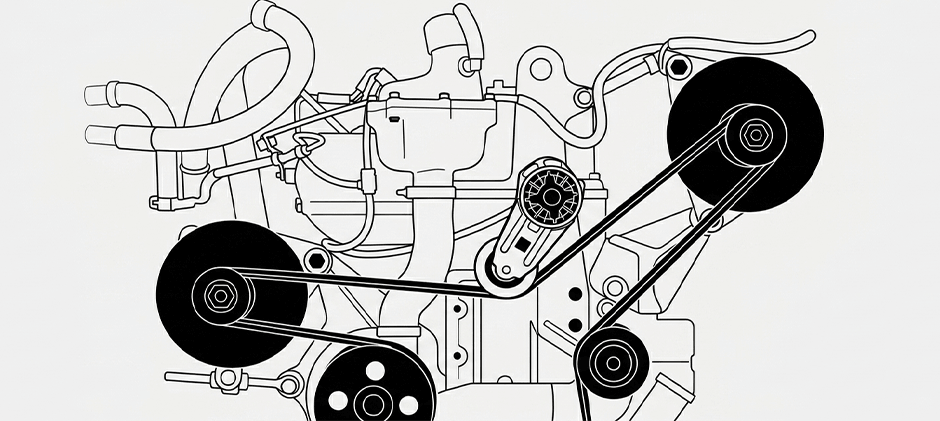
What Causes Serpentine Belt Noises?
The serpentine belt takes power from the engine crankshaft and sends it to key parts like the alternator, water pump, cooling fan, and hydraulic pump. If any part in this system starts acting up, strange noise is usually the first warning sign. There are many reasons why the belt squeals. Sometimes it’s a red flag that a bigger part failure is on the way. Here are the most common causes.
Improper Belt Tension
Your serpentine belt has to fit pulleys just right — neither too loose nor too tight.If it’s loose, the belt slips on spinning pulleys, especially under heavy load when you run hydraulics, and makes that high-pitched squeal. If it’s too tight, it puts extra stress on all component bearings. This also brings squealing or whining sounds, and burns out alternator and water pump bearings way earlier than normal.
Pulley Misalignment
Every pulley in the system needs to line up perfectly. Even a tiny misalignment on the alternator, hydraulic pump or belt tensioner forces the belt to run at an angle. The belt rubs against pulley grooves nonstop, causes a rhythmic chirping sound, and wears down the belt edges really fast.
Contamination
Heavy equipment works in rough off-road conditions with plenty of mud, dust, water and debris. When these get stuck between the belt and pulleys, the belt slips and makes noise. Fluid leaks are even worse. Oil, hydraulic fluid or coolant can soak into the belt. These liquids soften and swell the belt’s rubber, making it slip nonstop and squeal all the time. Once a belt gets contaminated, it’s damaged for good — you have to replace it right away.
Wear and Tear
Serpentine belts don’t last forever. After long hours of running, the rubber hardens, turns brittle and starts cracking. The belt surface can also get glazed and shiny, losing grip on pulleys and slipping with loud noise. Check for obvious signs: frayed edges, cracks on the ribbed side, or missing rubber pieces.
Failing Component Bearings
Sometimes the squeal isn’t from the belt itself. Parts driven by the belt — alternator, water pump, idler and tensioner pulleys — all have internal bearings. When bearings start going bad, they turn rough or even start to seize up. This creates heavy drag on the belt, making it slip and squeal loudly. You’ll usually hear grinding or rumbling noise along with the belt squeal.
Is a Serpentine Belt Squeal Harmful?
Absolutely yes. That squealing noise is a clear warning sign that something’s not right.
The biggest risk is the belt breaking completely. If a worn or damaged serpentine belt snaps, your equipment will shut down right away. The water pump stops moving coolant, so the engine can overheat fast. The alternator quits working too, and your battery won’t charge anymore. On most machines, you’ll also lose all hydraulic power.
Even if the belt doesn’t snap, the underlying problem can trigger more and more damage. A slipping belt keeps key parts from running at the right speed. If the alternator spins too slowly, it can’t charge the battery properly, which leads to all kinds of electrical troubles. A slipping water pump can cause engine overheating — and that can end up ruining the whole engine.
On top of that, if the noise comes from a bad bearing in the alternator, hydraulic pump or other part, the belt fails completely. A locked-up pulley can tear up a brand-new belt in no time, and even damage other pulleys nearby. What starts out as just a simple belt squeal can quickly turn into multiple expensive parts breaking down at once.
How to Fix Serpentine Belt Noise?
Shut off the engine, take out the key, and let the engine cool down fully. Never touch or check the belt system while the engine is running.
Do a Visual Check
Grab a flashlight and look closely at the belt. Check for cracks, frayed edges, a shiny glazed surface, or oil and coolant stains. If the belt is soaked with any fluid, you’ve found the issue. You’ll need to fix the leak first, then install a new belt.
Check Belt Tension
With the engine off, push down firmly on the belt at its longest stretch between two pulleys. As a simple rule, it shouldn’t bend down more than half an inch. If it feels loose or soft, the tension is too low.
Most heavy equipment comes with an automatic belt tensioner. Just check the marks on it to see if it’s still within the normal working range. If the tensioner arm shakes or bounces heavily while running, the tensioner is worn out and you need to replace it.
Inspect pulleys and other parts
If the belt looks fine and tension is good, the problem is probably one of the pulleys.
- Take off the serpentine belt first — this is necessary to check everything properly. Before removing it, snap a photo or sketch the belt routing so you can put it back correctly.
- Spin each pulley by hand. Every pulley should turn smoothly with no noise. This includes the alternator, water pump, hydraulic pump, idler pulleys and tensioner pulley.
- Pay attention to sound and feel. If you hear grinding or feel rough, stiff resistance, the bearing inside that part is going bad.
- Also check for wobble. Wiggle each pulley side to side. There should only be a tiny bit of movement. Too much wobble means a worn bearing or a failing part.
Check Pulley Alignment
With the belt removed, use a straight ruler or a laser alignment tool. Lay it across two or more pulley faces. All pulleys should line up perfectly flat against the straight edge. If one pulley sits offset with a gap behind it, you have a misalignment issue that needs fixing.
Replace any belt that’s worn, stretched or contaminated. Stay away from belt dressing spray. It only covers the problem temporarily. It makes the belt sticky, picks up more dirt and debris, and ends up wearing out the belt and pulley bearings faster.
If the automatic tensioner or pulley bearing is faulty, replace the whole tensioner assembly. It’s better to change the tensioner when you change the belt. And if parts like the alternator or water pump have bad bearings, replace them.
Serpentine Belt Chirp Noise
Let’s tell the difference between a loud belt squeal and a bird-like chirp.
A squeal is a long, high-pitched noise. It usually happens when the belt is too loose, contaminated with fluid, or slips because a part is stuck. A belt chirp sounds totally different — it’s sharp, short, and follows a steady rhythm. When engine RPM goes up, the chirp happens faster, but the tone stays the same.
- The top cause of belt chirping is misaligned pulleys. When pulleys aren’t lined up straight, the belt ribs rub and ride up the sides of the pulley grooves as the belt moves in and out. This small friction and movement creates one quick chirp every time the belt makes a full rotation.
- Worn belts can also chirp, but if you hear this specific rhythmic sound, you should check pulley alignment first.
Use a straight edge or laser alignment tool to find which pulley is out of line. Adjust its position by adding shims, or check and tighten its mounting bracket. Make sure the bracket isn’t loose or bent to get everything perfectly aligned again.
Conclusion
Routine maintenance lets you catch belt issues early, before they turn into big problems. Keep an eye out for any unusual sounds or changes while your equipment is running, and fix issues right away.
When you need to replace parts like serpentine belts, FridayParts is your reliable go-to source. We carry compatible parts for all major brands and equipment models. Shop all your replacement parts right here in one place.
