

When your engine idles steadily, the RPM needle keeps jumping up and down, which is really annoying. This guide explains why the off-road equipment rpm drops while idling, so you can get your machine running smoothly again.
Is a Fluctuating Idle Ever Normal?
It’s pretty normal for heavy equipment RPM to drop a little for a second. This usually happens when you suddenly put extra load on the engine.
For instance, when you use hydraulics, the hydraulic pump needs lots of power. It will slow the engine down briefly before the control system adjusts it back. Turning on bright work lights or air conditioning can also cause this short RPM drop. These small speed changes are common and nothing to worry about.
But we’re talking about another issue here: unstable idle speed. The engine RPM keeps going up and down nonstop even with no extra load. It may even run rough and feel like it’s about to die out. This means there is something wrong that needs fixing right away.
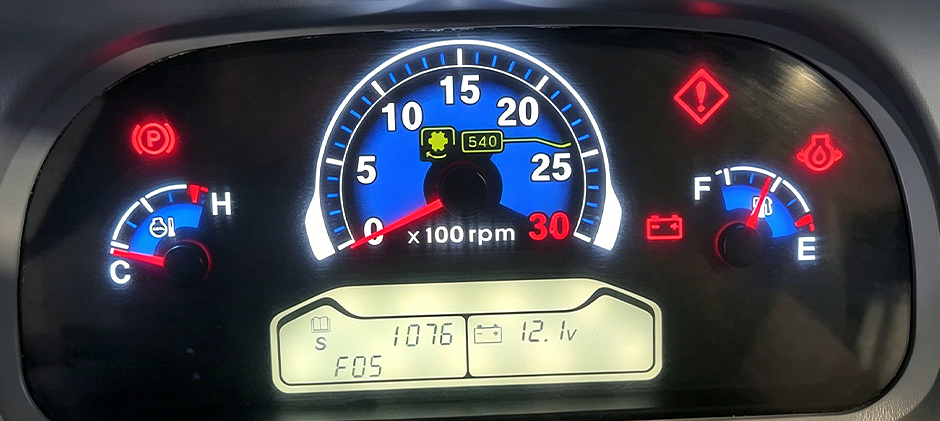
Top Reasons Your Heavy Equipment’s RPM Drops at Idle
1. Fuel System Issues
The fuel system is the core part of a diesel engine. If it can’t get steady, clean diesel fuel, unstable idle will show up right away.
- Clogged Fuel Filters: Heavy machines work in dusty and muddy sites, so dirt easily gets into the fuel system. A blocked fuel filter slows down fuel flow to the injection pump. The engine doesn’t get enough fuel, so its speed drops and runs rough. When the engine system tries to add more fuel to fix it, RPM goes up again, which causes the up-and-down idle speed.
- Bad Fuel Injection Pump: This key part sends fuel to injectors at the right pressure and time. After long use, inside parts wear out, making fuel supply unstable. That leads to shaky idle. Sometimes the inner parts get stuck and can’t adjust fuel supply properly, so the engine can never run smoothly at idle.
- Dirty or Broken Fuel Injectors: Injectors spray fine fuel mist into engine cylinders. Once they get covered in carbon or go wrong, fuel sprays unevenly or at the wrong time. Fuel can’t burn fully inside cylinders, making the engine run unbalanced. You will feel strong vibration, slow dropping speed and rough idle.
When fixing idle speed troubles, check the fuel system first. In most cases, replacing new fuel filters can solve the problem quickly, or rule out common faults and help you save both time and repair cost.
2. Air Intake and Exhaust Restrictions
Engines need proper air flow just like they need enough fuel. Any air supply problem will mess up steady idle speed easily.
- Dirty Air Filter: The air filter keeps dirt out of the engine. If it gets full of dust and dirt, less air can get inside for burning fuel. This throws off the air and fuel mix, causing weak power, black exhaust smoke and unstable idle. It’s an easy check that many people ignore.
- Air Intake Leaks: For turbo diesel engines, all air pipes must stay sealed tight. Unlike gas engines, leaks in pipes behind the turbo will let compressed air escape. The engine can’t get enough dense air it needs, which confuses the control system and makes RPM keep going up and down nonstop.
3. Faulty Engine Sensors and ECU Issues
Modern heavy machines use various sensors to send data to the engine control unit. Wrong data will make the ECU adjust fuel supply and ignition timing incorrectly.
- MAP Sensor: It detects air pressure inside the intake pipe to let the ECU know engine working load. A broken sensor sends wrong readings, making the ECU add too much or too little fuel. This directly causes idle RPM to go up and down constantly.
- Crankshaft & Camshaft Position Sensors: These key sensors tell the ECU engine running speed and part positions. Once they start failing, they send unstable signals. The ECU fails to judge engine status properly, leading to engine misfire, wrong timing and rough idle.
- ECU Program Issues: This fault happens less often. If the ECU software does not match your machine’s original settings, system communication will go wrong, and you will notice obvious unstable idle speed.
4. Internal Mechanical Engine Problems
If you’ve checked fuel, air and sensors and found nothing wrong, the problem is likely inside the engine.
Low Engine Compression: This is a more serious fault. All engine cylinders need equal pressure to run steadily. When one cylinder has low compression, it can’t output enough power, throwing the engine off balance. This issue shows up most clearly when idling. Common reasons for low compression:
- Worn piston rings
- Damaged head gasket
- Loose or poorly sealed valves
You can run a compression test to confirm the problem. Professional technicians can check pressure inside every cylinder and find out which one is way too low.
A Step-by-Step Troubleshooting Guide
Don’t feel stressed about fixing this issue. Just follow these easy steps to find the cause quickly. Before you start repairing, check the running status carefully. Does the RPM keep fluctuating all the time, or only after the engine gets warm? Does it happen when you use hydraulic functions? Also, check for strange noises and exhaust smoke. The more details you note, the faster you can locate the fault.
1. Begin with simple checks
- Change a new air filter
- Replace all fuel filters
2. Check fuel quality
Make sure you use good, clean diesel. Water and dirt mixed in fuel will damage the whole fuel system. You can also use injector cleaning additives for simple maintenance.
3. Look out for leaks
Do a full visual check. See if there are fuel leaks around fuel pipes, the injection pump and injectors. Also check all air intake hoses and clips for cracks and loose connections.
4. Ask experts for help
If the problem still exists after all above checks, contact a professional repairman. The fault is probably caused by broken sensors, faulty injection pumps or internal engine parts. Technicians can do these checks for you:
- Read fault codes from the engine control unit
- Carry out cylinder compression tests
- Test fuel injectors and injection pumps
Wrapping Up
Dropping idle RPM often comes with the engine warning light on, which is a clear sign something is wrong. You can usually fix this issue yourself with easy common solutions like replacing fuel and air filters. FridayParts supplies premium parts at budget-friendly prices, with huge stock covering most major heavy equipment brands.
