

V-plows help you clear snow faster because it can change shape for different jobs. If you run a skid steer, loader, or truck in winter, you already know snow is not always the same. Sometimes it is deep and packed, sometimes it is light and fluffy, and sometimes you must work close to curbs and buildings. A V-plow gives you more control in all these situations, so you can finish work with fewer passes.
What Makes V-Plows So Versatile?
A V-plow is versatile because it has two wings that move on their own. The wings meet at a strong center hinge (pivot), and hydraulic cylinders let you change positions without leaving the cab.
This means one plow can act like several different tools, depending on what the snow and the job site need.
This “change shape anytime” ability is the main reason a V-plow can outperform a fixed straight blade. You do not have to switch attachments or fight the snow with the wrong blade shape.
4 Key V-Plows Positions and How to Use Them
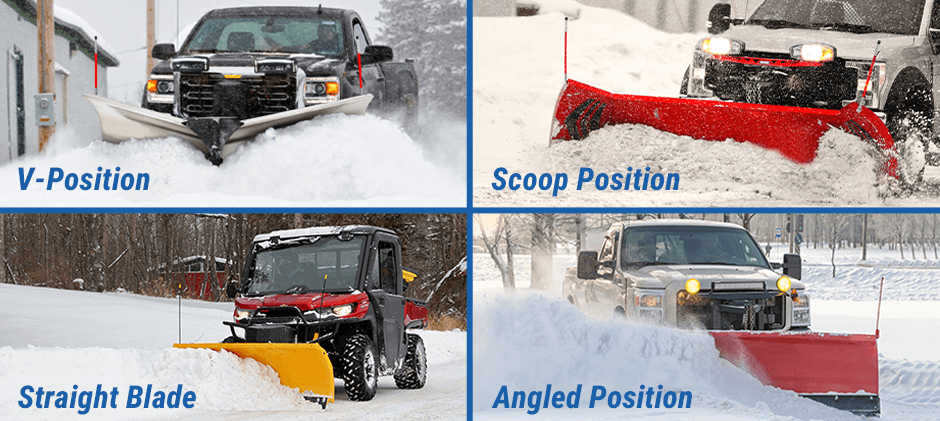
Using the right plow position is the easiest way to save time and effort. Each position controls where the snow goes, and that changes how clean and fast the job will be.
1. The V-Position
Use the V-position to break open deep, hard snow. Point both wings forward to make a “V,” then drive into the drift. This shape splits the snow and pushes it to both sides, so the machine does not feel like it is hitting a wall.
This is the best first move after a big storm. It helps you open lanes in lots, long driveways, and access roads.
2. The Scoop Position
Use the scoop position to hold snow and move it where you want. Angle the wings back to form a bowl shape that keeps snow from spilling off the sides. This helps when you need to carry snow across a parking lot to a pile.
Scoop also helps with stacking. Because it “contains” the snow, you can push and build piles more neatly in tight spaces.
3. The Straight Blade Position
Use the straight blade position for normal pushing and wide clearing. Lock both wings in a straight line when you want a clean, wide pass, especially for lighter snow or final cleanup.
Many V-plows also have trip edges on each wing for better protection. If one side hits a hidden object, it can trip without the whole blade slamming as hard.
4. The Angled Position
Use the angled position to throw snow to one side on purpose. Angle both wings left or both wings right so the snow rolls off in one direction. This is very useful when you must keep snow away from doors, loading docks, sidewalks, walls, and curb lines.
This position helps reduce leftover “trails” of snow. It also helps you avoid pushing snow into places where it will block people or equipment.
“For a commercial operator, a V-plow isn’t a luxury; it’s a force multiplier. It lets one machine do the work of several, saving time on every single job.”
What Are 4 Common V-Plows Maintenance Hotspots?
A V-plow needs more checks because it has more moving parts. If you want it to work during the worst storm, focus on these areas before and during the season.
- Hydraulic Cylinders and Hoses: These parts move the wings. Look for wet spots, cracks, rub marks, and leaks, because cold weather and high pressure are hard on seals and hose covers.
- The Center Pivot: This hinge takes a lot of force every time the wings move and every time the blade hits heavy snow. Watch for looseness, uneven wear, and “slop,” which can mean the pin or bushings are wearing out.
- Locking Pins: These pins and latches hold the wings in position. Dirt, ice, and rust can make them stick, so keep them clean and make sure they move freely.
- Cutting Edges and Trip Springs: Cutting edges wear down as they scrape pavement and gravel. Trip springs help protect the blade when you hit an obstacle, so broken or weak springs can lead to more damage.
Conclusion
A V-plow works best when you match the position to the job and keep the moving parts in good shape. Use V for breaking drifts, scoop for carrying and stacking, straight for general clearing, and angled for tight work along curbs and buildings. This reduces extra passes and helps you control where the snow ends up.
Simple maintenance prevents most breakdowns. Check hydraulics for leaks, keep the center pivot tight, make sure locking pins do not seize, and replace worn cutting edges before they get too thin. When it’s time for repairs, FridayParts is your reliable partner. Whether you need parts for the plow itself, like Hydraulic Cylinders & Components, Bushings, and Cutting Edges, or critical components for your machine, such as Engine Spare Parts, Starters, Alternators, and Filters, we have you covered. Keep your equipment running strong all winter long.
