

Wheel bearing noise on off-road machinery is one of those problems that can go from “annoying hum” to “lost hub, damaged spindle, fire risk, and downtime” faster than most people expect. This guide helps you do three things quickly: (1) tell whether the noise is likely a wheel bearing, (2) reduce the chance of a sudden failure while you plan the repair, and (3) fix it correctly—without wasting time on guesses or parts that don’t fit.
What is a Wheel Bearing?
A wheel bearing is the set of rolling elements that lets a wheel hub rotate around a spindle/axle with low friction while carrying a load. On off-road machines, wheel bearings deal with:
- High radial load (machine weight, payload, side loads from uneven ground)
- Shock load (potholes, rocks, curbs, demolition debris)
- Contamination (mud, water, dust, sand, pressure washing)
- Heat (brakes, long travel, high-speed roading between sites)
Common wheel bearing designs you’ll see in off-road equipment
- Tapered roller bearings: common on many hubs; can often be cleaned, inspected, re-greased, and adjusted for correct preload/endplay.
- Sealed hub/bearing units: replaced as an assembly; faster to swap, but no re-greasing or adjustment.
- Planetary/final-drive hubs: noise can come from the hub gears or bearings inside the planetary set, so diagnosis must be careful.
A key point: wheel bearing noise is not just “a sound.” It’s often a sign of metal wear (pitting/spalling), loss of lubrication, or incorrect preload—all of which can destroy the hub and spindle if ignored.
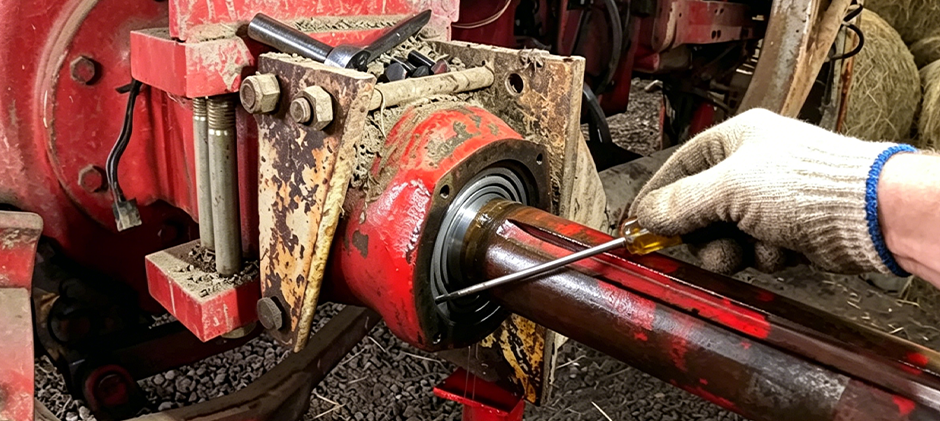
How to Fix Wheel Bearing Noise Quickly?
There’s no honest “magic spray” that repairs a damaged bearing. A real fix is inspection and correction—usually replacement. Still, there are fast, practical steps that often (a) pinpoint the cause, (b) stop a non-bearing issue that sounds like a bearing, or (c) stabilize the machine long enough to move it safely to a service area.
Before any method below:
- Park on level ground, lower attachments, set the brake, and chock wheels.
- Use proper lifting points and rated jack stands. Never rely on hydraulics alone.
1) Rule out “fake bearing noise” in 10–20 minutes
Many machines get misdiagnosed because other parts make a very similar hum or grind.
Quick checks
- Tire and tread damage: cupping, separated lugs, or embedded rocks can howl like a bearing.
- Loose wheel nuts/rim damage: can click, knock, or change pitch under load.
- Brake drag: a seized caliper, stuck pad, or contaminated parking brake can overheat the hub and create a constant grind.
- Driveline/CV/U-joint issues (on some machines): can create a growl that changes on turns.
Why this matters: if the sound is brake drag or tire-related, “replacing bearings” won’t fix anything—and you’ll still have heat and risk.
2) Use heat as a fast indicator
Heat is one of the best quick signals for a failing bearing or brake drag.
How to do it safely
- After a short travel cycle, check the hub temperature with an IR thermometer (preferred).
- Compare side-to-side under similar load and speed.
Interpretation
- One hub significantly hotter than the others often points to bearing friction or brakes dragging.
- If you smell hot grease or see smoke: stop and do not continue operation.
3) Check for wheel play and roughness
If the machine can be safely lifted:
- Grab the tire at 12 and 6 o’clock and rock it (vertical play).
- Grab at 3 and 9 o’clock (lateral play).
- Spin by hand and feel for roughness, crunching, or a tight spot.
What it means
- Noticeable play often suggests bearing wear, loose adjustment, or hub/spindle damage.
- Roughness while spinning (especially with the brake released) supports a bearing issue.
Important: If removing brake load changes the feel (for example, play disappears when the brake is applied), you may be seeing a brake or hub fitment issue—don’t skip inspection.
4) If serviceable: correct bearing adjustment/preload
Some off-road hubs use tapered rollers with an adjustable nut. If the bearing is not destroyed and the issue is incorrect preload/endplay, adjustment can reduce noise and prevent rapid wear.
High-level process
- Remove the hub cap/dust cover.
- Inspect for burnt grease, metal flakes, and damaged seal lips.
- Set preload/endplay per spec (often involves torquing while rotating, then backing off and re-setting).
- Install a new cotter pin/locking device as required.
When this helps
- Noise started soon after a hub service.
- There’s looseness but no signs of heat damage or metal contamination yet.
When it won’t help
- If the bearing has pitting/spalling, the noise returns quickly—replacement is the right fix.
5) Re-grease or correct lubrication
A bearing that runs low on grease can start to hum. Re-greasing can reduce noise only if surfaces are not already damaged.
Do it right
- Use the correct grease type (wrong grease can break down with heat).
- Avoid overfilling a sealed cavity; excess can raise temperatures.
- Replace damaged seals—fresh grease won’t survive a bad seal.
Red flags
- Metallic glitter in grease
- Burnt odor / dark, cooked grease
- Blue discoloration on bearing parts (heat damage)
6) Replace the bearing
For many off-road machines, the quickest real fix is replacing:
- The wheel bearing set (inner/outer + seal), or
- The full hub/bearing unit assembly.
What makes replacement go smoothly
- Match by machine serial number and hub configuration.
- Confirm dimensions and hardware style before ordering.
- Replace seals and inspect the spindle/race seats—new bearings won’t last on damaged surfaces.
7) If noise is not the wheel bearing, check adjacent driveline systems
If your quick tests don’t point to the hub, the sound may come from the driveline, transmission, or axle components—especially if the noise changes with gear shifts or under torque.
For repairs beyond the hub, it helps to source the right families of components from one place—both heavy equipment bearings (engine bearing categories, but also useful when you’re building a parts cart and standardizing bearing suppliers) and compatible transmission parts (clutches, shafts, seals, valve-body related items, and other drivetrain pieces) so downtime doesn’t stretch into multiple orders.
What Causes a Wheel Bearing to Become Worn?
Wheel bearings wear out for a few predictable reasons in off-road work:
- Seal failure → contamination: water and grit get in, grease gets pushed out.
- Low or wrong lubrication: overheats and scars rolling surfaces.
- Incorrect preload/installation damage: over-tight or misaligned bearings run hot and fail early.
- Overloading and side loading: heavy lifts, uneven ground, aggressive turning with load.
- Brake heat transfer: dragging brakes cooks the grease and hardens seals.
- Pressure washing directly at seals: forces water past seal lips.
Even if the machine is “not that old,” one bad seal or one overheating event can shorten bearing life drastically.
How to Test Which Wheel Bearing Is Bad?
Use a short, repeatable routine:
- Road-test pattern (if safe): note whether the hum/grind changes with speed and whether it changes when steering left vs right on a clear, level area.
- Temperature comparison: IR thermometer on each hub after a similar travel cycle.
- Lift-and-check play: 12/6 and 3/9 rocking test, then spin test.
- Eliminate brake drag: confirm brakes release fully; check for abnormal pad contact or parking brake binding.
- Confirm with inspection: if in doubt, open the hub—metal in grease is a clear verdict.
Fast Reference Table
| What you notice | Likely cause | Quick action you can take | What not to do |
|---|---|---|---|
| Humming that rises with speed | Bearing wear or tire cupping | Check tire tread first; compare hub temps | Keep traveling long distances “to see if it goes away.” |
| Grind + hub very hot | Bearing friction or brake drag | Stop, IR temp, inspect brakes and hub | Hose it down with water and keep running |
| The wheel has play (12/6) | Loose adjustment / worn bearing | Lift safely, confirm play, plan bearing service | Ignore it; it can damage the spindle and hub |
| Noise changes on turns | Load shifting across the hub | Confirm with temp + play checks | Replace random parts without testing |
| Crunchy feel when spinning | Pitted bearing/damaged race | Replace bearing set or hub unit | Add grease and assume it’s fixed |
Conclusion
Wheel bearing noise is a warning, not a feature. Quick checks—temperature, play, brake drag, and spin feel—usually tell you whether it’s safe to move the machine or time to stop and repair. When replacement is needed, accurate fitment and quality parts prevent repeat failures. We support owners as an aftermarket parts supplier with high-quality products at affordable prices, a vast inventory, and wide compatibility across many heavy equipment brands—so you can reduce downtime and keep your fleet moving.
