

If you’ve ever bought gear oil, you’ve probably come across the API GL-4 and GL-5 ratings. You may be wondering: What’s the difference between GL-4 vs GL-5 gear oil, and which one is right for your equipment?
What Is the American Petroleum Institute?
The American Petroleum Institute, or API, is a leading group for the oil and gas industry. A key job of theirs is setting performance rules for lubricants like gear oil.
These standards help equipment makers, repair technicians and machine owners all use the same guidelines. If you see an API grade on gear oil, it tells you how well the oil works in different working conditions.
Gear Oil API Grades
API uses a GL rating system for gear lubricants, from GL-1 all the way up to GL-5. The higher the number, the more heavy pressure and stress the oil can handle.
- GL-1 to GL-3: Made only for light use. They’re barely used on modern heavy-duty machines now. They don’t have the extreme pressure additives needed to shield gears under heavy loads.
- GL-4 and GL-5: These are the most widely used grades for off-road equipment. They work great for gears running in tough conditions.
When your equipment’s drive system deals with more torque, pressure and heat, pick a higher GL grade. It will keep parts well lubricated and prevent wear and tear.
The Difference Between GL-4 and GL-5
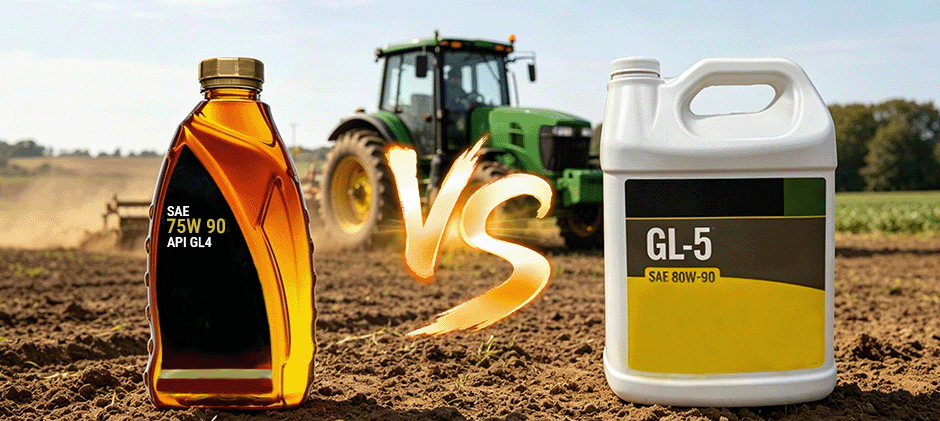
The biggest difference between GL-4 and GL-5 gear oil is the amount of extreme pressure (EP) additives. These additives are made from sulfur and phosphorus. When gears work under heavy pressure, the gear teeth get extremely hot fast. The additives then form a tough protective coating on steel gears. This coating wears down first as gears turn, so the actual gear teeth stay undamaged and avoid scratches or severe wear.
GL-5 has around twice as many EP additives as GL-4. That’s why it works perfectly for hypoid gears, such as those in tractor final drives and differentials that endure extreme pressure.
Still, there’s a downside. The high sulfur in GL-5 can corrode soft yellow metals like brass, bronze and copper, especially at high temperatures. Its strong protective layer sticks too firmly to these soft parts. When the coating wears off, it rips tiny bits of the metal away with it. Many manual transmissions, including older models and those with synchronizers, have brass or bronze parts like sync rings, bushings and thrust washers. GL-5 is too harsh for these components. Over time, it causes heavy wear, rough gear shifts, and even permanent part failure.
GL-4 only has half the EP additives. It delivers enough protection for regular manual transmissions and standard gears that don’t face extreme pressure. Its lower sulfur content won’t corrode delicate yellow metal parts, so it’s safe for these gearboxes.
When to Use GL-4 Gear Oil?
Pick GL-4 if your gear systems need solid extreme pressure protection, and also have delicate parts inside. For off-road machines, these are the common uses:
- Manual transmissions: Most have brass or bronze synchronizers. GL-4 protects steel gears well, and won’t wear down synchro rings.
- Transaxles and transfer cases: These parts usually run under moderate loads and often include yellow metal components.
- Standard spiral bevel gears: Ideal for setups that don’t deal with heavy shock loads.
If your equipment manual calls for GL-4, it’s because stronger EP additives in GL-5 will damage internal parts. Never replace GL-4 with pure GL-5 oil.
When to Use GL-5 Gear Oil?
GL-5 gear oil is designed for the toughest working conditions and is essential for protecting heavily loaded drivetrain parts. It is often required for:
- Hypoid gears: Found in most modern differentials and final drives on tractors, dozers, and wheel loaders. These gears have a sliding motion between teeth, which creates very high pressure. GL-5 oil is needed to handle this load and prevent metal wear.
- Planetary final drives: These systems multiply torque and operate under constant heavy load. They need strong extreme-pressure (EP) protection, which GL-5 provides.
- Heavy-duty differentials: Whether open, limited-slip, or locking, differentials work under high stress and pressure. GL-5 helps protect the gears from wear in these conditions.
Using GL-4 oil in hypoid gear systems is risky. The oil film may not be strong enough under extreme pressure, which can lead to: Breakdown of lubrication film, Rapid gear wear, Serious damage to gear teeth over time.
What Type/Weight Gear Oil Should I Use?
We’ve covered the key differences between GL-4 and GL-5. Next, you also need to pick the right oil viscosity, also known as oil weight.
Manufacturers run thorough tests on their machines, so they list exactly which oil to use for the best performance and longer service life. The manual will show two key details: the API rating like GL-5, and the viscosity grade such as 80W-90 or 75W-140.
- Viscosity (e.g. 80W-90): This describes how easily the oil flows in different temperatures. The number with W (short for Winter) means how well it flows when cold. The second number stands for its thickness when the machine is running hot. The right viscosity keeps gears protected on startup, and stops the oil from getting too thin at high temperatures.
- API Rating (e.g. GL-5): This refers to the oil’s additives and overall performance, which we talked about earlier.
You need to follow both specs exactly. For example, if your tractor’s final drive requires 80W-90 GL-5, use oil that meets both standards.
Final Thoughts
GL-5 contains about twice as many additives as GL-4, giving it maximum protection under heavy pressure. GL-4 provides moderate protection and is safer for yellow metal components like brass and bronze. Always check your owner’s manual first. It’s the best guide for choosing the right gear oil for your machine.
At FridayParts, you’ll find a wide range of high-quality aftermarket parts at affordable prices, compatible with many major heavy equipment brands.
