

Code P0449 stands for “Evaporative System Vent Control Circuit Malfunction.” This guide will explain what causes it, and provide a step-by-step process to diagnose and fix the issue, getting you back on the road with confidence.
What Does the Code P0449 Mean?
Diagnostic trouble code (DTC) P0449 stands for “Evaporative System Vent Control Circuit Malfunction.” It means your vehicle’s PCM (Powertrain Control Module) has found a problem with the EVAP vent valve circuit. This is a standard OBD code that works for every car built after 1996.
our car’s main computer (PCM) controls the vent valve for the fuel vapor system. It sends out signals to open or close the valve, then waits for a matching electrical feedback signal. If the feedback doesn’t line up with what the computer ordered — say it tells the valve to shut but the circuit stays open — it logs P0449 and turns on your check engine light.
Even though this code is universal, part placement and troubleshooting steps differ a little across brands like Chevy, Ford and Toyota. Keep your vehicle’s service manual handy for accurate repair steps.
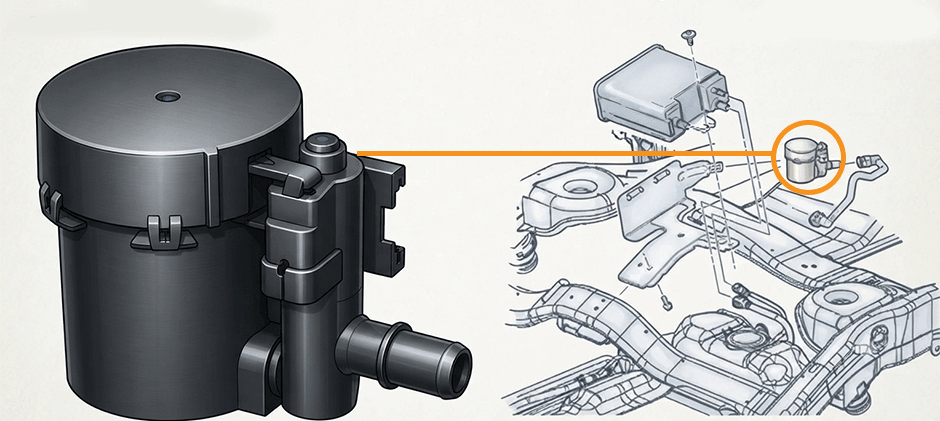
What Is the EVAP System?
The EVAP (Evaporative Emission Control) system keeps fuel vapors from escaping into the air. It’s a sealed system made up of hoses, valves, and sensors.
- Instead of letting fuel vapors escape, the system stores them in a charcoal canister.
- When driving conditions are right, the PCM opens the purge valve. The engine vacuum then pulls the vapors into the engine, where they’re burned during normal operation.
- The vent valve (also called the vent solenoid) is an important part of this process. Most of the time, it stays open to let fresh air into the canister. Every so often, the PCM closes the vent valve to seal the system and check for leaks.
The P0449 code appears when the PCM detects an electrical problem in the vent valve circuit.
Common Symptoms of the P0449
Lots of fault codes mess up how your car drives, but P0449 barely affects performance most of the time. The main sign you’ll see is the check engine light lighting up. You might run into these other issues:
- Light gasoline smell: The vent valve gets stuck open, letting fuel fumes leak out.
- Trouble pumping gas: If the vent valve stays shut, air can’t escape the tank when you fill up, so the pump keeps cutting off early.
- Failed emissions inspection: This is why you need to get it fixed. Any active P0449 code will make you automatically fail emissions testing.
What Are the Causes of P0449?
P0449 means there’s an electrical fault, so the issue is almost always wiring or electrical parts between your car’s computer and the vent valve. Here are the most frequent problems, ordered from most to least common:
- Bad EVAP vent solenoid: The coil inside can burn out, or dirt and gunk jam the valve open or shut. This part sits under the vehicle by the fuel tank, so mud, water and rust wear it down fast.
- Damaged Wiring or Connectors: The wiring running to the vent valve often gets damaged. Check for frayed, snapped or rusted wires. Dirt and corrosion on the plug will also create a weak electrical connection.
- Blown fuse: A fuse protects the vent valve circuit. This doesn’t happen as often, but a blown fuse cuts power entirely and triggers the trouble code.
How to Fix the P0449 Code?
You can track down what’s causing P0449 by testing parts one by one. Follow simple steps to find the issue on your own.
Tools You’ll Need:
- OBD-II scanner
- Digital multimeter
- Basic hand tools (socket set, screwdrivers)
- Jack and Jack stand
- Safety glasses
Step 1: Do a visual check
Test parts only after a full visual look.
- Find the vent valve and charcoal canister; they’re almost always under the car next to the fuel tank.
- Look over all wires running to the vent valve. Watch for fraying, melted spots or broken cables. Make sure the wiring harness is fastened tight so it doesn’t rub against the frame or exhaust pipes.
- Check the plug connected to the vent valve. Is it fully snapped in? Are there rust, dirt or water trapped inside?
Step 2: Check the EVAP fuse
Grab your owner’s manual to find which fuse powers the EVAP vent circuit. Pull the fuse out and see if it’s burnt. If it is, replace it with a new fuse with the exact same amp rating. If the new fuse blows right away, there’s a short somewhere in the wiring you’ll need to track down.
Step 3: Test the vent solenoid
If the visual check and fuse look fine, test the vent valve itself.
Resistance test
Unplug the vent valve connector. Switch your multimeter to ohms (Ω). Touch the two-meter probes to the two metal pins on the valve. A working solenoid usually reads between 14–30 ohms (look up your vehicle’s exact spec in the service manual).
- Infinite/OL reading: The internal coil is broken, valve is defective.
- Reading close to zero: The coil is shorted, valve is bad.
Actuation test
You can also check if the valve moves mechanically. Use jumper leads to run 12V battery power to the solenoid pins. You should hear a clear click when the valve opens/closes. No click means the valve is stuck and needs replacing.
Step 4: Test the wiring circuit
If the vent valve passes all tests, the fault is in the wires between the valve and car computer.
- Power wire test: Leave the vent valve unplugged, turn your ignition to ON. Use the multimeter to check voltage on the plug. One wire should read 12V. If not, the power line is cut or the fuse is blown.
- Ground/control wire test: The second wire is controlled by the PCM to trigger the valve. You’ll need a wiring diagram to test continuity between the plug and PCM. If you find damaged wiring along the harness, fix it up.
Step 5: Replace out the broken part
Once you find the faulty piece—vent valve, damaged wire or corroded plug—repair or replace it. Aftermarket EVAP vent valves are cheap and easy to install.
When repairs are done, use an OBD-II scanner to erase the P0449 trouble code. Drive the vehicle for a couple of days to confirm the check engine light doesn’t pop back on.
Conclusion
If your P0449 code comes from a bad EVAP vent solenoid, replace it as soon as you can. Waiting can lead to extra issues and more trouble codes popping up. Need a replacement part? Head to FridayParts.com, type your part number or vehicle model into the search bar to find matching vent solenoids. If you don’t have much experience fixing cars, take it to a professional mechanic instead.
