

Code P0521 means: “Engine Oil Pressure Sensor/Switch Range/Performance.” It shows up when the engine computer (ECM) thinks the oil pressure reading does not make sense for the current engine speed (RPM) and engine temperature. (If you are seeing a high circuit code instead, check out DTC P0523 – Engine Oil Pressure Sensor Circuit High).
This code is common on many engines (including work trucks), and the same problem can happen on off-road machines, too. Most of the time, it is a sensor, wiring, or oil maintenance issue—not instant engine failure. But you must check it, because really low oil pressure can destroy an engine fast.
What Causes Code P0521?
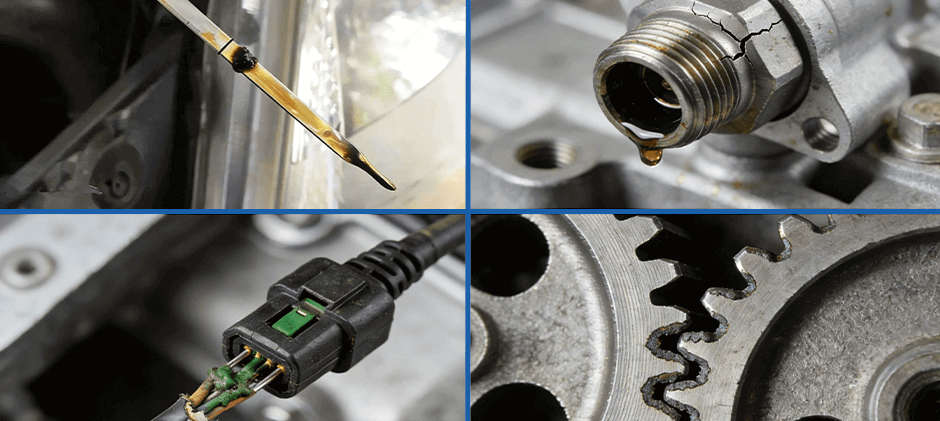
There are four main reasons P0521 appears.
1. Dirty or Low Oil
This is the most common cause.
- A low oil level can cause low or unstable oil pressure.
- Old, dirty oil can turn into sludge.
- Sludge can block small oil passages and may make the sensor read incorrectly.
For a deeper dive into this, read about the Top 10 Causes of Low Oil Pressure in an Engine.
2. Faulty Oil Pressure Sensor
Oil pressure sensors work in heat and vibration all day. Over time, they can fail and send bad signals, such as:
- Readings that jump up and down,
- Readings stuck too high,
- Readings stuck at zero.
3. Wiring and Electrical Issues
Off-road machines see mud, water, vibration, and rubbing hoses. Wiring problems are common:
- broken wires,
- loose connectors,
- green corrosion in plugs,
- rodent damage,
- rubbed-through insulation.
Any of these can change the signal and confuse the ECM.
4. Mechanical Engine Wear
This is less common, but it is the most serious.
If the oil pump is weak or the engine bearings are worn, the oil pressure may truly be low.
“Always verify the oil level before replacing any parts. It is the cheapest and fastest diagnostic step.”
3 Symptoms of P0521 You Should Watch For
You may notice these before you even scan the machine.
- Check Engine Light: the warning light comes on. (Unsure what it means? Read What Does a Check Engine Light Mean?)
- Strange gauge behavior: the oil pressure gauge may bounce, drop to zero, or stay high all the time.
- Engine noise: if pressure is truly low, you may hear ticking, tapping, or clattering (metal parts are not getting enough oil).
How to Diagnose and Fix P0521
Follow these steps in order. They go from easiest to hardest.
Step 1: Check the Oil Condition
- Park safely and check the dipstick.
- If oil looks very dark, thick, or sludgy, do an oil and filter change. You can follow our guide on When and How to Change Your Engine Oil Filter & Oil.
- Clear the code and see if it comes back.
Simple rule: “Fix the oil first. Then chase sensors.”
Step 2: Inspect the Sensor and Wiring
Find the oil pressure sensor on your engine (location depends on model—often on the engine block).
Check for:
- oil leaking through the sensor body,
- broken wires or rubbed spots,
- loose connector fit,
- corrosion (often green) on terminals.
If the connector is dirty or loose, clean/repair it before replacing parts.
Step 3: Replace the Oil Pressure Sensor
If the oil is good and the wiring looks okay, the sensor is a common fix.
On some engines, there may be a small screen/filter under the sensor that can clog. If your engine uses one, clean or replace that screen when you replace the sensor.
After replacement:
- clear the code,
- run the engine,
- Watch the gauge/readings.
Step 4: Verify with a Mechanical Gauge
If P0521 still returns, you need to know the truth: Is oil pressure actually low?
- Remove the sensor.
- Install a manual mechanical oil pressure gauge.
- Compare readings at idle and higher RPM (follow your service manual specs). You should also know What Is Normal Oil Temperature to ensure accurate testing.
Results:
- Mechanical gauge shows normal pressure → likely an electrical problem (wiring/connector/ECM input).
- Mechanical gauge shows low pressure → likely a real mechanical issue (oil pump, pickup screen, worn bearings, etc.). Stop heavy operation and repair before engine damage happens.
Is It Safe to Drive with P0521?
Do not run the machine under heavy load until you know if the oil pressure is truly okay.
P0521 is often a bad sensor, but you cannot assume that. If the oil pressure is really low, the engine can be damaged in minutes.
Rule of Thumb:
- If the engine is quiet and runs normally, it may be a sensor or wiring issue.
- If you hear clattering/ticking and the gauge shows very low pressure, shut it down and check immediately.
Conclusion
P0521 means the ECM isn’t happy with the oil pressure signal. Most of the time, it’s low/dirty oil, a bad oil pressure sensor, or wiring/connector trouble—not instant engine failure. Check oil level/condition first, then inspect the sensor plug and harness. If the code returns, confirm real pressure with a mechanical gauge.
If you need parts to finish the repair, FridayParts can help you source common P0521-related items like an engine oil pressure sensor/switch, connector pigtail, and (on some engines) the small sensor screen/filter, plus oil filters and other oil-system components.
