

When your heavy machinery’s dashboard displays the P2200 fault code, it is signaling a problem with the Nitrogen Oxide (NOx) sensor circuit. This sensor is a critical part of your machine’s modern emissions control system, specifically the one located on “Bank 1.” Ignoring this code can lead to reduced engine performance, increased fuel consumption, and potential damage to your expensive exhaust aftertreatment system. This guide will help you understand what P2200 means, its symptoms, causes, and how to resolve it.
What Is Fault Code P2200?
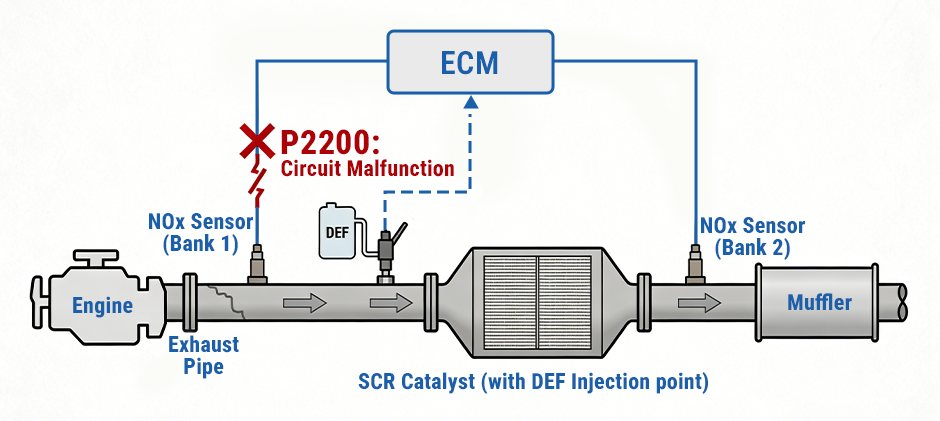
The P2200 code means the Engine Control Module (ECM) has detected a malfunction in the electrical circuit of the NOx sensor for Bank 1. In simpler terms, the ECM is not receiving a proper signal from this sensor. “Bank 1” refers to the side of the engine that contains the first cylinder. This sensor measures the amount of nitrogen oxides in the exhaust, providing essential data for the Selective Catalytic Reduction (SCR) system to work effectively.
4 Key Symptoms of a P2200 Code
You will likely notice several clear warning signs when a P2200 NOx sensor circuit malfunction occurs.
- Check Engine Light Is On. This is often the first and most obvious indicator that the ECM has logged a fault.
- Increased DEF Consumption. The SCR system may default to injecting more Diesel Exhaust Fluid (DEF) to compensate for missing sensor data.
- Reduced Engine Power. Many modern machines will enter a “limp mode” to prevent damage, significantly reducing engine power and performance.
- Failed Emissions Test. The machine will produce higher levels of harmful emissions, which is a critical issue for compliance in many regions.
Why You Cannot Ignore a P2200 Warning
“A P2200 code is more than just an emissions warning; it’s a direct threat to your machine’s performance and the health of its aftertreatment system. Prompt action protects your equipment and your bottom line.”
What Are the Main Causes of P2200?
The issue triggering a P2200 code is almost always located within the NOx sensor system. The most common culprits include:
- A Faulty NOx Sensor. The sensor itself is the most frequent cause of failure, often due to extreme heat, vibration, and exposure to exhaust gases over time.
- Damaged Wiring or Connectors. The wiring harness leading to the sensor can become corroded, frayed, or melted due to its proximity to the hot exhaust system.
- Exhaust Leaks. A leak in the exhaust pipe near the sensor can allow fresh air to enter, which skews the sensor’s readings and causes the ECM to register a fault.
- A Faulty ECM. While rare, the Engine Control Module can have an internal fault, but all other possibilities should be ruled out first.
How to Diagnose and Fix the P2200 Error
Follow these steps to systematically find and fix the source of the P2200 trouble code.
Step 1: Visually Inspect the Sensor and Wiring
Begin by locating the Bank 1 NOx sensor, which is installed in the exhaust pipe before the SCR converter. Carefully inspect the sensor for any physical damage. Follow its wiring harness and check for any signs of melting, chafing, or corrosion on the wires and at the connector. Ensure the connector is plugged in securely.
Step 2: Check for Exhaust Leaks
With the engine running, carefully inspect the exhaust system around the NOx sensor. Look and listen for any leaks between the engine manifold and the sensor. Black soot stains around flanges or joints are a clear sign of a leak that must be repaired.
Step 3: Test the Sensor’s Circuit
Using a multimeter and your machine’s service manual, check for the correct voltage and ground at the sensor’s electrical connector. This test will confirm whether the sensor is receiving the power it needs to operate and help differentiate between a wiring problem and a failed sensor.
Summary
Fixing a P2200 code is essential for maintaining the performance and compliance of your modern off-road machinery. By carefully inspecting the wiring, checking for exhaust leaks, and testing the circuit, you can accurately identify the problem. Most often, the solution is replacing the faulty NOx sensor with a new, reliable unit.
Don’t let a sensor fault sideline your equipment. For durable components designed to restore your machine’s emissions system to proper working order, explore our complete range of NOx sensors at FridayParts.
