

P0404 usually means the EGR system is not moving or reporting position the way the ECU expects. If your loader, excavator, telehandler, or generator throws P0404 (EGR Control Circuit Range/Performance), the engine computer is seeing an EGR command vs. EGR feedback mismatch. In plain words: the machine asked the EGR valve to open or close, but the sensor signal didn’t line up. Fixing it fast helps protect power, fuel use, and uptime.
What Does P0404 Mean?
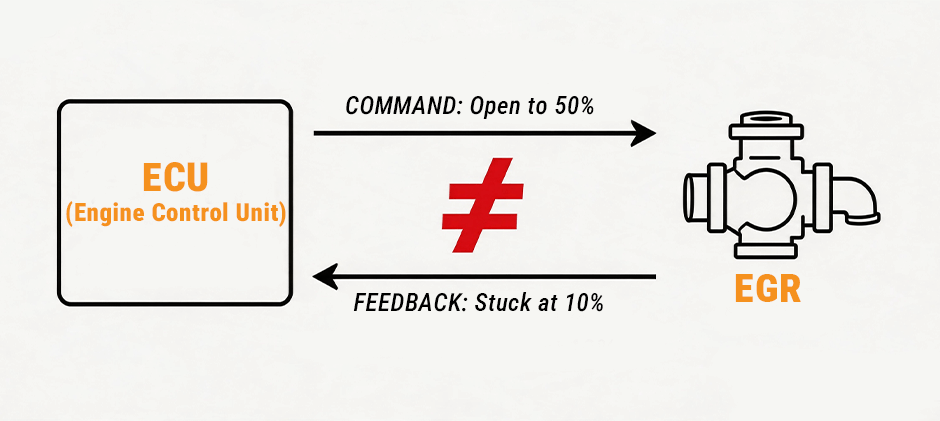
P0404 is an EGR control performance code. Many engines label it as “EGR Control Circuit Range/Performance” or “EGR Position Performance.” The ECU expects the EGR valve to move to a target position, then it checks an EGR position sensor (built-in or separate). If the reading is out of range, slow, stuck, noisy, or inconsistent, it sets P0404.
Off-road equipment can show P0404 with different symptoms than trucks. Some machines will derate (limit power) quickly, while others run “okay” but smoke more or idle roughly. Brand and engine family matter, but the core idea is the same: command doesn’t match feedback.
Why Does P0404 Happen?
Carbon buildup is the most common cause. Exhaust soot can pack into the EGR valve and passages, making the valve stick or move slowly, especially after lots of idle time, light-load work, or short duty cycles.
Electrical problems are just as important as sticky soot. A loose connector, bent pin, rubbed-through harness, water intrusion, or poor ground can distort the EGR position signal and trigger P0404 even when the valve itself is fine.
Sensor drift can trigger “range/performance” codes. If the EGR position sensor signal becomes noisy or biased, the ECU may “think” the valve is in the wrong spot, even if it moves.
Related phrases you may see include “EGR valve stuck,” “EGR position sensor,” and “EGR actuator performance.” These are common neighbors to P0404 and point to the same troubleshooting path.
6 Common Signs You Have a P0404 Problem
P0404 often shows up as a power loss under load. Off-road owners commonly notice the machine feels weak when pushing, digging, lifting, or climbing.
Here are 6 common P0404 symptoms:
- Reduced power / derate (especially under heavy load)
- Rough idle or unstable idle speed
- Poor throttle response (hesitation)
- More smoke (black or gray) than normal
- Lower fuel economy
- Hard starts or occasional stalling (less common, but possible)
“If it runs fine at idle but falls on its face working hard, EGR control is a prime suspect.”
When Is P0404 “Urgent”?
P0404 is urgent if the machine derates, overheats, or smokes heavily. Continued operation with a stuck-open EGR valve can create rough running and soot loading. Continued operation with a stuck-closed EGR valve can increase NOx and sometimes affect aftertreatment behavior on certain engines.
Stop and inspect soon if you see multiple codes. P0404, paired with codes like P0401 (EGR flow insufficient) or P0402 (EGR flow excessive) can narrow the direction: not moving enough vs. moving too much.
How Do You Diagnose P0404 In 7 Steps?
Step 1: What Codes Are Stored Besides P0404?
Extra codes are clues you should not ignore. Write down all active and stored codes, and note whether the code returns immediately or only after working the machine.
Step 2: What Changed Right Before The Code Appeared?
Recent changes can point straight to the cause. New battery, welding work, pressure washing, harness repair, intake work, or sensor replacement can all lead to connector or ground problems.
Step 3: How Do The Connector And Pins Look?
A 2-minute connector check can save hours. Unplug the EGR connector and look for corrosion, loose pins, oil contamination, broken locking tabs, or stretched terminals that don’t grip well.
Step 4: How Does The Harness Look Along The Frame?
Rub points are a top cause on off-road machines. Follow the harness near engine mounts, clamps, sharp edges, and hot zones (turbo/exhaust). Look for melted loom, cracked insulation, and pinch marks.
Step 5: What Happens If You Command The EGR With A Scan Tool?
Commanded movement vs. feedback is the heart of P0404. If you have a tool that can run an EGR functional test, watch:
- Commanded EGR position (target)
- Actual EGR position (feedback)
- Stability (no “jumping” values)
If the command changes but feedback doesn’t, you likely have a sticking valve, failed actuator, failed sensor, or wiring issue.
Step 6: Is Carbon Blocking The Valve Or Passages?
Carbon can physically prevent correct movement. Remove the EGR valve (when safe and cool) and inspect for heavy soot, crusty deposits, or a valve that doesn’t move smoothly.
Step 7: What Do Voltage, Ground, And Signal Look Like?
Electrical testing confirms the root cause. Use a wiring diagram when possible and check:
- Proper reference voltage (if used)
- Solid ground
- Clean signal return (no shorts to power/ground)
If you’re not comfortable probing connectors, a tech can do this quickly without damaging pins.
How Do You Fix P0404? 5 Practical Fixes
Fix depends on whether the problem is sticking, sensing, or wiring. Use the steps below in order, because they go from simplest to most “parts-heavy.”
1. How To Fix P0404 With A Connector Repair
Bad connections create “ghost” EGR problems. Clean light corrosion, repair broken locks, and replace damaged terminals or pigtails when needed. Make sure the connector seats fully and the harness has strain relief.
2. How To Fix P0404 With Harness Repair
A rubbed wire can mimic a bad EGR valve. Repair chafed sections correctly (sealed splices, heat shrink, proper routing). Then secure the harness away from heat and movement.
3. How To Fix P0404 With Cleaning (When Appropriate)
Cleaning can help if the valve is sticky from soot. If the valve is mechanically sound and the actuator/sensor tests good, careful cleaning of the EGR valve and mating surfaces may restore smooth movement.
Clear statement: Do not “force” the valve with tools if it has an electronic actuator. Forced movement can damage gears or the sensor.
4. How To Fix P0404 By Replacing The EGR Valve Or EGR Position Sensor
Replacement is often the correct fix when movement is inconsistent or feedback is unstable. If the actuator binds, the sensor signal is erratic, or the valve won’t track commands, replacement is usually more reliable than repeated cleaning.
5. How To Fix P0404 By Checking For Related Airflow Issues
Air leaks and clogged intake paths can confuse EGR control. Inspect intake boots, clamps, and (where applicable) components around EGR mixing. On some engines, a restricted path can cause unusual feedback behavior.
What Parts Commonly Solve P0404?
Most P0404 repairs come down to a small list of parts. Depending on your engine design, the “fix parts” are often:
- EGR valve assembly (with actuator)
- EGR position sensor (if separate)
- EGR gasket/seal kit
- EGR connector pigtail (when pins are loose/corroded)
- Related sensors (less often), when diagnosis proves the signal is wrong
Clear statement: Replace parts only after a basic connector/harness check. That’s the fastest way to avoid repeat downtime.
When Should You Call A Tech?
Call a tech when the machine derates hard, or you can’t verify command vs. feedback. If you don’t have a scan tool that shows EGR commanded/actual position, you may end up guessing. A good technician can confirm the failure path quickly with live data and electrical tests.
Summary
P0404 means your EGR valve isn’t matching the position the ECU expects, and the cause is usually soot, wiring, or a failing actuator/sensor. Start with codes + connector + harness, then confirm movement vs. feedback, and only then decide whether cleaning or replacement makes sense. When you’re ready to get your machine back to work, FridayParts can help you source the common fix items.
