

When your machine shows the P0335 code, it means there’s a problem with the crankshaft position sensor “A” circuit. Knowing this fault code is the first step to preventing downtime and engine damage. This guide explains what the P0335 code means, what signs to look for, what causes it, and how to fix it.
What Is Fault Code P0335?
The P0335 code means your machine’s Engine Control Module (ECM) isn’t getting a signal from the crankshaft position sensor.
This sensor tells the ECM how fast the crankshaft is turning and where it’s positioned.
If the ECM can’t read that signal, it can’t control ignition or fuel delivery correctly — making the engine run rough or stop running completely.
In heavy machinery, this isn’t a small issue. It’s a serious problem that needs attention right away to avoid engine damage.
4 Common Symptoms of a P0335 Code
When the P0335 code appears, your machine will usually show clear signs of trouble.
Look out for these common symptoms:
- Engine Will Not Start: The ECM may block ignition if it doesn’t see a signal from the crankshaft sensor.
- Sudden Stalling: The engine might shut off suddenly during use, creating a safety risk and downtime.
- Rough Idle or Misfiring: The engine may shake, sound uneven, or run roughly because the timing is off.
-
Reduced Power or Weak Acceleration: The machine may feel slow and lack power for heavy work.
Why You Should Not Ignore a P0335 Warning
Running your machine with a P0335 fault can cause more than just poor performance — it can lead to engine failure.
When the crankshaft signal is missing or wrong, the engine fires at the wrong time.
This can cause internal damage that’s much more expensive to fix than replacing the sensor.
“A P0335 code is your engine’s way of shouting for help. Fixing it right away protects your machine and your investment.”
What Are the 4 Common Causes of P0335?
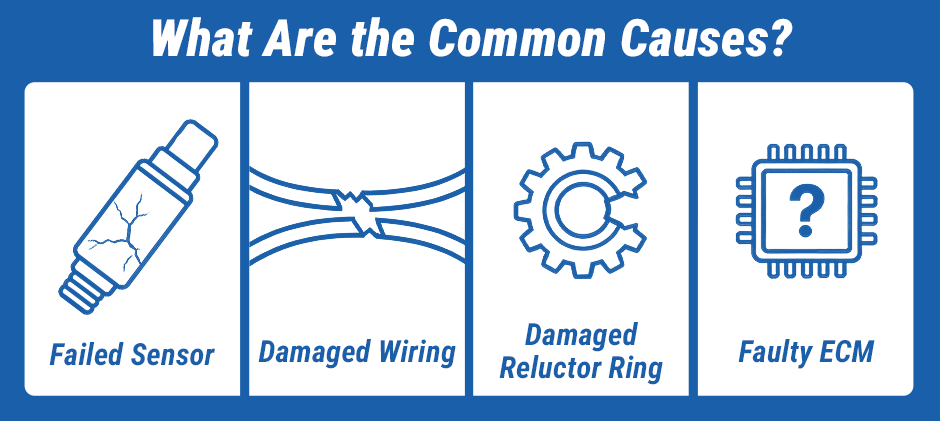
There are a few possible reasons why the crankshaft position sensor circuit may stop working.
Here are the most common ones:
- Failed Crankshaft Position Sensor: The sensor can fail due to heat, vibration, or age.
- Damaged Wiring or Connectors: The wires going to the sensor face dirt, moisture, vibration, and heat. Over time, they can become cracked, corroded, or loose, breaking the connection.
- Damaged Reluctor Ring (Tone Wheel): The sensor reads the teeth on this ring attached to the crankshaft. If the ring is broken, loose, or dirty, the sensor can’t get a good signal.
- Faulty ECM (Engine Control Module): This is rare, but possible. Test everything else before assuming the ECM is at fault.
How to Diagnose and Fix the P0335 Error
Here’s a simple step-by-step way to check what’s wrong and fix it.
You’ll need basic tools, a multimeter, and your service manual.
Step 1: Inspect the Sensor and Wiring
Start by finding the sensor — it’s usually near the crankshaft pulley or the engine block.
- Check the sensor body for cracks or signs of wear.
- Make sure the connector is clean, dry, and firmly plugged in.
- Check the wiring harness for damage like frayed wires or corrosion.
- Clean dirt or oil off before reconnecting it.
Step 2: Test the Sensor’s Circuit
Use a multimeter to test for proper voltage or resistance based on your service manual.
This test helps you tell if the sensor is still good or if it has failed.
If you have access to an oscilloscope, you can check the sensor’s live signal pattern — this will show if it’s working correctly or not.
Step 3: Check Mechanical Components
If the sensor and wiring look good, the problem might be mechanical.
Inspect the reluctor ring (also known as the tone wheel) for:
- Missing teeth
- Warping
- Buildup or metal debris
This step might need some disassembly, so if you’re not sure, ask a mechanic for help.
Conclusion
When you need a new sensor, choose one that’s strong, well-built, and made for heavy-duty use. For reliable replacements that fit correctly, check out the complete selection of crankshaft position sensors at FridayParts — built to help your equipment keep working hard.
