

When an off-road machine starts making a new squeal, chirp, or grind near the front of the engine, it’s easy to keep working and “deal with it later.” That’s how a small cooling-system problem turns into overheating, warped components, and lost hours. This guide helps you identify water pump sound patterns, confirm the issue with quick checks, and decide what to replace before a breakdown—focused on heavy equipment and off-road machinery, not passenger cars.
What a Failing Water Pump Sounds Like?
A belt-driven water pump has moving parts under constant load: bearings, shaft, pulley, and the internal impeller. When wear begins, sound is often the first clue—especially at cold start, during throttle changes, or under hydraulic/work load when engine RPM changes.
Below are the most common “bad water pump” noises you’ll hear on off-road equipment, what they usually mean, and how to verify them.
1) High-pitched squeal
What it usually is: belt slip, pulley misalignment, or bearing drag.
Why it happens: if the pump bearing starts to bind or the belt loses proper tension, the belt can slip across the pulley face.
Quick checks
- Listen at cold start: squeal that fades may still be a belt/tension issue.
- Inspect the belt for cracks or glazing.
- Look for belt dust around pulleys (fine black powder).
What to do
- If the belt shows glazing/cracks or tension is clearly off, replace it. A worn belt is cheap compared to the overheating risk, especially on machines working in heat and dust. Consider a correct-fit water pump belt when you see squeal + visible wear.
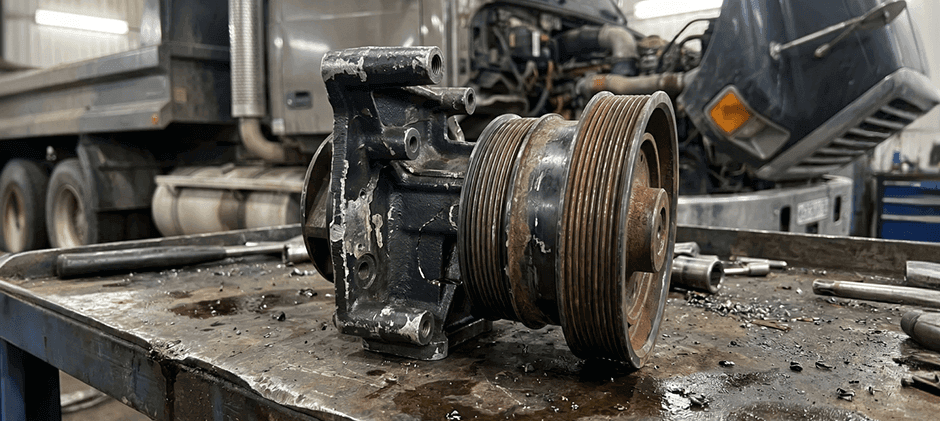
2) Chirping (rhythmic “bird” sound) at idle
What it usually is: slight bearing roughness, pulley wobble starting, or belt tracking issues.
Why it happens: a pulley that’s beginning to run out of true can make the belt “chirp” once per revolution.
Quick checks
- Watch the pulley while the engine idles (from a safe distance). Any visible wobble is a red flag.
- Check alignment across adjacent pulleys (misalignment can also chirp).
What to do
- Treat chirping as “early warning.” Plan parts and downtime now—because this noise often becomes grinding later.
3) Grinding/growling
What it usually is: bearings near failure (metal-on-metal).
Why it happens: bearings lose lubrication or pit from age/contamination; heavy vibration accelerates it.
Quick checks
- Noise usually gets louder with RPM.
- Often paired with pulley wobble and/or coolant seepage.
What to do
- Stop scheduling “one more shift.” Grinding means the pump is close to failing. If the belt-driven pump locks up or the belt breaks, coolant circulation stops, and overheating can happen fast.
If replacement is needed, start with a quality-fit water pump and plan to address related wear items at the same time (belt, hoses, clamps, thermostat, coolant).
4) Whining or groaning
What it usually is: belt slipping under load, tension problem, or pulley surface issue.
Why it happens: under load, belt tension and pulley grip matter more; a weak belt or tensioner can “sing.”
Quick checks
- Does the whine change when the electrical/hydraulic load changes RPM?
- Any glazing on the belt? Any coolant leak near the pump (coolant can reduce belt grip)?
What to do
- Replace the belt if worn and re-check tension. If the pulley is loose or misaligned, address the root cause—otherwise the new belt won’t last.
5) Rattle
What it usually is: loose pulley, failing bearing, or adjacent rotating component (tensioner/idler) rather than the pump itself.
Why it happens: As tolerances open up, the rotating assembly can knock or rattle.
Quick checks
- Confirm the sound source: many “pump rattles” are actually from a weak tensioner or idler.
- If safe and accessible during service, check for play in the pump pulley by hand with the engine OFF.
What to do
- If pulley play exists, treat it as imminent. Rattle is not “normal machine noise.”
How to tell water pump noise from other common noises?
Because many components live in the same area, use this quick comparison:
| Sound | More likely water pump | More likely something else |
|---|---|---|
| Grinding + wobbling pulley | Yes | Less likely |
| Chirp once per revolution | Possible | Belt tracking/idler is common, too |
| Squeal at start-up | Possible | The belt/tensioner is very common |
| Random rattle | Possible | Shields, mounts, tensioner, idler |
Tip: If the noise clearly tracks engine RPM and comes from the front accessory drive area, the pump is on the short list—but confirm with visual checks below.
What a Failing Water Pump Looks Like?
Sound is only half the story. A failing water pump often leaves visible clues. In heavy equipment, dust can hide evidence, so clean the area first (quick wipe-down) and re-check after a short run.
1) Coolant leaks at the front of the engine
What you may see
- Drips/pooling under the front of the engine
- Wetness around the pump housing
- Coolant trails flung by the pulley/fan
Why it happens
- Seal wear, housing damage, or gasket failure.
If a leak appears around the pump-to-engine mating surface, the seal point matters. A water pump gasket is designed to seal between the pump and engine block, and it should be inspected when there’s a coolant leak, sweet smell, low coolant warning, or overheating. The practical guidance is simple: it’s typically smarter to replace the pump and gasket together to avoid paying the labor twice.
2) White crust, rust staining, or corrosion tracks
What it means
- Slow seepage over time. Coolant dries and leaves mineral/crust deposits.
- Corrosion can weaken sealing surfaces and speed up failure.
3) Wobbling or loose water pump pulley
What you may see
- Pulley appears crooked or oscillates at idle
- Belt tracking is inconsistent
Why it matters
- Wobble usually points to bearing/shaft wear. That can shred belts and reduce coolant circulation.
4) Steam, hot smell, or repeated overheating
If the machine is overheating “without obvious coolant loss,” the pump may be slipping (belt) or failing internally.
Common Water Pump Symptoms
A failing water pump rarely shows only one sign. Look for patterns:
Cooling system symptoms
- Overheating under load or at idle
- Temperature swings (runs cool, then spikes)
- Heater performance issues in cab systems (if applicable)
- Low coolant warnings or repeated top-offs
Leak-related symptoms
- Sweet coolant smell
- Visible drip lines or wet hoses around the pump area
- Crust buildup near the gasket edges or the pump weep area
Noise-related symptoms
- New water pump sound that follows RPM (chirp/whine/grind)
- Noise that gets worse as the engine warms or as the workload increases
Water Pump Maintenance Tips
Water pump failures are expensive, mostly because they cause secondary damage (overheat events) and downtime. The goal is to catch wear early and replace related parts once, not twice.
1) Inspect the belt on a schedule
On heavy-duty machinery, belts see heat, vibration, and contamination. A worn belt can slip or break and stop coolant circulation. A reasonable baseline is inspection every 6 months or 500 operating hours, and sooner in harsh conditions. If you see cracking or glazing—or hear squealing under load—shop for a correct-fit water pump belt rather than waiting.
2) Don’t ignore hoses
Water pump hoses can crack, swell, or develop soft spots. That leads to leaks, overheating, and engine damage. If a hose feels soft, looks swollen, or shows surface cracking, replace it with a heavy-equipment-fit water pump hose and re-check clamps and routing.
3) Replace the pump + gasket together during pump service
If a gasket is leaking, the labor is usually the high cost. Replacing only the gasket and reusing a worn pump often means doing the job twice. When the pump comes off, pair it with a matching water pump gasket and address sealing surfaces correctly.
4) Keep coolant clean and correct
Contamination and poor coolant condition accelerate seal wear and corrosion. During pump replacement, it’s smart to:
- Flush and refill coolant (as required by the equipment spec)
- Inspect the radiator and fan
- Replace suspect hoses/clamps
5) Plan parts before peak season
If equipment is running daily, keep a maintenance kit ready: belt + hoses + gasket + pump as needed. When it’s time for a replacement, a compatible water pump matched by machine model/engine/part number reduces the risk of fitment delays.
Conclusion
A bad water pump sound—chirping, whining, grinding, or rattling—often shows up before a full failure. Pair what you hear with what you see: leaks, crust, pulley wobble, and overheating. Catching these signs early helps avoid engine damage and downtime on off-road machinery. For repairs, FridayParts supports heavy equipment with aftermarket cooling parts that balance price and reliability—high-quality products, affordable cost, wide compatibility, and a large inventory to keep machines working.
