

Got a new tractor and this is your first time in the seat? Believe it or not, tractors are the major cause of accidental deaths on farms. It’s no kidding. Every time you get near your tractor, you should treat it as if it wants to kill you all the time. In this article, we gonna talk about 10 fatal mistakes tractor owners can make and tractor safety tips to help you stay safe on the farm.
Common Mistakes Tractor Owners Make
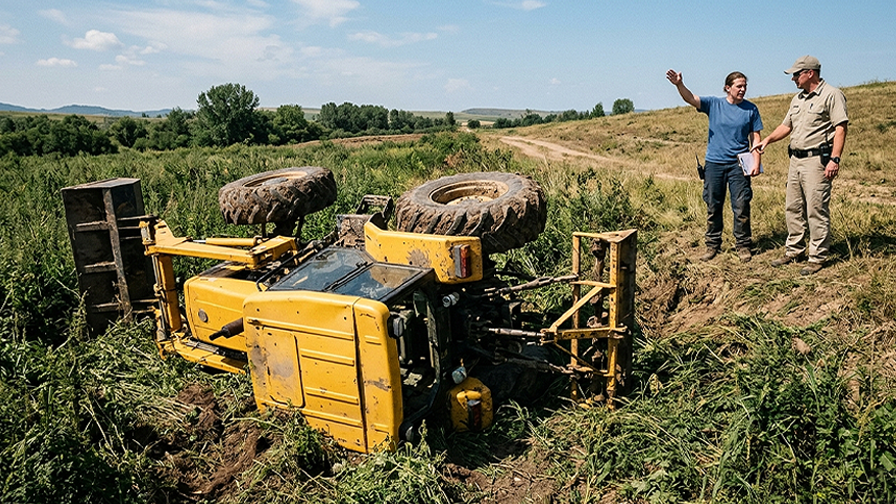
Your Tractors are more dangerous than you could think. Even a small mistake can claim the valuable lives of the riders or someone nearby. Here are 10 fatal mistakes that every tractor user should avoid.
No.1 Driving Too Fast
This is the commonest mistake for tractor users, especially for beginners. Tractors are not designed to be race cars. Speeding up significantly increases the risks of accidents, especially when carrying heavy loads or operating on uneven terrain with hidden stumps and ruts. It is wiser to plan for a slow pace and use low ranges during operation.
No. 2 Loader Raised Too High
Another dangerous mistake is driving with a loader, bucket or forks high in the air. You may probably think it’s ok for the ground is seemingly level. Absolutely No!!! Hidden ruts or holes can cause your tractor to wobble. Don’t risk life on the seeming even ground. With the load raised, this momentum can cause the operator to lose control instantly. Always keep the loader as low to the ground as possible when moving around.
No. 3 Inadequate Ballast Weight
Many new tractor owners mistakenly believe a tractor is perfectly set up for heavy lifting straight from the factory. No. Without sufficient ballast weight on the rear, such as liquid in the tires, wheel weights or a three-point hitch attachment, the weight of a heavy front load can tip your tractor forward. You don’t want your tractor to roll over, right? That’s extremely dangerous.
No. 4 Reaching Near A Spinning PTO Shaft
A spinning Power Take-Off (PTO) shaft has immense torque and spins at speeds of 9 to 15 rotations per second. This can instantly suck in loose clothing, hair or limbs. Never reach a moving shaft. Do remember to disengage your PTO completely before you approach the rear of the machine or even if you just get down for a few seconds. If the safety shield covering the PTO shaft is missing, anyone who comes close to the rear is in danger.
No. 5 Failing To Use Seatbelts and ROPS Properly
Wearing a seatbelt is essential, particularly when the Rollover Protective Structure (ROPS) is in the upright position. The rollbar prevents the tractor from crushing the operator during a tip over, while a seatbelt keeps the operator securely within the protected “cockpit” area.
No. 6 Carrying An Extra Passenger
Don’t try to carry an extra passenger, even a child or ask for a ride. The only safe place to sit on a tractor is in the driver’s seat. Riders sitting on fenders or knees can easily be thrown off during an unexpected bump or quick turn. This can cause injury and, in severe cases, death.
No. 7 Not Using Four Wheel Drive On Slopes
Using a four-wheel-drive tractor offers additional braking power and traction on the hills. Engaging the front axle provides you with better control when slipping or sliding in delicate situations.
No. 8 Side-hilling On Steep Slopes
Driving across the side of a hill, rather than up and down the slope is the major culprit for a sideways rollover. You should avoid side-hilling whenever possible to ensure the tractor has a low center of gravity through added ballast and widened wheel footprints.
No. 9 Improper Hitching & Lack of Stabilization
Hitching a load to a point above the rear axle can cause the tractor to flip backward due to the high torque. Besides, failing to stabilize the tractor by setting the parking brake and lowering all implements to the ground when parked can lead to rolling away or crushing someone when the hydraulics fail. Learn three point hitch and tractor attachment compatibility here.
No. 10 Neglecting Safety Guards & Emergency Equipment
If you remove or fail to replace safety guards, such as PTO shields or debris guards on brush hogs, you may expose yourself and bystanders to entanglement or deadly flying debris. Moreover, many operators fail to carry essential safety gear like fire extinguishers and first-aid kits for unexpected emergencies in the field.
Tractor Safety Tips From Experienced Tractor Operators
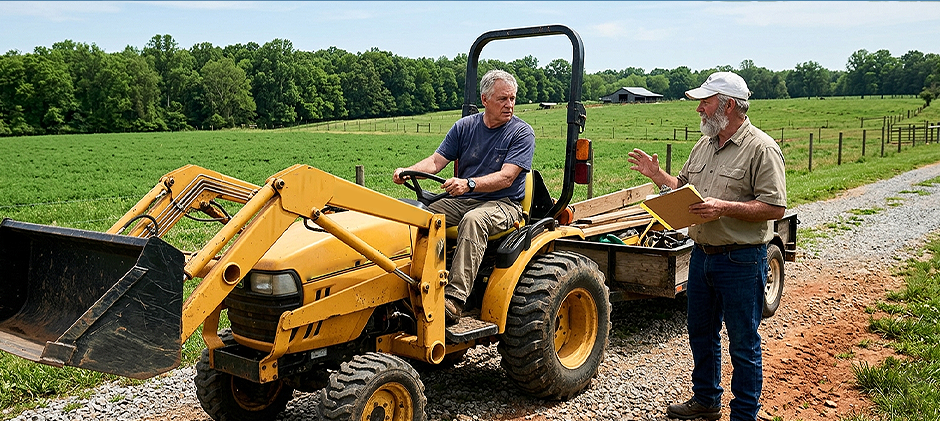
At FridayParts, we understand tractors are an integral part of your workflow and they can be quite dangerous. By following these tips from a farmer with 55 years of tractor operating experience, you can minimize the risk of accidents or damage to your tractor.
Prevent Dangerous Rollovers
Rollovers account for the majority of all tractor accidents annually in the United States. Here are ways to stay safe from unexpected dangers.
- Don’t drive close to ditches, slopes or on steep hills
- Avoid turning at excessive speeds
- Always keep the loader bucket low when moving
- Add weight to your tractor like water in the rear tires to stabilize it
- Make sure your tractor is equipped with a rollover protection structure and a seatbelt
Always Check Your Surroundings When Operating
Knowing your surroundings is a super easy way to avoid accidents. These tips can help you stay safe and feel comfortable when running a tractor.
- Keep a safe distance from people when starting the tractor or changing the attachments
- Never get close to moving parts, drive shafts or implements such as balers, tillers, post hold diggers
- Look around for people every time you turn or change directions
- Beware of powerlines or other obstacles with a raised bucket and never swing or move a load with people around
- Watch behind you as much as in front when driving on the roadways
Keep Daily Tractor Maintenance
Set up a daily check routine before and after you operate your tractor and stick to it. Read more about tractor maintenance and PTO maintenance here.
- Ensure the attachments are secured properly
- Check engine oil and hydraulic fluid
- Check radiator coolant levels
- Check brakes and brake fluid
- Check tire pressure, guards, signals, lights and fan belts.
Wear Proper Clothing
Loose clothing or long hair is easy to get stuck in the moving parts of your tractor
- Wear fitted pants or jeans and tuck in shirt tails
- Always tie up your hair and wear a hair net or a hard hat
- Wear steel-toe boots or sturdy work shoes
- Wear heavy gloves and safety glasses when operating or performing maintenance
Mount and Dismount Safely
Most tractor-related injuries happen from falls when mounting or dismounting. You must take into consideration the following points when operating a tractor.
- Make sure the machine is off and the parking brake is set
- Keep one foot and two hands or two feet and one hand on your tractor when climbing in or out
- Use the handholds, face the tractor, use a 3-point mount
- Ensure your pant cuffs, boot or shirt loops, shirt sleeves, etc. are not caught on any pedals or gear shifter knobs before dismounting
Additional Precautions
Here are other precautions or tips that can help prevent undesirable accidents.
- Don’t stand or work under a lifted bucket or lifted attachment without protective support
- Do not use a mobile phone when operating your tractor
- Keep people, especially children, out of the area where a tractor is operating.
- Make sure to read the operator’s manual and get familiar with safety features, maintenance schedules and general components specific to your tractor
- Attend safety training specific to your tractor operation when necessary
Conclusion
Tractor safety is no small matter. It is closely linked to everyone who operates it. Even a small mistake can cost a lot, and a tiny change can make a difference. Keep in mind these common mistakes and practical tractor safety tips for your own safety and that of your property. Performing regular checks and maintenance before and after using the tractor is essential. At FridayParts, we provide a vast inventory of high-quality tractor parts for various brands. Our selection includes parts for the engine, hydraulic, cooling, driving and electrical systems. Whether you need an overhaul or a small repair, we can cover all your parts needs to ensure a safe and comfortable operating experience.
Related Articles
How to Check Hydraulic Fluid on Your John Deere Tractor
