

The flaking snow on these freaking cold days heralds the arrival of snow removal season with your versatile skid steer. Whether you deal with such a demanding job for the first time or for the fortieth time, you could feel the pain and sort of mess. Any mistake you make means damaged property, ruined machines, wasted time and fuel, all of which are actual losses. In this article, we list 5 common snow removal mistakes newbies make and practical tips to help you plow through the cold winter days.
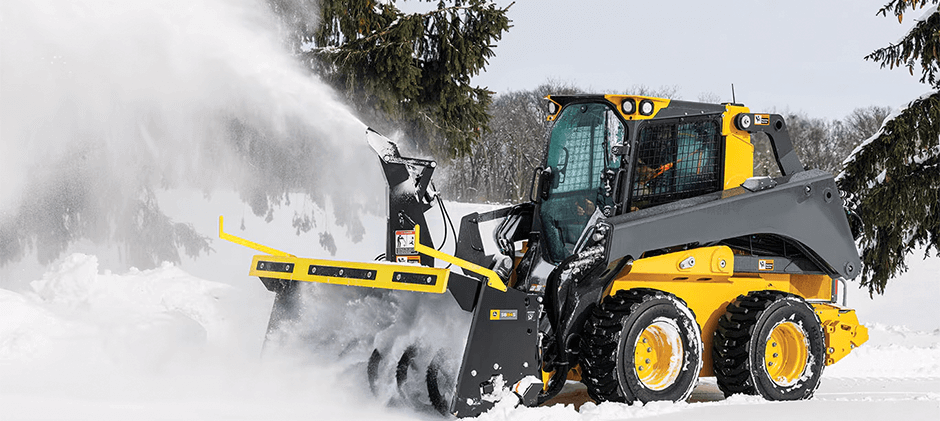
Mistake #1: Being Too Fast & Aggressive
As a beginner at snow removal tasks, you’d probably feel more than excited driving your skid steer to remove mounds of snow yourself, so that you relentlessly pick up speed, nearly leaving “safety first” behind. Being too aggressive may bring about something unexpected. It can make you lose traction and control. You’d likely slam into hidden curbs, manhole covers or frozen ground. This can damage the attachment, the loader arms and the pavement. As a result, you should pay the bill for repairs and replacements or the damaged facilities.
Mistake #2: Ignoring the Pre-season Pavement Inspection
Another blunder of beginners is that they are prone to missing out on pre-season pavement inspection. When winter hits hard, the surroundings are covered by white snow, under which there are potential dangers like parking blocks, raised utility covers and soft landscaping. It is one of the major culprits of costly repairs to both the property and the skid steer.
Mistake #3: Using the Wrong Attachment
There are various snow removal attachments to choose from, including snow bucket, snow plow, snow blower, snow pusher and snow blade. A layman who embarks on removing snow usually chooses the one, not taking into consideration the area he is clearing or the type of snow falling in his region. Selecting the wrong attachment may make it much harder and less efficient to clear the snow, thus adding to the labor and time costs.
Mistake #4: Misplanning Your Pattern
A fourth snow removal mistake that skid steer beginners may make is the lack of a clear snow removal plan. They tend to plow randomly, which can lead to trapping the machines, re-plowing cleared areas and creating inefficiently placed snow mounds.
Mistake #5: Neglecting Pre-and Post-Operation Checks
Snow removal is tough on skid steers, as they have to run in cold temperatures with hydraulic pressure and potential impacts. Skipping necessary checks can give rise to unplanned breakdowns in the middle of a snowstorm, causing costly downtime and safety risks. Likewise, it is often overlooked by freshmen to clean the equipment and perform quick maintenance tasks.
Tips for Skid Steer Beginners in Snow Removal Tasks
As mentioned above, any mistake you make while removing the snow can cause different damages and costs, ranging from a simple waste of time and energy to costly repairs and replacements for your skid steers and facilities. It is wise for new beginners to strictly follow the suggestions below.
Make Good Preparations for the Snow Removal
Being well-prepared for the snowplowing is of pivotal importance. It should include the following three aspects.
1. Check the conditions of your skid steers. To minimise the likelihood of breakdown in the middle of snow removal, you should pay close attention to issues like low hydraulic fluid, worn cutting edges, or low tire pressure.
2. Choose the right attachment. It is unwise to select a snow-removing attachment randomly rather than based on the actual situation you may encounter in this task. A right attachment can make things half done.
3. Do Pre-season Inspection & Plan Your Pattern. It’s essential to inspect the pavement and make a clear plan before you embark on snowplowing yourself. This means minimized damage to your property and facilities as well as enhanced efficiency.
Slow Down When Operating Your Skid Steer
It is of paramount importance that you give priority to the golden principle “Safety First”. Whether you are a greenhand or a veteran, you shouldn’t be overexcited or too aggressive when driving your skid steer to clear the snow, even when it is a critical period. Be calm and steady. Start slow and try to learn the feel of your machine and the surface. Smooth is fast. A stable pace allows for better clearing and prevents leaving snow trails.
Perform Prompt Maintenance After Snow Removal
When you finish the last lane of clearing, here’s a 5-minute to-do list for you.
1. Clean off salt, sludge and ice on your skid steer.
2. Tighten your tire chains.
3. Check the fluid level (engine oil, hydraulics).
4. Grease all fittings.
5. Inspect hoses for leaks.
6. Check attachment cutting edge and trip springs.
Regular inspections and maintenance ensure a smooth snow removal experience. Timely replacement of your failing parts with quality snow equipment parts can make things half done before you embark on this demanding task. As a result, your skid steer and snow attachment are well-braced for the next snowstorm.
Conclusion
In such a chilly winter, snow removal doesn’t have to be a source of stress and mess. By avoiding these common snow removal mistakes and arming your skid steer with reliable parts, you’re not just preventing damage and saving money – you’re building your skills and confidence. With FridayParts, you won’t just be clearing snow; you’re mastering your beloved skid steer, turning a daunting task into a smooth, efficient and satisfying operation. Last thing to remember: Stay steady, stay safe, and conquer the cold!
Newbies Also Read
What Type of Skid Steer Is Best for Snow Removal?
