

February 2, 1887, marked the first Groundhog Day celebration on Gobbler’s Knob in Punxsutawney, Pennsylvania—all centered around this furry little rodent weather forecaster. If the groundhog pops out of its burrow and sees its shadow, it’ll get spooked and scurry back in. That means six more weeks of cold winter weather. If it doesn’t see a shadow, spring is on its way early.
It’s a fun tradition for sure, but Groundhog Day has a more practical side, too. It’s a key checkpoint to shift your maintenance focus. Whether the forecast calls for six more weeks of winter or an early spring, keeping your equipment up and running—and your business profitable—boils down to the maintenance you do right now. This guide will talk about two simple, actionable maintenance plans, tailored to whatever the groundhog’s prediction is.
Why Groundhog Day Matters on the Jobsite?
Groundhog Day is the key time to shift from surviving winter to getting ready for spring. For equipment owners, this isn’t just a folk custom—it’s all about timing your machine upkeep right. The groundhog’s forecast is a clear sign to make a big call: do we step up our winter protection for another six weeks, or start getting everything set up for the busy spring work ahead?
Think of it as a critical crossroads for your maintenance strategy. One way you focus on keeping your machines tough and protected from the still-harsh winter weather. The other way, you switch gears fast to get your equipment running at full capacity, ready for the sudden jump in work when spring comes.
Groundhog Sees Its Shadow, Winter’s Not Over Yet
If the groundhogs recede from their shadows, it’s a clear sign that the winter weather will continue for weeks. Your equipment may have to work in icy, muddy conditions. We must focus on strengthening the systems most susceptible to cold. It’s a strategy for lasting endurance. When winter’s grip refuses to let go, your focus must remain on the core systems that keep your machine alive in the cold.
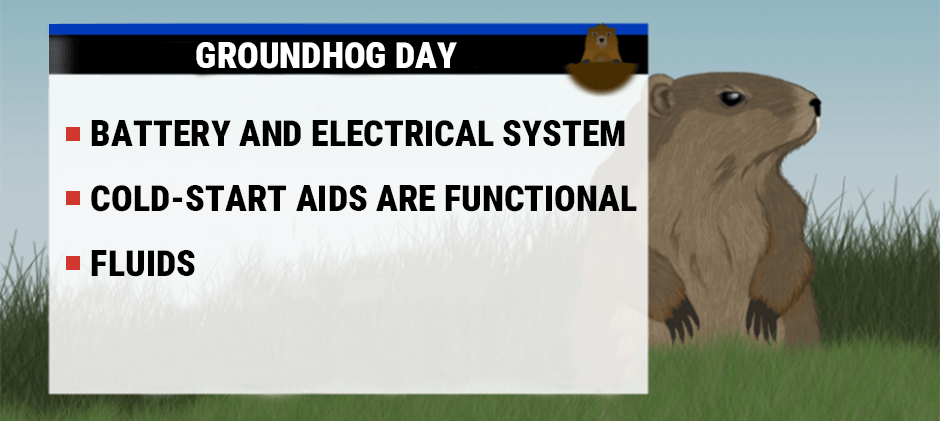
Battery and Electrical System
Cold weather makes your battery work a lot worse. Low temps slow down the chemical reactions inside it, and thicken the engine oil—so your engine needs way more current (the cold cranking amps, or CCA we usually talk about) to start up. A battery that runs fine at 0°C (32°F) might just stop working entirely when it hits -10°C (14°F).
Don’t just check the voltage and call it good—do a load test to see the battery’s real condition. When you’re inspecting it, use a wire brush to clean off any corrosion on the terminals and cable ends, and make sure all the connections are tight. A loose connection means even a great battery can’t deliver all its power. Also, don’t forget to check if the alternator’s working right. If it’s not charging the battery properly, even a brand-new battery won’t last long.
Cold-Start Aids are Functional
Engine block heaters, glow plugs and intake air grid heaters aren’t nice-to-haves—they’re must-haves for keeping your engine healthy in the cold. Starting a big diesel engine cold without these tools causes huge wear on pistons, cylinders and bearings, because thick oil can’t flow the way it should.
Before the next cold spell hits, test these systems. Plug in the block heater and make sure it’s warming the engine block up. For machines with glow plugs or grid heaters, turn the key on and off to check the indicator light works right, and that the system’s pulling power. A bad relay or a burnt-out glow plug is cheap and easy to fix—and it stops your engine from getting serious damage.
Fluids
Coolant (antifreeze) prevents the engine from freezing. If it fails, the engine block will freeze and crack.
It is best to measure the freezing point of the coolant using a refractometer. It is common practice to mix antifreeze and water 50/50. But still make sure it can handle the lowest temperatures you can get there. And the oil and hydraulic fluid. Be sure to use multi-grade oil, such as 5W-40, which can flow smoothly at low temperatures. If the oil is as cold as thick tar, the engine will be damaged when started.
No Shadow, Launching into an Early Spring
If the groundhog doesn’t see its shadow, the message is clear: spring is right around the corner. An early spring means the busy season starts sooner, too. Now it’s time to shift focus from just getting through winter to getting your machine firing on all cylinders. Wake your machine from its winter rest and perform a full-system check and cleanup. This proactive prep makes sure your machine’s ready to handle full workloads from day one—so you can keep productivity high right out the gate.
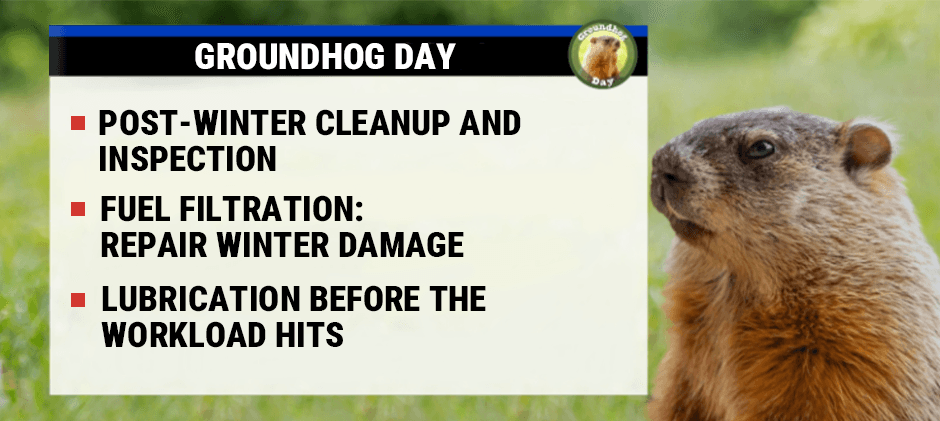
Post-Winter Cleanup and Inspection
Winter leaves a mess of salt, dirt and moisture on your machine—these can mess up its parts bad.
- Start with the cooling system. Your radiator, hydraulic oil cooler and A/C condenser are probably coated with dirt and de-icing chemicals. This gunk acts like an insulator, making the cooling system work way less effectively. When the weather warms up and you start working the machine hard, it’ll overheat fast. Use a pressure washer (stand far enough to not bend the fins) and a good degreaser to clean these parts really well.
- While you’re at it, check all the coolant hoses for cracks, swelling or soft spots—cold weather makes rubber brittle and easy to break.
- Last, do a thorough walk-around of the whole machine, and pay extra attention to the undercarriage. Check the track tension, and look for weird wear on the rollers, idlers and sprockets.
Fuel Filtration: Repair Winter Damage
Your fuel system is one of the easiest parts to get hidden winter damage. When temperatures swing—cold nights and milder days—moisture builds up inside the fuel tank. This water is a big threat to your high-pressure fuel system.
Water is heavier than diesel, so it sinks to the bottom of the tank and collects in the water separator. First thing to do: drain the water separator fully. If you find a lot of water, that’s a warning sign—your fuel filter’s probably soaked and no good anymore. Don’t take any risks. Replace both the primary and secondary fuel filters. New filters are cheap, and they’re worth it to avoid spending thousands on fixing or replacing fuel injectors and high-pressure pumps that get damaged by water and mold growth. This is also the perfect time to change the engine oil filter and air filter, so your engine’s all fresh and ready for the new season.
Lubrication Before the Workload Hits
If your machine’s been sitting idle or not used much, its joints and pivot points need a good greasing. Snow and rain can wash away the grease, leaving those vital metal contact points unprotected.
Grab your grease gun and lube them up well. Stick to the lube guide in your operator’s manual, and grease every zerk fitting—don’t miss a single one. Focus extra on the high-movement parts: bucket pins, stick and boom pivot points, and the swing bearing. Pump fresh grease into these joints; it’ll flush out all the built-up water and dirt and form a protective layer to prevent wear and tear. Making sure all joints move nice and smooth before heavy work keeps them from seizing up, eases the strain on the hydraulic system, and makes your pins and bushings last longer.
Turn the Forecast Into a Maintenance Plan
At the end of the day, this Groundhog Day check is really just an equipment maintenance reminder. It gives you clear, timely cues to plan and get your maintenance done right. No matter the weather, you can order top-quality aftermarket parts like batteries and fuel filters from FridayParts—we’ve always got stock. Stick to your own preventive maintenance schedule, and you’ll never be at the mercy of the weather again. Your equipment stays in peak shape, and you can stick to your work plans stress-free.
