

Getting the perfect seedbed or level grade is hard work. A soil conditioner attachment makes it faster, but choosing the wrong one wastes time and money. This guide cuts through the confusion, explaining the main types—from skid steer models to 3-point hitch units—and what to look for. It’s about matching the tool to your machine and your job, simply and effectively.
What Are the Skid Steer Hydraulic Conditioners
Skid steer soil conditioners are the top choice for landscaping and construction. These attachments mount to the front of your machine and are powered by its hydraulic system. Because they are front-mounted, you get an excellent view of the work area, allowing for precise grading and leveling around buildings or sidewalks. This category includes popular models like the Bobcat soil conditioner and smaller units designed for a mini skid steer soil conditioner.
- Good for: Finish grading, seedbed preparation, debris and rock removal in tight spaces.
- Key Advantage: Excellent visibility and maneuverability.
- Critical Check: Your skid steer’s hydraulic flow rate (GPM). An underpowered machine will result in poor performance.
3-Point Hitch Soil Conditioners
A 3-point soil conditioner is ideal for tractors working in large, open spaces. These attachments connect to the tractor’s rear 3-point hitch and are typically powered by the PTO (Power Take-Off). They are built for covering large acreage efficiently, making them perfect for agricultural applications, large lawn installations, or preparing wildlife food plots.
- Good for: Large fields, farm use, athletic fields, and long driveways.
- Key Advantage: Wide working widths for maximum efficiency on open ground.
- Critical Check: Your tractor’s horsepower (HP). The attachment must be properly sized for your tractor’s power output.
How to Choose the Right Soil Conditioner: 4 Key Factors
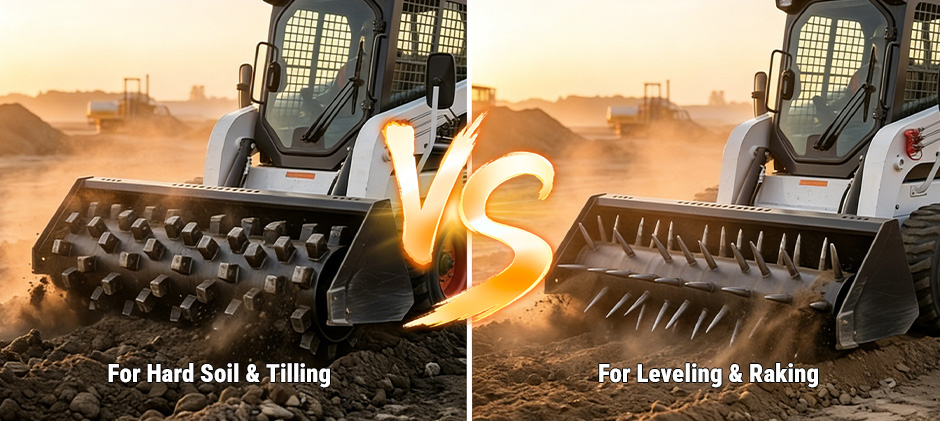
Making the right choice comes down to four simple questions about your equipment and your job.
1. What Is Your Machine’s Power?
The attachment must match your machine’s specifications. An incompatible tool is a waste of money and can even damage your equipment. For a skid steer soil conditioner, the most important number is the standard-flow or high-flow hydraulic rating (gallons per minute, or GPM). For a 3-point soil conditioner, it’s all about having enough tractor horsepower (HP) to pull and power the unit effectively.
“The best attachment is useless if your machine can’t power it. Always check your GPM or HP before you buy.”
2. What Is the Primary Job?
Soil conditioners are versatile, but specific features are better for certain tasks. The core of the attachment is its rotating drum. A drum with aggressive carbide teeth is excellent for pulverizing hard soil and tilling. A drum with simpler spikes or rods may be better suited for lighter leveling and raking. If your main goal is removing rocks and debris, look for a model with a strong, well-designed collection bucket.
3. How Wide Should It Be?
Working width determines how quickly you can cover an area. While a wider attachment seems better, it requires more power and is less maneuverable in tight spaces. A good rule of thumb is to choose a width that is slightly wider than your machine’s tire tracks. This ensures you cover your tracks in a single pass without leaving ridges.
4. Are Replacement Parts Easy to Find?
Every soil conditioner has parts that wear out. Downtime in the middle of a job is expensive. Before you invest, confirm that you can easily source common replacement parts.
Common wear items include:
- Carbide teeth or tines
- Bearings for the drum
- Hydraulic hoses and motors
- Sprockets and drive chains
Ensuring parts are available is just as important as the initial purchase, especially when a deadline is approaching.
Why Is Maintenance So Important?
A well-maintained soil conditioner performs better and lasts longer. Regular checks prevent unexpected breakdowns. Before each use, take a few minutes to inspect the attachment. Check for worn or broken teeth, as a missing tooth can throw the drum off balance and cause excessive vibration. Look for hydraulic fluid leaks, grease all pivot points and bearings, and check the drive chain for proper tension. This simple routine protects your investment and ensures it’s ready when you are.
Summary
No matter which attachment you rely on, wear and tear is inevitable. At FridayParts, we specialize in keeping your equipment in the field. From durable replacement carbide teeth to reliable hydraulic components and bearings, we have the parts you need to prevent downtime. Shop our extensive selection today and make sure your soil conditioner is always ready to work.
