

For anyone who owns or maintains off-road machinery, knowing the difference between SAE and metric is more than just a technical detail — it can prevent major problems. Using the wrong bolt, nut, or tool can strip threads, damage parts, and lead to costly downtime. This simple guide explains how to tell the difference of the SAE vs. Metric systems so you can pick the right parts and tools every time.
What Are SAE and Metric Systems?
SAE and metric are two different measurement systems.
- SAE stands for Society of Automotive Engineers, and it uses inches and fractions (like 1/2″ or 3/4″).
- Metrics use millimeters (like 10mm or 19mm).
They are not interchangeable — a metric bolt will not fit an SAE nut correctly, and forcing it can cause damage.
Most USA-made machines use SAE bolts, while machines from Asia and Europe often use metric ones.
Why Does This Difference Matter for Your Machinery?
Using the wrong type of fastener may seem harmless, but it can seriously damage your machine.
A mismatched bolt will not seat properly, and forcing it can ruin the threads on both the bolt and the part it’s going into.
This weakens the connection, causes parts to loosen, and may lead to vibration, leakage, or failure during use.
As the saying goes:
“A mismatched bolt today can become a breakdown tomorrow.”
That’s why taking a few seconds to identify the correct type is worth it — every time.
3 Simple Ways to Identify SAE vs. Metric Fasteners
You can spot the difference between SAE and metric fasteners just by looking closely or testing the fit. Here are three easy methods:
Method 1: What Do the Head Markings Mean?
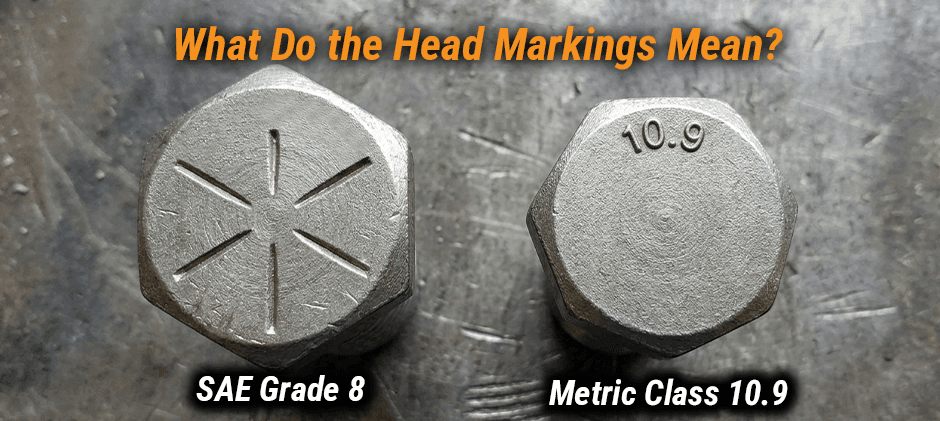
The markings on the bolt head give you clues:
- Metric bolts usually have numbers like 8.8, 10.9, or 12.9.
- SAE bolts use lines (radials) around the head to show strength.
Grade 5 has 3 lines.
Grade 8 has 6 lines.
If there are no markings, the bolt is probably a low-strength one.
Method 2: How Do You Measure the Wrench Size?
The wrench or socket you need tells you a lot:
- Metric tools use whole millimeters (e.g., 10mm, 17mm, 19mm).
-
SAE tools use fractions of an inch (e.g., 1/2″, 9/16″, 3/4″).
If an SAE wrench feels close but doesn’t fit perfectly, you’re likely working with a metric bolt.
Method 3: How Do You Analyze the Thread Pitch?
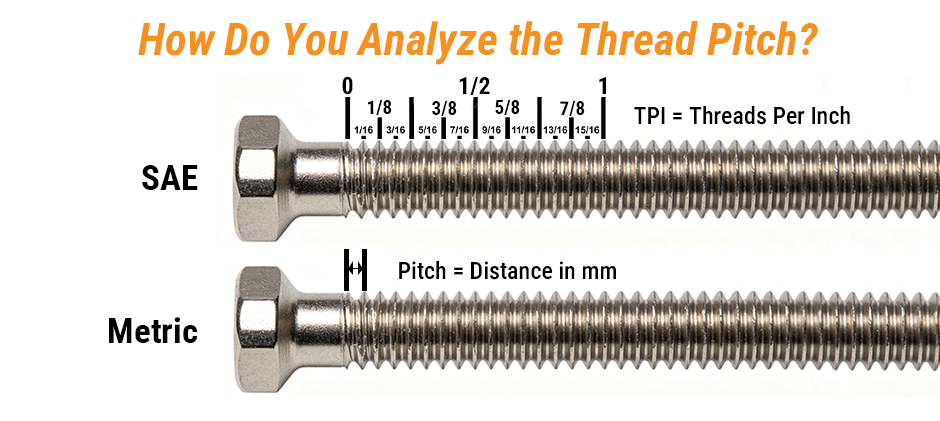
Thread pitch is another way to confirm the type:
- SAE measures threads in TPI (Threads Per Inch) — count the number of threads in one inch.
- Metric measures distance between threads in millimeters (for example, 1.5 mm).
If you’re unsure, use a thread gauge — it’s the quickest and most accurate tool to check.
What Happens When You Mix Them?
Mixing SAE and metric bolts, nuts, or tools can cause serious damage.
Threads can strip, bolts can loosen, and parts can fail.
Even if a mismatched bolt seems to fit “close enough,” it’s only a matter of time before it causes a bigger problem.
For off-road equipment that runs under heavy load and vibration, that small mistake can mean a big repair bill or lost work time.
Summary
The key to reliable machinery is using the right fasteners and tools. SAE uses inches — metric uses millimeters — and mixing the two will lead to damage, lost time, and possible breakdowns.
Knowing how to spot the difference helps ensure every bolt fits perfectly and every repair stays solid. To keep your equipment secure and ready for work, explore durable and precise hardware and fasteners in the FridayParts tools category, or check out final drive and undercarriage components designed to keep your heavy machinery performing strongly in any environment.
