

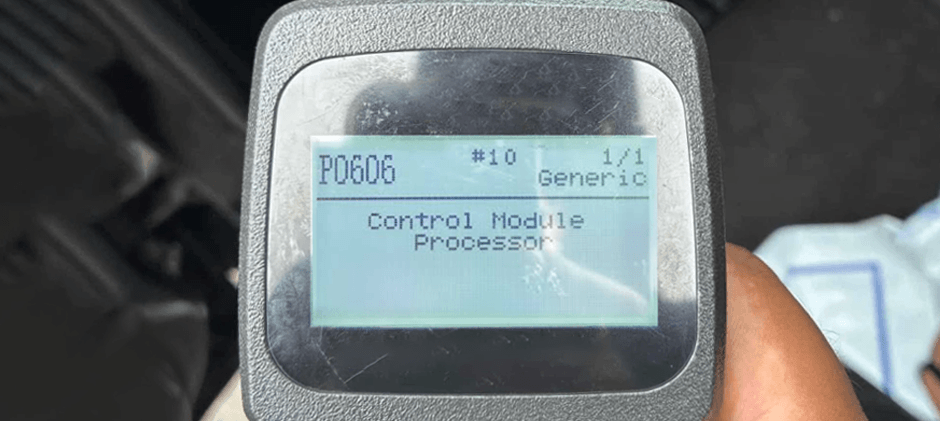
P0606 Toyota code indicates that the PCM/ECM has detected an internal processor fault. But don’t rush to replace the ECM. This code can be misleading. In many Toyotas, a faulty air/fuel ratio sensor (front O2 sensor) or downstream O2 sensor may trigger the code, causing the ECM to mistakenly take these sensor issues as an internal processor fault.
What Is the P0606 Toyota Error Code?
Diagnostic Trouble Code (DTC) P0606 indicates an internal processor fault in the Engine Control Module (ECM). This code is set when the ECM detects a problem during its self-diagnostic checks.
Think of the ECM as your vehicle’s main computer. Every time you start the engine, it performs a series of self-tests to ensure that its processor, memory, and internal circuits are working correctly. If one of these tests fails, the ECM may store the P0606 code.
Common Symptoms of Toyota P0606
If your ECM stores code P0606, you’ll almost always notice your check engine light turn on. On most Toyota models, extra warning lights will light up too — your VSC light and slip indicator light activate as a safety measure. Here are other common signs:
- The engine turns over but won’t fire up
- The motor randomly cuts out while you drive or sit at idle
- Sudden, obvious lack of engine power
- The car goes into limp mode: acceleration feels weak, and the engine won’t rev higher than a set RPM (e.g., 2000 RPM)
- Rough, jerky gear shifts with an automatic transmission
- Much worse gas mileage than normal
Main Causes of P0606 Toyota Error
Even though P0606 points directly at the ECM, the module itself failure is actually one of the least common reasons for this code. The ECM is delicate electronic hardware. It needs clean power and stable signals from dozens of sensors. More often, trouble comes from one of these outside sensors or wiring inputs instead. Below are the main causes, ordered from most frequent to least frequent:
- Faulty Air/Fuel Ratio (A/F) or Oxygen (O2) Sensor: This is the top reason for a P0606 code on most Toyotas. The sensor’s heating circuit may short out or develop high resistance. Either issue sends sudden voltage surges or signal loss straight to the ECM. The ECM’s built-in diagnostic software mistakes this unstable electrical signal for an internal processor error, logging P0606 even though the sensor is the real faulty part.
- Loose or corroded ECM power/ground connections: The ECM requires a perfectly stable voltage supply to operate. Rust and corrosion on engine-chassis ground straps or dedicated ECM ground wires create an inconsistent, noisy power supply. Voltage swings mess up the ECM’s self-test routine and generate a false P0606 code.
- Weak Battery or faulty alternator: This creates the same unstable power problem as bad ground points. A weak battery reads below 12.4 volts when the engine is off. A failing alternator puts out voltage outside the normal 13.5–14.5V operating range. Without clean, stable power, the ECM wrongly registers an internal fault.
- Damaged wiring harnesses: Frayed, shorted, or corroded wires leading to the ECM or its sensors produce erratic signals that trigger P0606. Common issues include wires rubbing against metal brackets and corroded sensor or ECM plug connectors.
- Defective Engine Control Module (ECM): The ECM itself may have failed, but you should only suspect this after fully testing and eliminating every other cause listed above.
Toyota P0606 Is Not always a Bad ECM
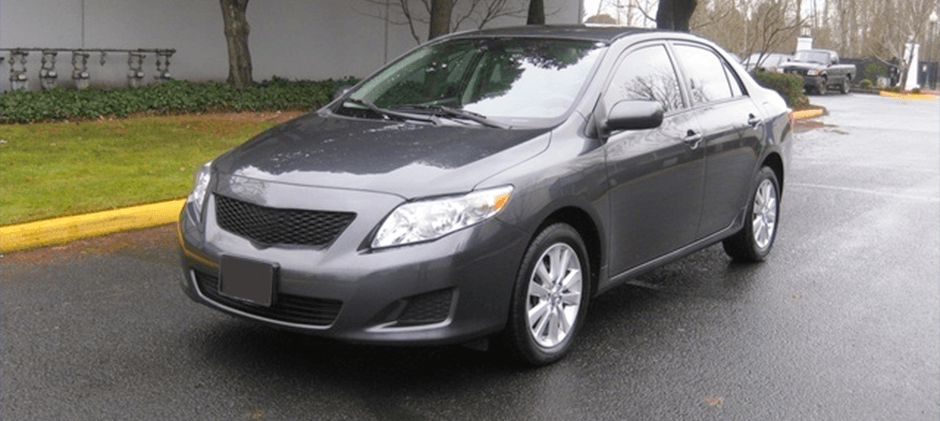
Code P0606 can be really misleading on many Toyota vehicles. This includes the 2009–2013 Toyota Corolla, plus the Toyota Matrix and Pontiac Vibe that share the same platform.
Official repair guides might make you think you need to replace the ECM right away. But experienced mechanics and car owners have found this code usually pops up because of electrical faults in other parts ( Air/Fuel Ratio sensor or an oxygen sensor), not a bad ECM. Replace the ECM, and a costly repair is performed, only for the check engine light to return.
How to Diagnose the Toyota P0606 Code?
Diagnosing this issue means checking every simple part first. Don’t jump to replace the costly ECM until you cross off all cheap, common external problems.
- Check if there are extra fault codes: If you see P0606 plus codes linked to O2 sensors, air/fuel sensors or their heating circuits (such as P0138, P0037), the sensor is the real issue. Fix the sensor problem first.
- Check freeze-frame data: Review the freeze-frame data captured when the code was set. Pay close attention to battery voltage, engine speed, coolant temperature, and sensor readings. Any abnormal value may provide clues about what triggered the code.
- Test battery and charging system: Grab a multimeter to check the power supply. When the engine’s off, battery voltage should hit at least 12.4V. While the engine runs, the alternator needs to hold a steady 13.5–14.5V.
- Do a full visual check: Look over every engine and chassis ground strap — make sure they’re tight and free of rust. Trace the wires for your O2 sensors and ECM, check for frayed, melted cables or corroded plugs.
- Watch live sensor voltage graphs: Start the engine and pull up live voltage graphs for your front air/fuel sensor and rear O2 sensor on the scanner. Gently wiggle each sensor’s wiring. If the voltage spikes or cuts out when you move the wires, you’ve likely found a wiring, connector, or sensor problem.
- ECM: Only suspect a bad ECM once you’ve run through all the steps above and found zero other electrical issues.
Related Codes That Often Appear With This One
- P0136 – P0167: This range of codes points to faults in the oxygen sensor circuits. Their presence is a strong indicator that the O2 sensor is the root cause.
- P0031, P0037, P0051, P0057: These codes specifically identify faults within the heater circuits of the A/F and O2 sensors. A short or open in the heater is a known and documented trigger for a false P0606 on Toyotas.
How to Fix the P0606 Toyota Error?
The fix is entirely dependent on the diagnosis.
- Faulty A/F or O2 sensor: Replace it. FridayParts offers high-quality aftermarket sensors at an affordable price, compatible with a wide range of Toyota models.
- Loose or corroded ground connection: Unbolting the connection, cleaning the contact surfaces with a wire brush until they are shiny, and securely re-fastening it.
- Damaged wiring: Repair or replace the affected section of the harness.
- All other possibilities have been ruled out to replace the ECM. This is a job for a professional, as the new module must be programmed specifically to your vehicle’s VIN and its options.
Conclusion
In many cases, an “ECM processor fault” is actually a sign of an electrical problem elsewhere in the vehicle. A proper diagnosis can help you find the real cause and avoid spending money on unnecessary ECM replacement. Need parts fast? Shop quality Toyota replacement parts at FridayParts today.
