

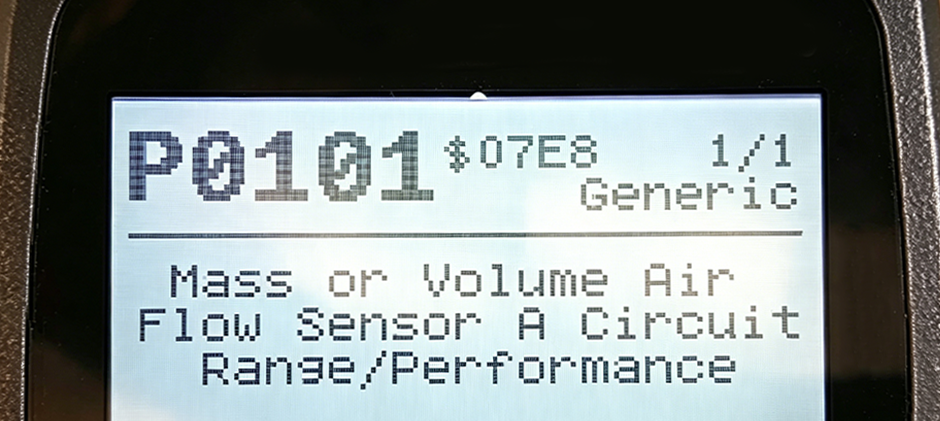
Fault code P0101 means a “Mass Air Flow Sensor Circuit or Performance Malfunction”. In other words, the output of your mass airflow sensor, or MAF sensor, is not within its normal range.
What Does a DTC P0101 Code Mean?
DTC code P0101 means your “mass air flow (MAF) sensor” is out of range or not working properly. Your engine’s control module (ECM) calculates how much air should flow into the engine, using engine speed, throttle position, intake air temperature and turbo boost pressure.
The MAF sensor measures the real air flow. If its readings don’t match what the ECM expects for a while, this code will pop up. The sensor may read too high, too low, or send unstable signals. This part matters a lot. For modern diesel engines, accurate air flow readings keep the machine running well and control exhaust emissions.
What Is a MAF Circuit?
The MAF setup isn’t just the sensor. It’s the whole system that measures airflow and sends data to the ECM. This includes the sensor itself, all wiring and connectors, plus its position right after the air filter in the intake line. The MAF sensor works closely with many key engine parts:
- Fuel injection: The ECM uses MAF readings to figure out how much fuel to spray in. The right air-fuel mix keeps the engine strong, saves fuel and cuts down on excess smoke.
- Turbo control: On engines with a VGT turbo, MAF data lets the ECM adjust turbo vanes for ideal boost. This keeps power snappy and stops the turbo from running too fast.
- EGR system: The ECM uses airflow data to operate the EGR valve. It routes some exhaust back into the engine to lower combustion heat and cut NOx emissions. Bad MAF readings will make the EGR system act up.
- DPF regeneration: The exhaust treatment system uses MAF data to run DPF cleaning cycles correctly. A faulty signal leads to incomplete cleaning and a clogged DPF.
You can think of the MAF sensor as the gatekeeper for engine air intake. If it gives wrong readings, the engine computer will make bad calls for fuel delivery and emissions control.
Any issue in this system upsets the engine’s normal operation. You’ll notice performance issues right away, and ignoring the problem can damage costly parts like the turbo or DPF.
Symptoms of Trouble Code P0101
When your off-road rig throws a P0101 code, you’ll notice obvious issues right away. Airflow is critical for diesel engines, so this fault will definitely hurt performance and disrupt your work.
- Check engine light on: The dashboard malfunction light will stay lit — this is the first clear sign.
- Big power loss / Limp mode: This is the most common issue. Your machine will feel slow and weak, struggle with heavy loads and hills. The engine control unit will cut power to protect the engine and emission systems.
- Black exhaust smoke: If the mass airflow (MAF) sensor reads low air intake, the engine will pump in too much fuel. Rich fuel mix causes incomplete combustion, leading to thick black smoke.
- Higher fuel usage: The engine runs inefficiently, so it burns more fuel. You’ll see your fuel level drop much faster than normal.
- Rough idle or stalling: Though less frequent, a bad MAF signal can make the engine idle rough or even stall out.
- Slow throttle response: The machine lags when you hit the gas, making precise work hard to do.
All these problems happen because the engine can’t keep a proper air-fuel ratio. If you get a P0101 code, troubleshoot it as soon as possible.
Why Does The P0101 Code Occur?
P0101 is a performance-related fault code. It usually means the MAF sensor isn’t fully broken, but it’s not working properly. Below are the most typical causes:
- Dirty MAF sensor: The fine hot wire or film inside the sensor gets covered with dust, grime or oil fumes from the crankcase vent. This layer blocks it from reading airflow correctly and leads to wrong data.
- Air intake leaks: Any air that sneaks in after the MAF sensor won’t be measured. Cracked intake hoses, loose clamps or leaky gaskets on the intake manifold and intercooler all cause this. The sensor reads less air than actually enters the engine, and the ECU will set off the fault code.
- Heavily clogged air filter: A dirt-clogged filter limits airflow. Under heavy loads, the engine can’t draw in enough air as the ECU expects, which triggers P0101.
- Damaged wiring or loose connectors: Vibration and harsh working conditions wear out the wiring. Loose plugs, corroded terminals or frayed wires on the MAF harness can cut out the signal or make it unstable.
- Failing related parts: The MAF sensor may just report the problem, not cause it. A weak turbo that can’t build enough boost, or an EGR valve stuck open letting exhaust gas flow into the intake, will mess up airflow and make the ECU think the MAF is faulty.
- Blocked exhaust system: A clogged DPF or catalytic converter creates too much backpressure. The engine can’t exhaust freely, airflow gets restricted, and this also brings up the P0101 code.
How to Fix Error Code P0101?
Fixing P0101 takes a step-by-step approach. Start with the easy, common fixes first before moving to advanced checks.
Do a Full Visual Check
Look over the whole air intake system from the air filter housing all the way to the intake manifold. Check for loose hoses, clamps and cracks on rubber or plastic pipes. Also make sure the MAF sensor plug is fully connected.
Check and Change the Air Filter
Take out the air filter and have a look. If it’s dirty or due for a service, put in a new one. This quick, cheap fix often solves the problem.
Clean the MAF Sensor
If everything looks good so far, clean the MAF sensor.
- Take it off the intake pipe carefully.
- Only use special MAF sensor cleaner spray. Never use brake or carburetor cleaner — they will ruin the delicate parts.
- Hold the can 4 to 6 inches away and spray the sensor’s wire or film element thoroughly.
- Do not touch the sensor parts with brushes, swabs or anything else; they break easily.
- Let it air dry fully before putting it back on.
Find Air Intake Leaks
If cleaning doesn’t help, check for hidden intake leaks. A smoke machine works great here — it fills the system with visible smoke to spot leak points fast.
Test the MAF Sensor and Wiring
If the fault remains, the issue is likely electrical. Use a multimeter to check power and ground at the connector. A scan tool lets you watch live MAF readings to confirm they change normally with engine RPM.
Check Connected Systems
If all prior tests pass, look at the turbo, EGR valve or clogged exhaust parts. This work usually needs professional tools and experience.
Replace the MAF Sensor
Once you rule out every other cause and confirm the sensor is bad, install a new one.
Final Thoughts
If you need replacement parts, whether it’s a MAF sensor or an intake hose, you can find them at FridayParts. Our parts fit a wide range of heavy equipment brands and can help get your machine back up and running quickly and reliably.
