

In the world of heavy-duty diesel, the Common Rail System (CRS) is a game-changer for modern Kubota V1 series engines, particularly the V3800 model. Transitioning from mechanical to electronic high-pressure fuel management has significantly boosted performance, but it requires a sharper eye for maintenance. For those running M108X or M108S tractors, mastering these components isn’t just about repairs—it’s your primary strategy for maximizing machine lifespan. Let’s break down the technical architecture that keeps these 4-cylinder workhorses firing in the toughest conditions.
What Makes the Kubota V3800 Common Rail System Unique?
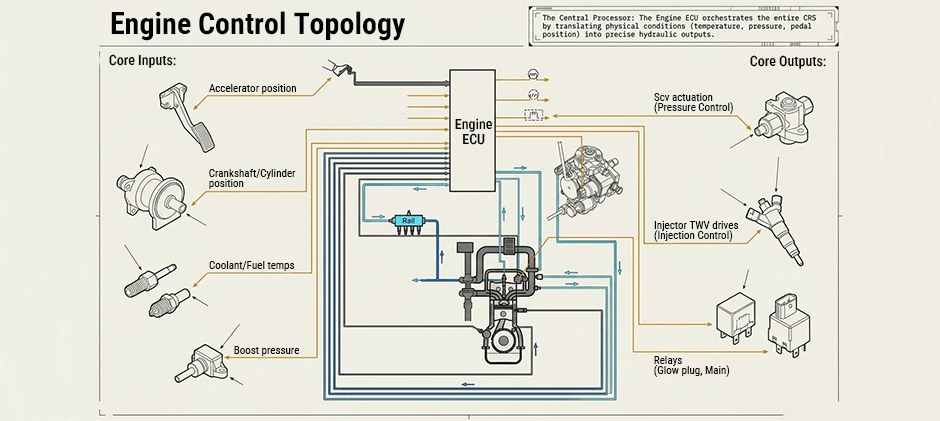
The CRS was newly introduced for the V3800 engine to improve fuel management and injection precision. This system is specifically engineered for the 4-cylinder, vertical water-cooled diesel engine with an exact displacement of 3769 cm³ (230.0 cu.in.). Whether you are operating the M108X or the M108S variant, you are utilizing the same sophisticated architecture. A defining technical characteristic is its high-pressure capability; the system is designed to operate with a maximum injection pressure of 130 MPa, allowing for the fine fuel atomization necessary to meet modern performance standards.
3 Key Components of the Kubota V1 Fuel System
In my experience, the fuel delivery architecture of the V3800 is a masterclass in precision. It relies on three primary components working in tandem:
- HP3 Supply Pump: This pump generates the massive pressures required by the CRS. The HP3 type featured here is notable for its compact Suction Control Valve (SCV) and a streamlined design that lacks a connecting pipe.
- G2 Injectors: These are the primary delivery method for fuel into the cylinders. They utilize a Two-Way Valve (TWV) system for high-speed solenoid actuation, allowing the ECU to command multiple injection events with microsecond timing.
- Rail: Think of the rail as the system’s high-pressure reservoir. It acts as the accumulator for pressurized fuel (0 to 130 MPa) delivered from the supply pump before it is distributed to the G2 injectors.
Why Is the Suction Control Valve Critical for Performance?
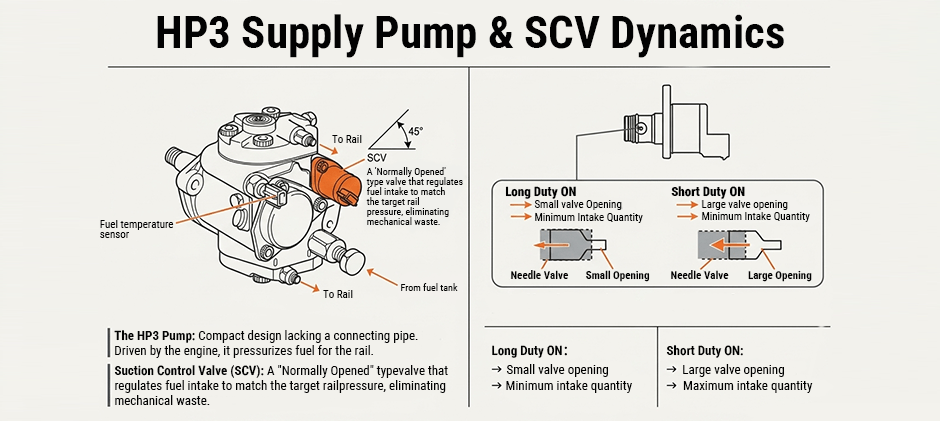
The V3800 CRS utilizes a normally opened compact SCV to regulate fuel intake. The engine’s Electronic Control Unit (ECU) manages fuel volume by controlling the duration of the “Duty ON” signal sent to the valve.
The intake volume follows this specific logic:
- Short Duty ON: This results in a large valve opening, which allows for the maximum fuel intake quantity.
- Long Duty ON: This creates a small valve opening, restricting the system to the minimum fuel intake quantity.
By modulating this duty cycle, the system ensures the pump only compresses the exact amount of fuel needed, reducing the mechanical load on the engine and improving overall efficiency.
How Does the Rail Pressure Sensor Protect Your Engine?
To prevent catastrophic failure from over-pressurization, the rail includes a Pressure Limiter. This safety valve is designed to open at approximately 221 MPa (2254 kg/cm²) to release abnormal pressure, returning fuel to the tank. Crucially for diagnostics, the valve will only close once the rail pressure drops to approximately 50 MPa (509.5 kg/cm²). These components work together to ensure optimum combustion and a significant reduction in combustion noise.
What Are the Essential Sensors in the Kubota V1 Control System?
The V3800 utilizes a sophisticated sensor network to monitor every heartbeat of the engine:
- Crankshaft Position Sensor (NE): Uses a Magnetic Resistance Element (MRE) and a 56-pulse gear to detect engine speed.
- Cylinder Recognition Sensor (G): Also an MRE type, this identifies specific cylinders via a 5-pulse camshaft gear. The ECU determines Top Dead Center (TDC) when the G sensor signal aligns with the “gearless section” of the crankshaft pulsar gear.
- Coolant Temperature Sensor: Utilizes a thermistor to monitor engine heat, providing critical data to prevent overheating.
- Boost Pressure Sensor: Detects air pressure inside the intake manifold. Like the rail pressure sensor, it utilizes the “Piezoelectric Resistive Effect” for high-accuracy signaling.
- Accelerator Position Sensor: A Hall element-type sensor that converts the operator’s pedal position into a precise electrical signal for the ECU.
6 Common DTCs Every Machinery Owner Should Know
| DTC Code | Detection Item | Symptoms / Possible Causes |
|---|---|---|
| P0087 | Pressure limiter abnormality | Sudden power loss or limp mode; faulty pump or leak. |
| P0088 | High rail pressure | Engine warning light: potential fuel blockage or sensor error. |
| P0093 | Fuel leak | Sudden engine stall or hard starting; ruptured fuel line. |
| P0117 | Coolant temp abnormality | Incorrect heat readings; potential wiring short in the sensor. |
| P0217 | Overheat | Reduced engine output; cooling system failure. |
| P0628 | SCV abnormality | Poor throttle response or stalling; SCV solenoid failure. |
How Does the Injection Pattern Improve Efficiency?
The V3800 uses a multi-stage injection pattern consisting of pre-injection, main injection, and after-injection to optimize combustion. Pre-injection occurs in nearly all operating regions to smooth out the pressure rise in the cylinder, reducing noise and vibration.
While the main injection provides the power, after-injection is a specialized event. It is specifically triggered only after the engine has completed its warm-up cycle, once the engine hits 1400 rpm while under a moderate engine load. This sequence is vital for emission control and maintaining the thermal efficiency of the V1 series.
Conclusion
The Kubota V3800 engine’s CRS is a sophisticated marriage of high-pressure mechanics and real-time electronic monitoring. Maintaining the integrity of the SCV, the rail sensors, and the G2 injectors is non-negotiable for the long-term health of your M108X or M108S tractor. To keep your machine running at factory specifications, always use high-quality replacement parts for your Kubota engine. Proper maintenance today prevents costly downtime tomorrow.
