

A worn or broken deck belt can leave your lawn looking uneven—or stop your Kubota mower from cutting altogether. In this guide, you’ll find Kubota mower deck belt diagrams for 42-, 48-, 54-, and 60-inch decks, and simple steps to help you know when to replace the belt and how to install a new one.
42 Inch Kubota Mower Deck Belt Diagram
For many homeowners and professionals, the 42-inch deck is a versatile workhorse. Its belt system is designed for efficiency, but it has several key components you need to get right. Let’s look at the diagram.
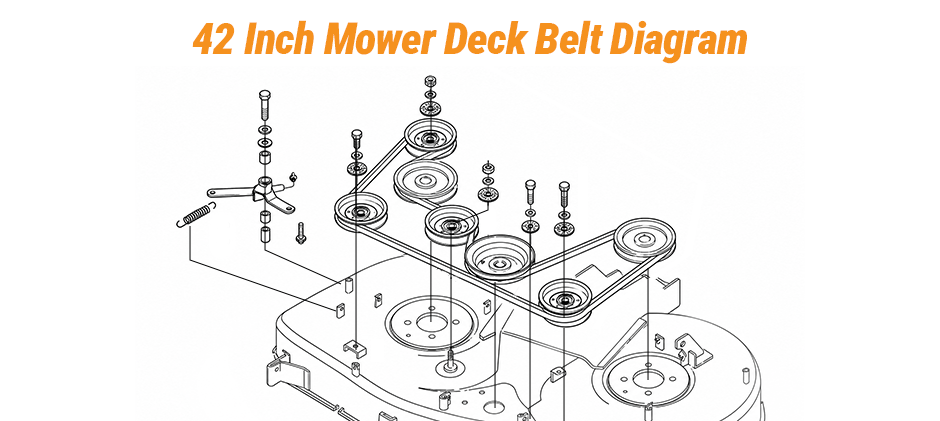
As you can see in the diagram, the belt snakes around two outer blade spindles and is managed by a series of idler pulleys. The key to this system is the tensioner assembly, like the spring and the tensioner arm. This assembly maintains the correct pressure on the belt. If the belt is too loose, it will slip and fail to turn the blades properly. If it’s too tight, it puts excessive strain on the spindle bearings. When routing the new belt, always ensure it sits securely in the V-groove of each pulley.
Kubota 48 Mower Deck Parts Diagram
Moving up to the 48-inch deck, the system becomes a bit more complex. This diagram provides an exploded view, which is incredibly helpful for understanding how all the parts work together, not just the belt itself.
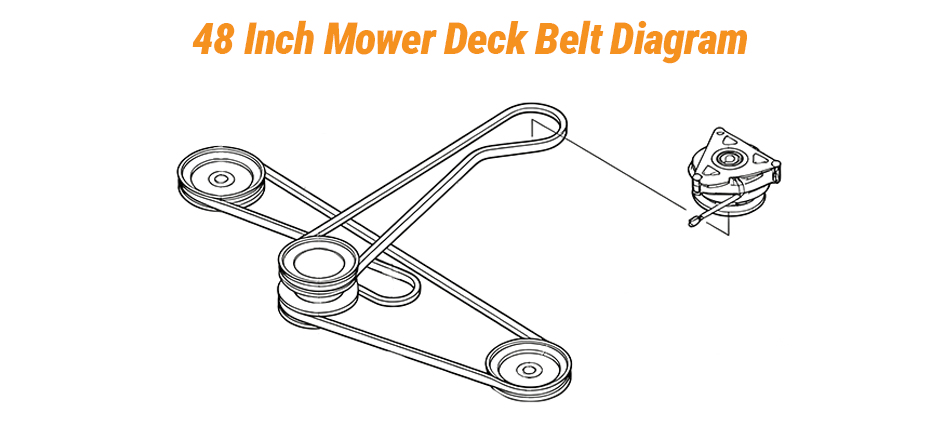
This Kubota 48 mower deck parts diagram shows the main drive belt that connects the blade spindles. Notice the idler pulley mounted on the tensioner arm. This pulley is what moves to apply or release tension. When you are changing the belt, this is the component you will manipulate. The diagram also details every nut, bolt, and washer. This is crucial if you need to replace more than just the belt, such as a worn-out pulley or a weakened tensioner spring, which are common failure points that can cause belt issues.
A smooth transition from one task to another is key in maintenance. Before you even think about ordering a new belt, it’s vital to know if you actually need one. Let’s explore the warning signs.
Kubota 54 Inch Mower Deck Belt Diagram
This diagram shows the exact route for the long serpentine belt. It loops around the three big pulleys mounted on top of each blade spindle. This routing sends power to all three blades so they spin together, giving you a smooth, uniform cut.
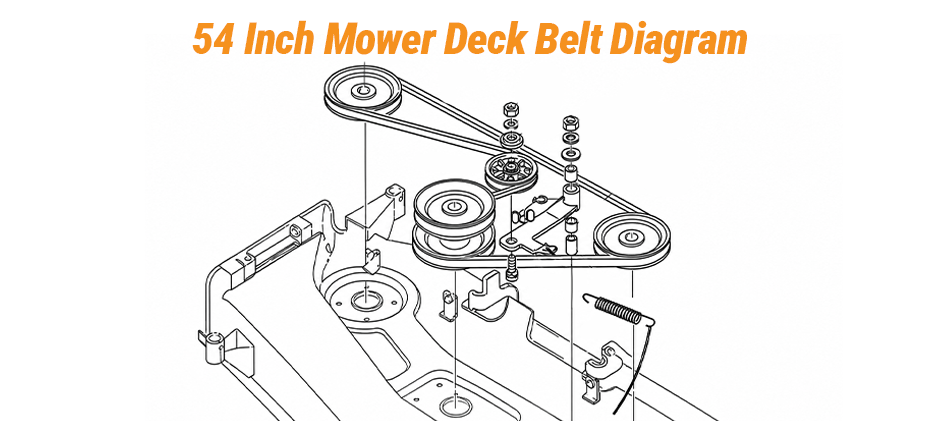
That spring tension setup plays a key role for reliable operation and longer belt life. It keeps steady tension on the belt automatically. It makes up for normal stretching and wear as the belt gets used. Correct tension stops belt slip on the pulleys. If slipping happens, you’ll get uneven cuts, excess heat, and your belt and pulleys will wear out fast.
60 Inch Kubota Mower Deck Belt Diagram
The 60-inch mower deck is built for wider cutting coverage and commercial work. It uses a heavy-duty belt system with several pulleys to deliver steady power to all three blades.
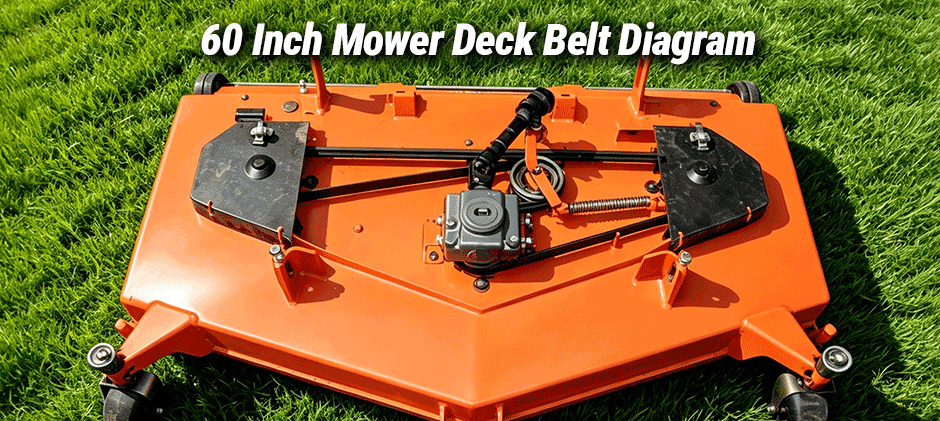
This diagram marks the belt path in red. Watch carefully how the belt wraps around the idler pulleys. Some pulleys press against the flat back side of the belt, while others grip the V-groove side. Many people route the belt incorrectly, which makes the belt slip off or tear quickly. Always compare your installation to the diagram before tightening the belt.
When to Replace a Mower Belt?
Mower belts don’t just break out of the blue. They always show warning signs before they wear out. Ignore them, and your mower could quit working halfway through mowing. Here’s what to check for:
- Cracks and fraying: Check your belt often, especially the V-groove side. Deep cracks, frayed edges, or exposed inner cords mean the belt is worn out and weak.
- Shiny, glazed surface: If the belt sides look shiny or feel hard, they’re glazed. This comes from heat and constant slipping. A glazed belt can’t grip the pulleys well, which slows the blades and leaves uneven, streaky grass cuts.
- No power to the mower deck: When you turn on the blades and the engine runs fine, but the blades spin slowly or not at all — your belt is either slipping badly or failing.
- Weird noises: A worn belt squeals or chirps when it slips on pulleys. A slapping sound usually means the belt is too loose and smacking the deck housing.
- Loose belt tension: If you can press the belt down more than half an inch on its longest section between pulleys, it’s too loose. Belts stretch over time, and the tensioner can’t take up the slack anymore.
How to Replace the Drive Belts?
Replacing your Kubota mower deck belt sounds intimidating, but it’s actually super simple if you follow these steps. This guide works for most Kubota tractor models.
- Stay safe first: Park your tractor on flat ground. Turn off the engine, take out the key, and set the parking brake. To avoid accidental startup, disconnect the negative battery cable just to be safe.
- Lower and remove the mower deck: Drop your mower deck down to its lowest height. This eases pressure on the PTO belt. Follow your manual to unbolt and unclip the deck linkage pins, then slide the whole deck out from under the tractor to give yourself plenty of working space.
- Release belt tension: Find the spring-loaded tensioner pulley. Use a wrench or socket to pivot it and loosen the belt tension. Many Kubota models have a lock hole — stick a pin in it to hold the tensioner open, so you have both hands free.
- Take off the old belt: Once the tension is loose, slide the old belt off all the pulleys. Be sure to note the belt path or take a quick photo. You might need to work it around blade guards to get it fully removed.
- Fit the new belt: Use your photo and belt diagram to route the new belt correctly. Start with the hardest-to-reach pulley first. Keep the belt’s V-side seated in the grooved pulleys, and the flat side against the flat idler pulleys. Double-check it sits fully on every pulley.
- Reset tension and check: Let the tensioner arm snap back slowly — the spring will set the perfect tension automatically. Spin the blades by hand a few full rotations to make sure the belt runs smooth, no binding, and won’t jump off.
- Reinstall the deck: Slide the mower deck back under the tractor, reinstall all pins and clips, reconnect your battery, and you’re ready to test it out.
wrapping up
By correctly identifying the belt path and knowing the signs of a worn belt, you can perform replacements with confidence. This not only ensures a perfect cut but also extends the life of your mower’s components. For reliable, high-quality aftermarket deck belts and pulleys that offer great performance at an affordable price, be sure to check FridayParts vast inventory.
