

If your machine won’t move because the brake is stuck, or it can’t stay put on a slope, you need to figure it out fast. John Deere parking brake troubleshooting means checking for stuck mechanical parts, electrical issues, or low hydraulic pressure. This guide shows you exactly how to find and fix the problem.

Common Signs of John Deere Parking Brake Problems
Before you start pulling parts apart, check how your machine behaves first. Symptoms usually lead you straight to the real problem and save you tons of unnecessary work. Lots of operators think their transmission is broken, when it’s just a simple brake issue.
- Brake pedal or lever locked up: You push the brake pedal or pull the orange lever, and it won’t budge. This is almost always dirt, rust, or jammed mechanical linkages.
- No drive and no brake hold: The machine rolls even with the brake on, and it won’t move forward or backward. This often happens right after taking off and refitting a rear tire.
- Engine stalls when you release the brake: As soon as you release the brake to move, the engine cuts out. That means there’s a bad safety switch or wiring problem.
- Machine slows down mid-use: While you’re driving, the machine creeps to a stop like someone’s hitting the brake. This happens often on heavy equipment, caused by a failing electric solenoid or dropping hydraulic pressure.
Use this simple diagnostic table to quickly narrow down what’s wrong:
| Symptom | Most Likely Cause | System Type |
|---|---|---|
| Rigid pedal or lever | Corroded pivot points or bent rods | Mechanical |
| Freewheeling after tire change | Missing transaxle axle key | Mechanical |
| Engine shuts off on release | Seat safety switch or broken wire | Electrical |
| Code on dash / slow stop | Bad solenoid or low transmission oil | Electric / Hydraulic |
How to Check and Adjust John Deere Parking Brake Linkage?
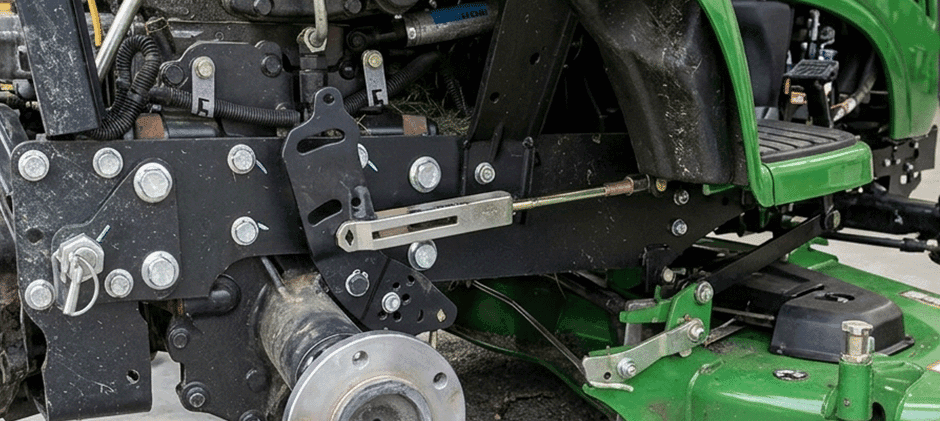
For riding mowers and compact tractors, the top problem is seized mechanical brake parts. The brake pedal connects to your rear brakes with metal rods, springs and pivot points under the battery or seat. Over time, grass, mud and moisture build up there. The metal rusts and gets stuck solid.
- Heavy rust on bolts and pivot joints. If the orange lever won’t move, clean that area well. Spray plenty of penetrating oil on every moving joint. Wait a few minutes, then gently work the brake pedal and lever back and forth to free it up.
“Don’t yank hard on a stuck brake lever or pedal. Too much force can bend the rods or break the cable. A simple lubrication job then turns into an expensive repair.”
- Sometimes the linkage moves freely, but the machine still won’t drive or stay put. If you recently took off a rear tire to fix a flat, you probably lost your transaxle axle key. Rear wheels slide onto a metal shaft. A small square metal key locks the wheel to the shaft so they spin together. If this key drops out in the grass while you change the tire, the shaft spins inside the wheel. You lose all drive, and your parking brake stops working too.
How to Fix
Jack up the back of the mower and take the wheel off. Use angled pliers to pry off the plastic hub cap. Then remove the E-clip and flat washer holding the wheel. Slide the wheel off and check the slot on the shaft. If the slot is empty, you found the issue.
Before fitting a new key, put anti-seize compound on the metal shaft. Skip this step, and the wheel can rust tight to the shaft, making it super hard to take off later. Drop the new key into the slot and line up its square edge correctly. Hold the key in place while sliding the wheel back on. Refit the washer, push the E-clip firmly into its groove, and pop the hub cap back on. Test your machine. The transaxle should work properly again.
How to Troubleshoot an Electric Parking Brake That Won’t Release?
Now let’s talk electrical systems. Bigger machines like skid steers and backhoes use electric parking brakes. A solenoid runs the brake parts. When you flip the cab switch, power goes to the parking brake solenoid. It opens a valve to let the brake pads release.
- If your brake won’t release, test the solenoid first. A bad solenoid can work off and on. It may slowly engage the brake while you’re driving, until the tracks or wheels lock up completely. Use a multimeter to check power at the solenoid wiring plug. If the plug gets power but the solenoid doesn’t click or open, it’s broken and needs replacing.
- The safety circuit is another key electrical piece. Heavy equipment uses seat sensors and seatbelt switches to confirm the operator is sitting safely in the cab. If the seat switch fails, or wires under the seat harness get cut, the machine’s controller thinks no one is in the seat. For safety, it locks the brake and won’t let it release.
- Check the wiring harness under the seat for pinched or frayed wires. Sometimes just cleaning the connector pins and making sure the seatbelt latches tight fixes tricky brake problems. If a circuit fault code pops up on your dash, follow the wires from the solenoid all the way back to the main control board to find where the wire is broken.
Hydraulic and Transmission Problems to Keep the Parking Brake Engaged
While mechanical and electrical faults are common, we also have to look at the hydraulic system. Many heavy-duty models use hydraulic pressure to physically hold the spring-applied brake open. As long as the engine is running and the hydraulic pump is pushing fluid, the brake stays off. If that pressure drops, the heavy springs clamp down, and the brake engages automatically.
- Low transmission oil. If the fluid level drops too low, the pump cannot maintain enough charge pressure. The machine might drive for a few feet, lose pressure, and then the brake will lock up again. Always check your hydraulic fluid levels using the dipstick or sight glass before tearing into the brake assembly. If the fluid is low, top it off and check for leaks around the hoses and cylinders.
- Bad pressure sensors. The transmission has sensors that read the hydraulic pressure and report back to the computer. If a sensor goes bad, it might tell the computer that the pressure is zero, prompting the system to lock the brake even when the fluid levels are perfect.
- Some hydrostatic transmissions experience a timeout error. If the machine loses forward and reverse drive and acts exactly like the brake is stuck on, the Transmission Control Unit (TCU) might need a calibration. Checking the fuse terminals for corrosion and ensuring the TCU is getting clean power can often clear these false brake faults and restore normal operation.
Summary of Parking Brake Repairs
Fixing a stuck parking brake needs a clear step-by-step plan. First, check your mechanical brake linkage for rust. If you just swapped a tire, double-check that your axle keys are seated properly. For bigger machines, test the electrical solenoids, look over seat safety switches, and always confirm your hydraulic fluid levels. Shop reliable replacement parts for your machine at FridayParts.
