

John Deere mini excavator sizes have consolidated under the P-Tier badge, which replaced the old G-series with seven models from 1.7 to 6.2 metric tons. The changes were modest — better cab sealing, EH joysticks on the larger sizes — but the specs are what buyers actually compare. This guide covers every P-Tier model — weights, dig depths, tailswing, trailer fit — with the practical details spec sheets tend to leave out.
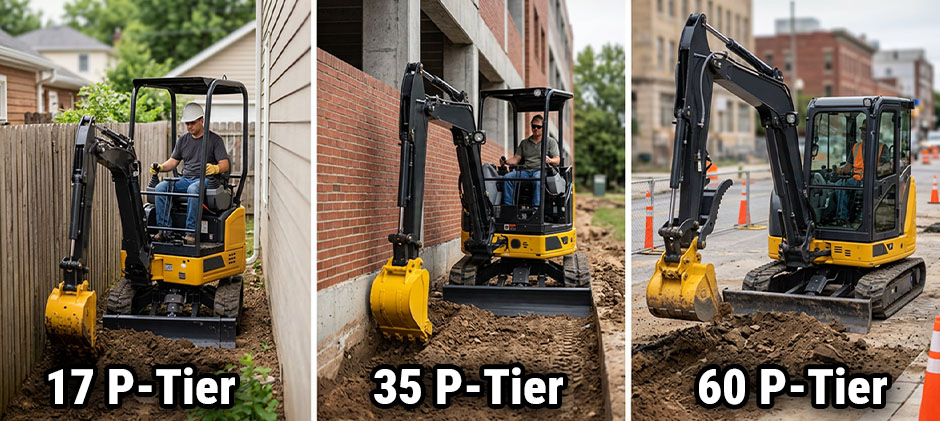
John Deere Mini Excavator Sizes at a Glance
The compact lineup now wears P-Tier badging, which took over from the older G-series naming. Mostly it was a refresh—output and dimensions stayed close to the G models they replaced. The bigger machines did get EH joysticks, better cab sealing, and updated hydraulic packages. Before most owners call a dealer, they want a table like this one in front of them.
| Model | Operating Weight | Net Power | Max Dig Depth | Tailswing |
|---|---|---|---|---|
| 17 P-Tier | 3,790 lb (1,720 kg) | 14.5 hp | 7 ft 2 in | Reduced |
| 26 P-Tier | 5,780–6,110 lb (2,620–2,772 kg) | 20 hp | 8 ft 6 in | Reduced |
| 30 P-Tier | 6,850–7,220 lb (3,107–3,275 kg) | 23 hp | 9 ft 2 in | Reduced |
| 35 P-Tier | 7,760–8,135 lb (3,520–3,690 kg) | 23.3 hp | 10 ft–11 ft 4 in | Zero |
| 40 P-Tier | ~9,190 lb (4,169 kg) | 40 hp | ~11 ft 10 in | Reduced |
| 50 P-Tier | 10,560–10,847 lb (4,790–4,920 kg) | 35.9 hp | 11 ft 7 in–12 ft 7 in | Zero |
| 60 P-Tier | 13,250–13,620 lb (6,010–6,180 kg) | 53 hp | 12 ft 4 in–13 ft 6 in | Reduced |
Weight shifts with cab configuration, long arm, rubber versus steel tracks, and counterweight choices. Check the serial plate before loading a trailer rather than trusting a brochure number.
Model-by-Model Breakdown
Walking through the individual machines is the most reliable way to line up a model with the ground conditions, site access, and digging depth you face week to week.
17 P-Tier: The Narrow-Access Specialist
Deere’s only sub-2-ton machine. The variable-width undercarriage retracts to roughly 39 inches, so with the blade folded it clears a standard 36-inch gate. Power comes from a Yanmar three-cylinder making 14.5 net horsepower — enough to pull a 10-inch bucket through loam or sandy soil without complaint. Pool preparation in backyards, irrigation runs, and interior demolition are the work this size sees most. Wear items are inexpensive here: rubber tracks and undercarriage components for the 17 cost far less than on the larger machines, which keeps hourly operating costs reasonable even as hours pile up.
26 and 30 P-Tier: The 2.5–3 Ton Sweet Spot
These two models sit in the most heavily rented class in North America. 26 P-Tier: about 6,000 lb, 20 hp Yanmar. 30 P-Tier: 23 hp, roughly 7,200 lb. Same engine family, shared engine and hydraulic parts—a mixed fleet’s best friend. Dig depth runs 8 ft 6 in to 9 ft 2 in, covering most residential sewer taps, footings, and shallow utility runs. Trailer weight the hard limit? Take the 26. Want more stick reach and lift? Take the 30.
35 and 40 P-Tier: Zero-Tail Favorites
The 35 P-Tier shows up on urban job sites more than any other size in the range, and zero tail swing is the reason. Working parallel to an existing foundation is easier because the counterweight doesn’t clip the wall on every rotation. With 23.3 hp, 10 ft of dig depth, and ground reach approaching 17 ft, the 35 takes on almost any landscaping or small civil task. The 40 P-Tier steps up to a 40 hp Yanmar and adds pin-mounted breakout force while remaining under 10,000 lb — still towable behind a 3/4-ton pickup on a standard tag trailer in most jurisdictions. Whichever you run, keeping hydraulic filters and oil fresh is the cheapest insurance you can buy for the pump.
50 and 60 P-Tier: Top of the Compact Range
Above 10,500 lb, you’re into the 5-to-6-ton class. The 50 P-Tier pairs a 35.9 hp engine with a dig depth of 12 ft 7 in on the long-arm version. The 60 P-Tier closes out the lineup at about 6.2 metric tons, 53 hp, and 13 ft 6 in of dig depth with the long stick. An enclosed, climate-controlled cab is standard on both, which starts to matter a great deal on long municipal shifts and full days of site prep. Typical work at this size includes 24-inch water main installation, basement excavation, and small commercial grading. Plan on a dedicated equipment trailer and a 1-ton or larger tow vehicle.
Picking the Right Size for Your Job
Job type usually narrows the field faster than any horsepower number. A quick decision map before committing:
- Backyard landscaping, fence lines, interior tear-out: the 17 P-Tier. The folding blade and retracting tracks justify the choice on their own.
- Residential utilities, pool prep, light grading: the 26 or 30 P-Tier. Enough reach for 8-foot sewer depths without dragging a mid-size trailer around.
- Urban foundation work, tight-lot building pads: the 35 P-Tier. Once you’ve worked with zero tail swing next to an existing structure, you won’t want to go back.
- Light commercial, farm improvements, driveway culverts: the 40 or 50 P-Tier. More breakout, still manageable to transport.
- Municipal utility. Deeper trenching. Mass excavation on small sites. That’s the 60 P-Tier’s territory—and over a long shift, the cab comfort and hydraulics earn their keep.
Running multiple sizes? Keep buckets, thumbs, and couplers on shared pin dimensions across adjacent models.
Specs That Matter Beyond Weight
Operating weight gets most of the attention, but three other numbers determine whether the machine makes money on your site.
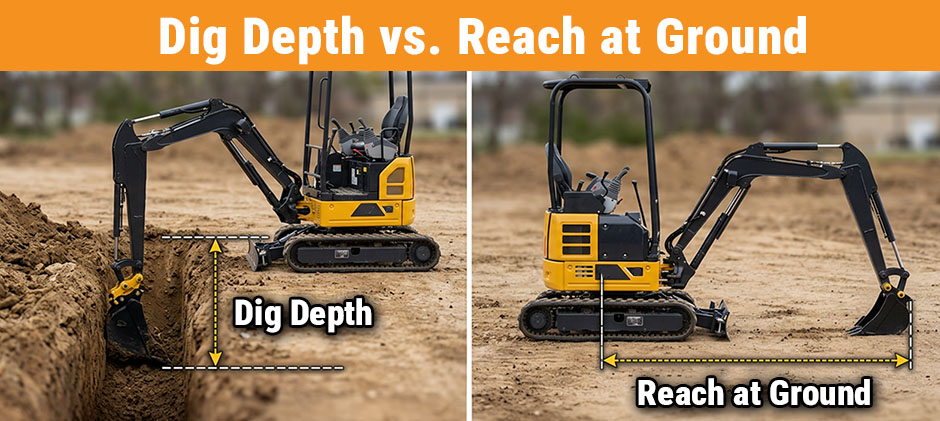
Dig Depth vs. Reach at Ground
Dig depth is measured straight down from the pin; reach at ground runs out from the swing center. A long arm buys dig depth but gives up breakout force at the bucket tip. Trenching to a specified depth is a dig-depth decision. Loading trucks or cutting a slope comes down to reach and dump height. Deere offers real long-arm options on the 35 and 50 P-Tier specifically, so review that spec closely before ordering.
Tailswing Type
Zero-tail-swing machines keep the counterweight inside the track envelope through a full 360-degree rotation. With reduced tailswing, part of the counterweight can extend past the tracks, which generally adds a bit more lift capacity and stability. Conventional tailswing has largely disappeared from modern compact classes but still posts the best lift figures. Match the tailswing to the tightest spot on your typical jobsite rather than the most open one.
Transport Weight and Trailer Fit
A machine that lives on a trailer costs real money every time it exceeds the trailer’s rating. The 17 through 35 sizes travel without issue on single-axle or tandem equipment trailers. A 40 or 50 usually means a dedicated tag or deckover. At the 60 P-Tier, pintle-hook gooseneck trailers and, in many states, CDL requirements enter the picture. Price all of that into the total cost of ownership before upsizing.
Common Compatibility and Parts Notes
Compact excavators share more components across sizes than most owners expect. The 26 and 30 P-Tier use the same engine block family; the 35 and 40 share a good deal of cooling system and filter parts. Final drives, swing motors, and track rollers often carry over between neighboring sizes. Mid-production updates happen, so check the serial-break notes carefully when buying wear items. Keeping a core kit of filters, pins, bushings, and seals on hand keeps a half-day job from turning into a week of backorder waiting.
Final Takeaways
In the end, the right John Deere mini excavator sizes come down to three honest numbers: dig depth, access width, and trailer weight. Nail those, and the choice usually makes itself. Once the machine is on site, keeping it there becomes a parts problem — and that’s where FridayParts fits in, with aftermarket filters, undercarriage components, and hydraulic and engine wear items for the full compact Deere range, at prices that keep hourly costs where they belong.
