

The common approach is to pick John Deere hydraulic oil by what’s written on the front of the container. That is the wrong starting point. The correct choice is based on the JDM spec the machine was designed around — usually JDM J20C or JDM J20D. J20C matches Hy-Gard. J20D matches Low-Vis Hy-Gard, and it is built for cold-weather flow, not for general upgrade. Get the spec right, and let temperature narrow it down from there. This guide explains the difference between J20C and J20D, which one fits your machine, and the right service interval.
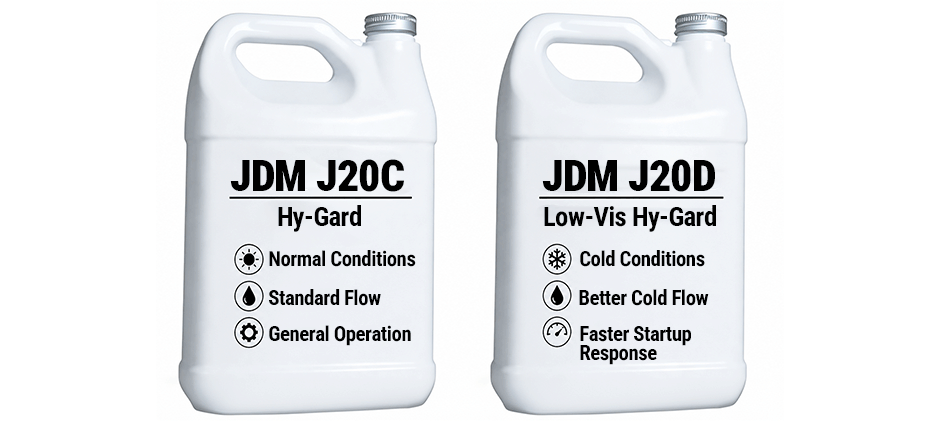
Quick Answer
For most off-road machinery, the process is simple:
- Use Hy-Gard when the machine requires JDM J20C
- Use Low-Vis Hy-Gard when the machine requires JDM J20D
- J20D is meant for better low-temperature flow
- Check the required spec before choosing by weather alone
In short, the right John Deere hydraulic oil is the one that matches the machine’s JDM requirement and operating conditions.
Which John Deere Hydraulic Oil Should You Use?
John Deere hydraulic oil isn’t always just for hydraulics. In many off-road machines, it also serves transmission, wet brakes, and clutches. So the selection shouldn’t be based on viscosity alone or a familiar product name.
The first question is whether the machine requires JDM J20C or JDM J20D. That specification tells you what kind of fluid performance the system needs. After that, choosing the matching product becomes much easier.
This is the key point: John Deere hydraulic oil selection is really about matching the fluid to the machine’s shared system design. That is why checking the spec matters more than guessing by season, price, or label wording.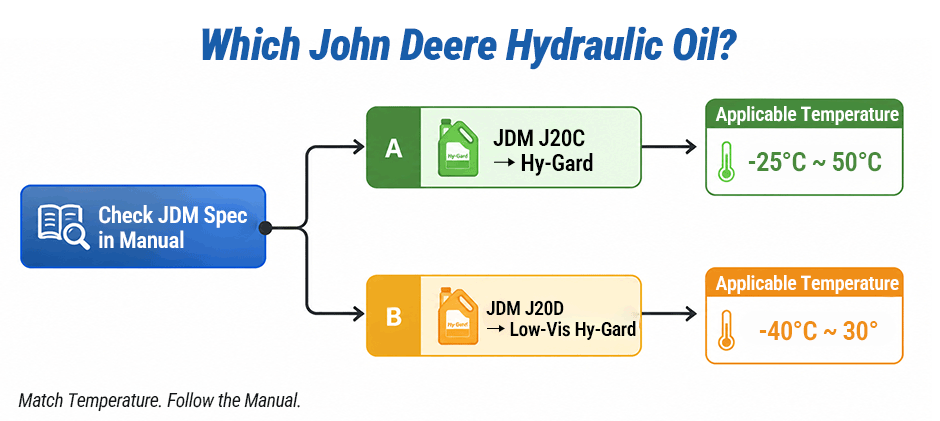
JDM J20C vs. JDM J20D: What’s the Difference?
This is the main comparison most owners need.
JDM J20C and JDM J20D differ mainly in how they behave when it’s cold. That difference shows up in startup flow, pressure build, and overall hydraulic response until the machine warms up. And J20D isn’t meant to be a direct upgrade to J20C.
| Specification | Main Characteristic | Typical Operating Fit | Common Product Match |
|---|---|---|---|
| JDM J20C | Standard viscosity performance | General operating temperatures | Hy-Gard |
| JDM J20D | Better low-temperature flow | Cold weather operation | Low-Vis Hy-Gard |
Here is the practical difference:
- JDM J20C is commonly used in general temperature conditions
- JDM J20D is used where cold-weather flow matters more
- The main difference shows up most during startup and early machine response
For off-road machinery, that can affect steering feel, lift speed, and hydraulic smoothness during the first stage of operation. A machine working in winter or in low ambient temperatures may respond better with the correct low-viscosity fluid, but only if that is what the machine specification calls for.
The main difference between J20C and J20D is cold-flow behavior, not overall quality level.
That is an important point because many owners assume J20D is automatically the safer choice. It is not. The correct fluid is the one the machine was designed around.
Hy-Gard vs. Low-Vis Hy-Gard: Which One Fits Your Machine?
Once the required JDM specification is known, product choice becomes straightforward.
- Hy-Gard is commonly used where the machine requires JDM J20C
- Low-Vis Hy-Gard is commonly used where the machine requires JDM J20D
So if someone asks which John Deere hydraulic oil to use, the practical answer is usually tied to this match. John Deere hydraulic oil selection is less confusing once the product names are connected to the JDM spec.
This also explains why John Deere hydraulic oil should not be chosen as if it were just a general hydraulic fluid. In shared systems, fluid choice affects more than hydraulic performance alone.
If the system already has fluid in it and service history is unclear, it is better to confirm the required spec before topping off or changing products.
Temperature Guide: How Weather Affects Your Choice
Weather matters, but it should not be the first filter. Specification comes first, then temperature.
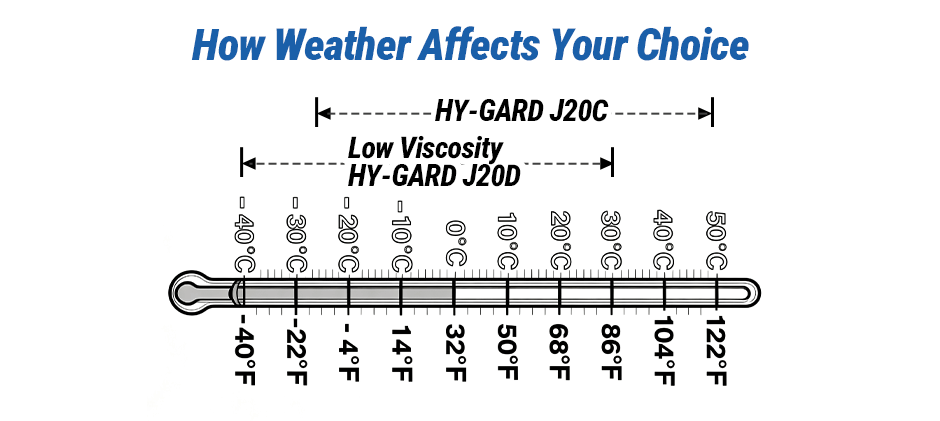
Cold temperatures affect how quickly oil flows at startup. If the viscosity is too high for the conditions, hydraulic response can be slow until warm-up. You’ll see it in delayed lift, heavy steering, or uneven operation in the first minutes after starting.
Here is the right way to think about it:
- Cold starts increase the importance of low-temperature flow
- Lower-temperature performance affects startup response
- Weather helps refine the choice, but it does not override the machine spec
A simple rule helps: do not choose John Deere hydraulic oil by weather alone. First confirm whether the machine requires JDM J20C or JDM J20D. Then choose the matching product for the temperatures the machine actually sees.
Signs Your Hydraulic Oil Needs Attention
Even the correct John Deere hydraulic oil needs routine attention in off-road machinery.
Common signs include:
- Slow hydraulic response
- Noisy pump operation
- Brake chatter
- Rising system temperature
- Foamy oil
- Milky oil
- Frequent top-offs
These signs do not always point to fluid failure alone, but they are strong warnings that service is needed. In some cases, related parts may also need attention. For example, restricted flow may call for a hydraulic filter, and poor hydraulic pressure recovery may justify checking the gear pump. If shared-system performance changes after leakage or contamination, a seal kit may also be part of a proper repair.
When Should Hydraulic Oil Be Changed?
There is no single service interval that fits every off-road machine. Oil change timing depends on operating hours, machine load, climate, contamination exposure, and whether the same fluid also serves the transmission and brake system.
A practical approach is to follow the operator’s manual first, then shorten the interval if the machine works in mud, dust, water, or repeated cold-start conditions.
Earlier service is often a good idea when:
- Oil becomes milky or foamy
- Hydraulic response becomes inconsistent
- Brake or clutch feel changes
- The machine needs frequent top-offs
During service, it is smart to replace the correct filters and keep the fill area clean so fresh oil is not contaminated right away. Good oil service is not only about draining and refilling. It is also about protecting the whole hydraulic system.
Final Words
The right John Deere hydraulic oil is the one that fits the JDM spec your machine calls for and the temperatures it runs in. For a lot of off-road equipment, that means Hy-Gard if you need J20C, and Low-Vis Hy-Gard if you need J20D. If maintenance parts are needed, FridayParts offers affordable aftermarket options, broad compatibility, and a large inventory for heavy equipment service.
