

The John Deere 4430 is still pulling its weight on farms and job sites, more than 45 years after it rolled off the assembly line. Whether you already own one or you’re shopping for a used model, there are two things you really need: reliable John Deere 4430 specs you can count on, and a simple way to find the right parts for your particular tractor. That’s exactly what we’ve laid out here. Below you’ll find verified specifications, serial number locations, a step‑by‑step parts lookup process, and the wear items owners end up replacing most often.
Quick Answer: Key John Deere 4430 Specs
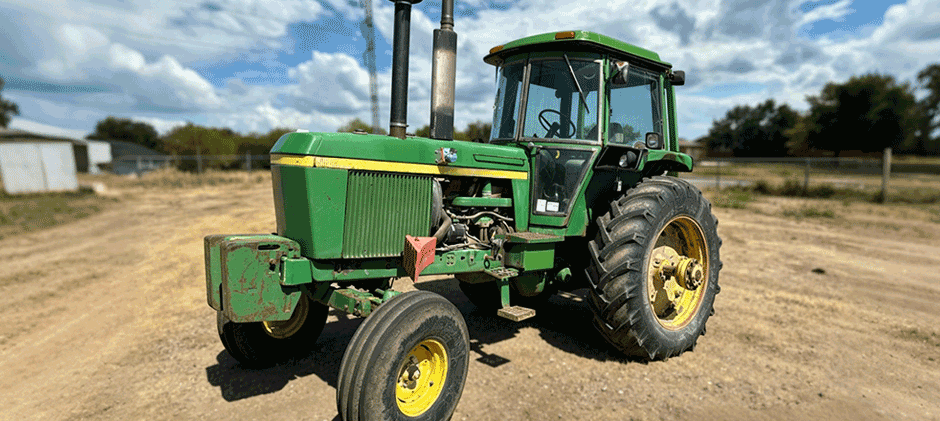
Built in Waterloo, Iowa, from 1973 to 1977, the 4430 was part of Deere’s Generation II line and a direct step up from the 4020. Here are the core John Deere 4430 specs at a glance:
| Spec | Value |
|---|---|
| Years built | 1973–1977 |
| Engine | JD 404 ci (6.6L) 6-cyl turbo diesel |
| PTO power (tested) | 125.88 hp |
| Drawbar power (tested) | 104.99 hp |
| Transmissions | Syncro-Range, Quad-Range, Power Shift |
| Hydraulics | Closed center, 22 gpm, 2,250 psi |
| Rear lift | 4,550 lbs |
| Fuel tank | 46 gal |
| Operating weight | 11,350 lbs |
You’ll see some listings quote 138 or even 145 hp, but those are estimates or seller figures. For standardized comparison, the Nebraska Tractor Test figure of 125.88 PTO hp is the most reliable tested reference, recorded in test 1110 back in October 1974.
Where to Find Your Serial Number?
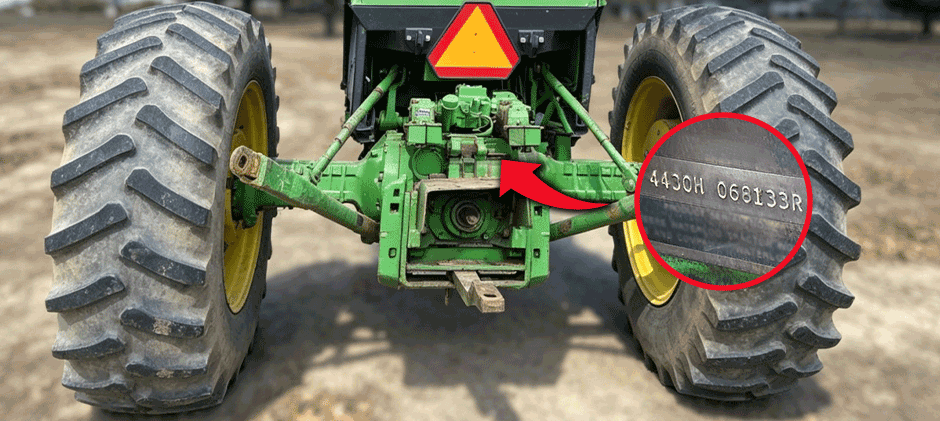
Before you order a single part, you need your serial number. On the 4430, it’s on a plate at the rear of the tractor, right side, just above the PTO shaft. Wipe it clean and write the full number down.
Use this table to match the number to a model year:
| Year | Starting Serial Number |
|---|---|
| 1973 | 1000 |
| 1974 | 17500 |
| 1975 | 33050 |
| 1976 | 47222 |
| 1977 | 62960 |
There’s one split that matters more than the year itself. Deere changed several components partway through production, so parts and service manuals are divided at serial number 33109. Machines numbered 0–33108 use one set of parts; 33109 and up use another.
Service tip: Before ordering, confirm whether your tractor falls below or above serial 33109. The same part name can have two different versions, and crossing that line is the most common ordering mistake on the 4430.
How to Look Up the Right John Deere 4430 Parts?
Old tractors rarely make this easy. Plates fade, parts get swapped over the years, and the original number on a worn component may be unreadable. Working through these steps keeps you from guessing:
- Confirm the machine is a 4430. Don’t assume from a hood decal. Check the model on the serial plate, since 4030, 4230, and 4630 share a similar body but use different parts.
- Find and record the full serial number from the plate above the PTO shaft.
- Check whether it’s below or above serial 33109. This decides which version of many parts you need.
- Confirm the transmission type (Syncro-Range, Quad-Range, or Power Shift). Clutch packs, filters, and fluid volumes differ between them.
- Read the original number off the old part. Most Deere parts have a cast or stamped number starting with letters like “R” or “AR.” Clean the surface with a wire brush if it’s caked in grease.
- If the number is gone, compare fitment instead. Measure mounting holes, shaft diameters, connector styles, and overall size, then match those details to the listing.
- Order from a trusted aftermarket supplier, double-checking dimensions and connectors before you buy.
When an original number is unreadable, the safest path is matching by physical fitment plus serial range. A good supplier’s listing will show the dimensions and compatibility you need to confirm.
Engine and Power Details
The heart of the 4430 is John Deere’s 404 cubic inch (6.6L) inline six-cylinder turbo diesel. It’s a direct-injection engine known for long life when maintained. Here are the numbers you’ll need for service work:
- Bore and stroke: 4.25 x 4.75 in
- Compression ratio: 15.5:1
- Rated speed: 2,200 RPM
- Firing order: 1-5-3-6-2-4
- Engine oil capacity: 17 qts, changed every 100 hours
- Coolant capacity: 30 qts (32 with cab heater)
This engine starts hard when pre-heating fails or when the starter drags in cold weather. A fresh starter motor is one of the most common fixes on these tractors, and many used listings note a recently replaced unit for exactly that reason.
Transmission Options
One reason the 4430 stayed popular is choice. Buyers could pick from three transmissions, and the one in your machine changes both how it drives and which parts it takes.
| Transmission | Type | Gears | Oil Capacity |
|---|---|---|---|
| Syncro-Range | Partially synchronized | 8F / 2R | 44 qts |
| Quad-Range | Partial power shift | 16F / 6R | 44 qts |
| Power Shift | Full power shift | 8F / 4R | 40 qts |
Quad-Range is by far the most common setup on the used market, so most John Deere 4430 specs sheets default to it. Each transmission uses Deere’s wet-clutch design in a different configuration, so confirming your transmission type is important before ordering any clutch or filter parts.
Hydraulics, PTO, and Hitch
The 4430 runs a closed-center hydraulic system, which keeps steady pressure on tap whenever an implement needs it. The hydraulic side of the John Deere 4430 specs looks like this:
- Pump flow: 22 gpm
- Maximum pressure: 2,250 psi
- Remote valves: 1 to 3
- System capacity: 11 gal (10 gal on Power Shift)
- Rear lift capacity: 4,550 lbs
Out back, you get an independent 540/1000 PTO and a Category II three-point hitch. If your loader feels slow or your remotes leak, the cause is often tired couplers rather than the whole system. Switching to modern hydraulic couplers is a popular, low-cost upgrade, and plenty of owners swap factory outlets for cleaner-sealing connections.
Dimensions and Weight
For transport planning and ballast decisions, here are the main measurements:
- Wheelbase: 106.6 in
- Overall length: 160.75 in
- Operating weight: 11,350 lbs
- Ballasted weight: up to 15,060 lbs
- Standard tires: 10.00-16 front, 18.4-38 rear
The rear axle is a rack-and-pinion design offered in several lengths, so tread width adjusts across a wide range. That flexibility is part of why this tractor fits so many row-crop operations.
Electrical System
This one surprises a lot of new owners. The 4430 runs two 6‑volt batteries hooked up in series to give you 12 volts, with an 800‑amp cold‑cranking rating. The alternator handles the charging—37 amps on open‑station models, 55 amps on cab units—and the system is negative ground.
If the tractor turns over slowly even after a full charge, don’t go straight after the starter. Check both batteries and the cable running between them first. A failing alternator can leave you with dim headlights and dead batteries after a full day’s work, too. Replacing it isn’t much of a job, and it gets your charging system working right again.
Common Wear Parts by System
After decades of work, certain parts wear out on nearly every 4430. The good news: aftermarket replacements are widely available, and these tractors are simple enough to fix in your own shop. Grouping them by system makes them easier to track and order.
Common engine parts. Starters and alternators top the list because of hard starts and charging faults. Water pumps, belts, hoses, and filters follow as routine maintenance items. Before ordering, confirm your serial range, since some brackets and pulleys changed mid-production.
Common hydraulic parts. Couplers, O-rings, and seals are the usual culprits behind slow remotes and drips. Pump components wear on high-hour machines. Confirm your transmission type first, because Power Shift units carry slightly different volumes and fittings.
Common PTO and hitch parts. PTO seals, linkage bushings, and hitch hardware tend to work loose over time. They’re cheap and easy to swap out, but you do need to get the diameter and spline count right.
For any of these, the ordering process is the same: match your serial number, confirm the system, then verify by original number or fitment.
Frequently Asked Questions
How much horsepower does a John Deere 4430 have?
The tested PTO rating is 125.88 hp and drawbar is 104.99 hp, based on the official Nebraska test.
What years was the 4430 made?
From 1973 to 1977, all at Deere’s Waterloo, Iowa plant.
How big is the fuel tank?
46 gallons U.S. That’s enough to keep you going for a good while between fill‑ups.
Where is the serial number located?
On a plate at the rear of the tractor, right‑hand side, just above the PTO shaft.
Why does serial number 33109 matter?
Deere switched some components midway through production, so parts are split into two versions around that number. Always check which side your tractor falls on.
Which transmission is most common on a used 4430?
The Quad‑Range—a 16‑forward, 6‑reverse partial power shift. Most John Deere 4430 specs listings reference it by default.
Does the 4430 use 6-volt or 12-volt batteries?
Two 6-volt batteries wired in series for a 12-volt system at 800 cold-cranking amps.
Can you still get parts for it?
Yes. Because so many 4430s are still running, aftermarket support stays strong across engine, hydraulic, and electrical parts.
Conclusion
If you’re tracking down electrical, cooling, hydraulic, or engine wear parts for a John Deere 4430, FridayParts is a solid place to start. They offer wide aftermarket coverage, reasonable pricing, and fitment support for older machines—so you can keep a proven tractor running without breaking the bank. Match your serial number, confirm the system, and order with confidence.
