

Compact enough for a side yard, capable enough for utility trenches—the John Deere 35G specs support both claims. Under the hood is a 23.3 hp Yanmar diesel. The machine weighs 7,760 to 8,135 lb, measures 5 ft 9 in across, digs to 10 ft, and reaches over 17 ft. That combination is why contractors working small jobs keep choosing it. The guide brings together the complete specifications, configuration-dependent values, and essential service and parts checks, helping you prepare effectively and avoid delays once the machine is on site.
Key John Deere 35G Specs at a Glance
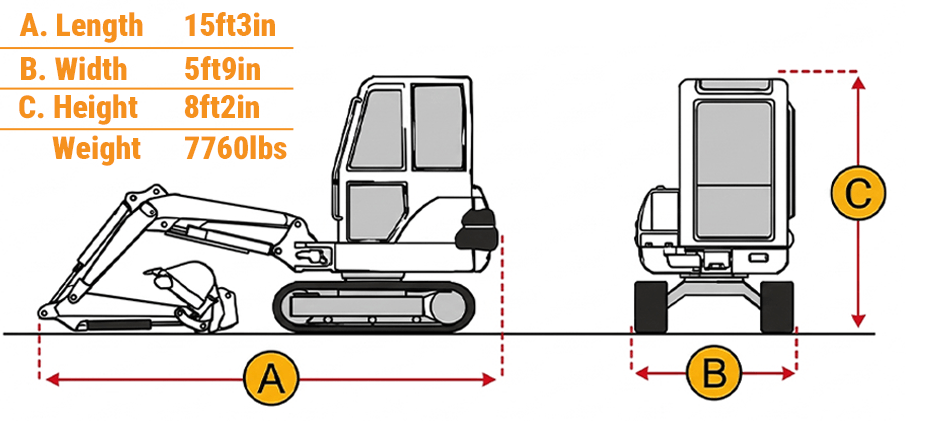
The core numbers, compared side by side, are the quickest way to size up this machine. They give you the transport dimensions, the digging reach, and the basic service capacity in one view.
| Spec | John Deere 35G |
|---|---|
| Engine | Yanmar 3-cylinder diesel |
| Displacement | 1.642 L |
| Net Power | 17.4 kW / 23.3 hp at 2,400 rpm |
| Emissions | Tier 4 Final / Stage IV |
| Operating Weight | 3,520 to 3,690 kg |
| Operating Weight | 7,760 to 8,135 lb |
| Transport Length | 4,640 mm / 15 ft 3 in |
| Transport Height | 2,480 mm / 8 ft 2 in |
| Overall Width | 1,740 mm / 5 ft 9 in |
| Track Width | 300 mm / 12 in |
| Max Digging Depth | 3,060 mm / 10 ft 0 in |
| Max Reach | 5,210 mm / 17 ft 1 in |
| Max Dump Height | 3,460 mm / 11 ft 4 in |
| Bucket Breakout Force | 27.1 kN / 6,085 lbf |
| Arm Tearout Force | 19 kN / 4,277 lbf |
| Hydraulic Flow | 76.8 L/min / 20.2 gal/min |
| Travel Speed | 4.3 km/h / 2.7 mph |
| Swing Speed | 9 rpm |
| Fuel Tank | 42 L / 11.1 gal |
| Hydraulic Tank | 32 L / 8.5 gal |
These John Deere 35G specs cover what most buyers and operators need up front. Doing service checks at the same time? Have the parts list and 35G parts diagram on hand for inspection and ordering.
Weight and Dimensions That Matter
Not every 35G weighs the same. That is where many spec lists get confusing. You’ll usually see this machine listed at either 7,760 lb or 8,135 lb. The difference comes down to configuration: canopy versus enclosed cab, arm setup, and any equipment that’s installed.
Operating Weight
For planning purposes, use this range:
- Light configuration: about 7,760 lb
- Heavier configuration: about 8,135 lb
That gap matters when you:
- Match trailer capacity
- Check axle ratings
- Plan bridge or ramp loading
- Compare the 35G against similar compact excavators
If you are pricing transport or checking towing limits, do not rely on one flat number. A machine with extra equipment can push you into a different hauling requirement.
Width and Height
The John Deere 35 G width is one of its strongest selling points for access work.
- Overall width: 5 ft 9 in
- Transport height: 8 ft 2 in
- Transport length: 15 ft 3 in
At this size, the machine slips into side yards, small building lots, and urban work zones without much trouble. Width alone will not answer every clearance question, though. Bucket position, thumb setup, and trailer deck height all have a say when the machine goes on the trailer.
A quick walk-around first helps a lot. Check the tracks, blade, boom rest, and undercarriage parts so the machine sits the way it should and clears the ramps without any surprises.
Engine and Hydraulic Performance
The 35G isn’t built for horsepower, but the engine fits the machine. A Yanmar 3-cylinder diesel: 1.642 liters, 23.3 net hp at 2,400 rpm.
Power and Digging Force
Key performance numbers include:
- Net power: 23.3 hp
- Bucket breakout force: 6,085 lbf
- Arm tearout force: 4,277 lbf
- Swing speed: 9 rpm
- Travel speed: 2.7 mph
So where does this machine fit? Right in the middle of trenching, utility work, light site prep, landscaping, and foundation digging—especially in tighter spaces. Bulk digging is a job for bigger iron. But when access and control matter more than mass, this is the machine you want.
Hydraulic Flow
Hydraulic flow is listed at 20.2 gal per minute. That matters for attachment response and general cycle feel. Use a thumb, auger, or other work tool? Then consistent hydraulic performance matters as much as raw engine power.
When the machine starts to feel slow or weak, inspection should begin with the basics:
- Hydraulic oil level
- Filter condition
- Track drag
- Engine air flow
- Hose and fitting leaks
At that point, having the right hydraulic filters, seal kits, and excavator maintenance parts can save time during routine service.
Digging Reach and Jobsite Fit
A lot of buyers start by comparing compact excavators on engine output. In everyday work, depth, reach, and dump height are usually more useful. That’s where the John Deere 35G specs become practical.
Dig Depth and Reach
The machine offers:
- Max digging depth: 10 ft 0 in
- Max reach: 17 ft 1 in
- Max dump height: 11 ft 4 in
Those numbers fit a wide range of common jobs:
- Drainage trenching
- Utility line work
- Footing excavation
- Landscape grading
- Loading smaller trucks and dumpsters
Dig near the limit often? Arm style and bucket choice matter more than you’d think. A narrow trench bucket changes the feel completely compared to a grading bucket or heavier attachment. And don’t trust the paper reach—real clearance around walls, fences, and trench boxes can be a different story.
Why the Weight-to-Reach Balance Matters
The 35G strikes a useful balance. It has enough mass to dig with real authority, while staying compact enough to work in areas that would shut out a larger excavator. That mix of capability and access helps explain the model’s steady demand.
That said, lifting work deserves a separate measure of caution. If the task involves pipe, concrete, or pallets carried on a sling, digging force is not the spec to lean on. Lift capacity depends on machine position, the radius of the lift, attachment weight, and the condition of the ground beneath the tracks. Specs provide a broad reference, but safe lifting depends on sound judgment and proper planning.
Fuel, Hydraulic, and Daily Service Capacity
Service capacity is one of the most searched parts of John Deere 35 G specs, and for good reason. Fuel planning affects the workday. Hydraulic capacity affects service cost and downtime.
Main Capacities
Here are the basic capacity numbers:
- Fuel tank: 11.1 gal
- Hydraulic tank: 8.5 gal
Those numbers are easy to read but more useful when tied to daily checks.
Daily Checks Worth Doing
Before a full shift, inspect:
- Fuel level
- Hydraulic oil level
- Engine oil level
- Coolant level
- Track condition and tension
- Bucket pins and grease points
- Hoses around boom and stick
- Leaks under the machine
Just a few minutes can be enough to spot small issues before they grow into downtime. Machines in this size class are often used on tight-access jobs and shorter work cycles, where thorough checks are easy to overlook. That is when hose rub, low fluid, or loose hardware tends to be missed.
If service is coming up, it is smart to prepare filters, rubber tracks, bucket teeth, and other replacement parts before the machine is parked.
Specs You Should Verify Before Buying Parts
Spec sheets help, but they do not answer every parts question. Two 35G machines can differ by year, setup, and installed options. That is why a part order should never rely on model name alone.
Check These Before Ordering
Always confirm:
- Serial number
- Cab or canopy setup
- Arm type
- Bucket size
- Track type and width
- Attachment plumbing
- Existing part number if still readable
This is especially important for:
- John Deere 35 G parts
- John Deere 35 G parts diagram
- Track rollers
- Sprockets
- Final drive items
- Hydraulic hoses
- Cooling components
A wrong filter or hose may only cost you time. A wrong undercarriage part can stop the machine completely once installation starts.
Parts Most Often Replaced
On machines in regular use, these are the categories that tend to come up most:
- Undercarriage parts
- Hydraulic cylinder seal kits
- Bucket pins and bushings
- Air and fuel filters
- Drive sprockets
- Track adjuster parts
- Cooling system parts
Keeping a simple service record helps you track what was changed and when. That makes the next order faster and reduces guesswork.
Final Words
The 35G specs give you a clear picture of what this machine does well: compact access, solid digging ability, and straightforward daily service. Once you verify the machine’s actual weight and configuration, the rest becomes much easier to plan. For parts support, FridayParts offers a broad aftermarket inventory, fair pricing, and dependable options for many equipment brands.
