

When your heavy machinery begins to lose power or act erratically under heavy load, we know the frustration can be overwhelming. Every minute a machine sits idle on a job site is money lost, and the pressure to find a quick fix often leads to expensive mistakes or misdiagnosing the entire gearbox. We have developed this guide to provide you with a clear, step-by-step diagnostic process to determine if your torque converter is actually failing or if the problem lies elsewhere. By following these professional testing methods, you can accurately identify the issue, save valuable time, and avoid replacing transmission parts that are still in good working order.
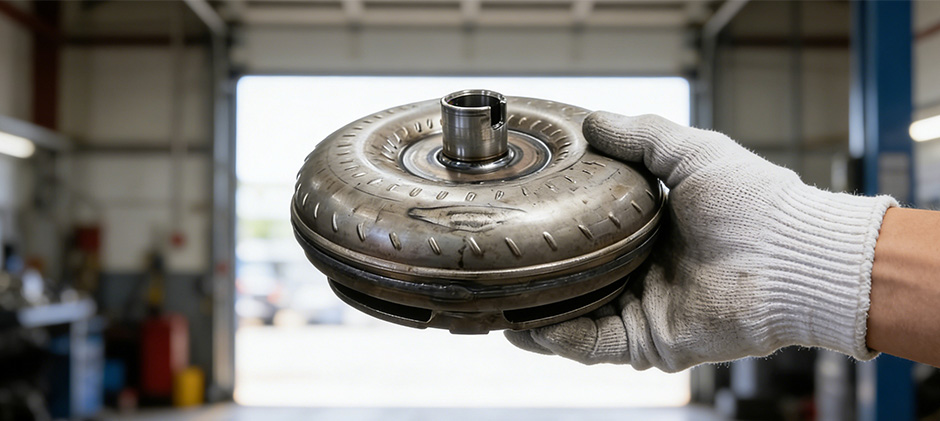
Why You Need to Test the Torque Converter?
In the world of off-road machinery, the torque converter plays an important role that cannot be overlooked. It serves as the vital link for power distribution, acting as a fluid coupling that connects the engine to the transmission. Because there is no solid mechanical connection between the two, it allows the engine to keep running while the machine is stopped, then provides the necessary torque multiplication to get a heavy loader or bulldozer moving under a heavy load. Essentially, it is the “middle man” that translates the engine’s spinning energy into the hydraulic force needed to move thousands of pounds of steel and dirt.
Ignoring the early symptoms of a bad torque converter is a risky strategy for any fleet owner. If you continue to run an excavator or grader with a failing converter, you are not just dealing with a minor power loss; you are risking a total transmission failure. Internal parts can break down and send metal debris through the entire hydraulic circuit. Testing the unit early is a much better strategy than the “running until failure” approach. An early diagnosis allows for a planned repair, which is always cheaper and faster than an emergency overhaul after a catastrophic breakdown. It is important to remember that a simple test now can prevent a big bill later and keep your equipment in the field where it can make you money.
How To Test Your Torque Converter
Pre-Test Precautions and Setup
Before we begin any diagnostic work, safety must be the top priority. Testing a torque converter while it is still in the machine involves putting the drivetrain under high stress, so you must follow these setup steps carefully:
- Consult the Manufacturer: Always contact the machinery manufacturer or check the service manual to confirm it is safe to perform a stall test. Some modern machines use electronically controlled transmissions or advanced “Automatic Traction Control” and “Electronic Guard” systems that do not support this type of manual testing and could be damaged by it.
- Electronic Risks: Be aware that running these tests on machines with advanced electronics may trigger warning lights or lock the transmission into a “limp mode” error state.
- Secure the Machine: You must prevent the machine from moving. Chock the wheels securely with heavy-duty blocks and set the parking brake firmly. If you are testing an excavator, ensure the bucket is lowered and pinned if possible.
- Check Your Fluids: Before you even start the engine, verify that all fluid levels are correct. The transmission fluid must be in good condition—not burnt, smelling of sulfur, or full of debris—as the test relies on the hydraulic properties of the fluid to work.
Monitor RPMs: If your machine does not have a built-in tachometer, you will need to install a handheld or temporary one that is clearly visible from the operator’s seat so you can accurately read the engine RPM during the test.
The Stall-Speed Test Procedure
The stall-speed test is the primary way to check the health of the torque converter and the internal clutches of the transmission. It measures the maximum engine speed possible when the transmission output is locked, and the converter is under maximum load. Follow these steps exactly:
- Start the Engine: Turn the key and let the engine reach its normal operating temperature. The fluid must be warm to flow correctly through the vanes of the converter.
- Apply the Brakes: Press the brake pedal all the way to the floor. Do not let up on the brake at any point during the test.
- Select Gear: Shift the transmission into the “Drive” or highest forward gear position.
- Accelerator Application: With one foot firmly on the brake, press the accelerator pedal all the way to the floor with your other foot.
- The Reading Window: Hold the accelerator down for only 2–3 seconds. This is the window where you must read your RPM tachometer.
Interpreting Stall-Speed Results
Once you have your RPM reading, you need to compare it to the factory specifications for your specific engine and torque converter pairing. Use the following table as a guide for what those numbers mean:
| RPM Reading | Diagnostic Interpretation |
|---|---|
| Lower than specifications | The torque converter is likely damaged internally (e.g., stator issues) and requires repair or replacement. |
| Higher than specifications | This indicates a slip within the transmission itself (clutches or bands), rather than a converter issue. |
A low RPM reading usually means the converter cannot multiply torque properly because the internal fluid flow is restricted or the stator is failing. A high speed suggests that the internal transmission parts are not holding the load, allowing the engine to “run away” because there is no resistance.
The Gear Shift and Drive Test
If the stall test is inconclusive, we recommend a secondary test focused on the physical behavior of the machine during gear changes and under field loads.
- Warm-Up and Rev: Start the engine and let it warm up. Rev the engine gently twice and wait for it to return to a steady idle.
- Static Shift Test: With the brake pressed firmly, shift the transmission through every gear, including reverse. Listen closely for any clicking, whirring, or lurching sensations.
- Observe Engagement: Note if the machine fails to shift into a specific gear or if there is a long delay before the gear “grabs.”
- Load Test Drive: If safe, drive the machine and attempt to perform a standard task, such as pushing against a pile of dirt or attempting to climb a steep grade. A torque converter with internal damage will often struggle to shift or will lurch violently when you ask for maximum power under these high-load conditions.
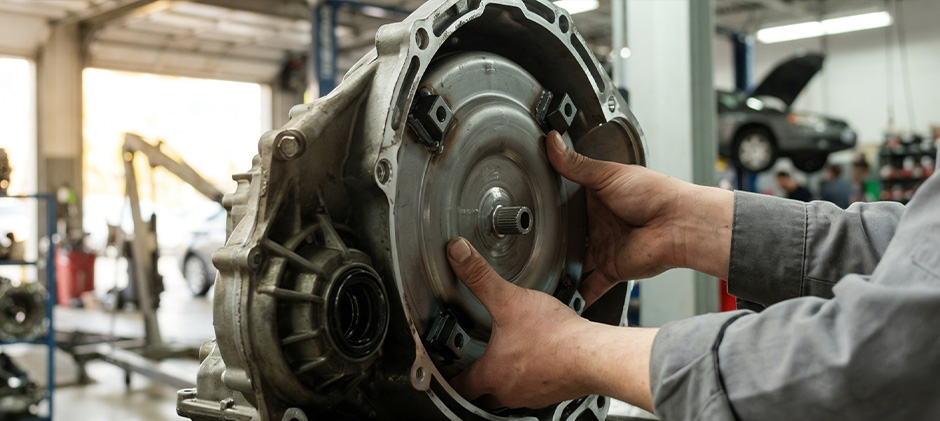
What Causes Issues in the Torque Converter?
In my two decades as a field engineer, I have seen that failure in off-road equipment usually comes from three specific sources. These machines work in much harsher environments than standard trucks, which puts extra strain on the torque converter internals.
- Mismatched Components: Using a torque converter that was not designed for your specific engine power curve can lead to a very fast failure. If the stall speed of the converter doesn’t match the torque peak of the engine, the internal vanes cannot handle the fluid force.
- Overloading: Regularly exceeding the towing or lifting capacity of the machine creates excessive heat. This heat thins the hydraulic fluid, making it less effective at transferring power and eventually damaging the internal seals.
- Internal Wear: Over time, general wear on the internal transmission parts can cause the metal vanes inside the converter to bend.
Bent vanes are a specific problem to watch for. When someone bends the metal, the engine often revs much higher than usual to get the machine moving because the fluid vortex inside the unit is inefficient. You might notice that the sound of the engine eventually turns normal once the system warms up. This happens because, as the fluid heats up, it expands and thins, which can partially compensate for the poor flow path caused by the bent metal. However, this is a clear sign that the hardware is failing and a breakdown is imminent.
Other Symptoms of Issues in the Torque Converter
Beyond the stall test, there are several secondary symptoms that we look for when diagnosing a machine in the mud.
Shuddering
If the machine begins to shake or quiver, even when you are on a smooth surface with only slight acceleration, you are likely experiencing “shudder.” This happens when the torque converter fails to distribute power effectively, causing an uneven flow of fluid that creates mechanical vibration.
Poor Low-Speed Acceleration
A major loss of power when you are trying to start moving or operating at low speeds is a classic sign of torque loss. This is often caused by the stator inside the converter. Think of the stator as the “middle man” that redirects fluid back to the pump to multiply force. If the stator one-way clutch doesn’t lock or spin correctly, that “vortex” of fluid stalls, and your engine power is wasted as heat rather than movement.
Internal Noises
Strange sounds are a major diagnostic tool for an engineer. A whirring sound when you start the engine can point to a worn one-way clutch inside the torque converter. That whirring could also happen if a failing pump creates vacuum bubbles in the fluid. Grinding or clacking sounds are much more serious, indicating that the internal metal components are literally falling apart.
Higher Stall Speed
As issues get worse, particularly in machines using lock-up converters, you might find that the engine has to reach a much higher RPM than it used to before the transmission finally engages. This leads to irregular engagement and eventually a total failure to move.
For a more detailed breakdown of these signs, you can read our guide on 8 Key Bad Torque Converter Symptoms.
Warning: If you ever hear loud grinding sounds, stop operation immediately. If you keep running the machine, the torque converter will circulate metal shards through the entire system, and you will end up having to replace all your transmission parts, including the cooling lines and valve body.
Conclusion
When it comes time for a repair, FridayParts is here to help. As a leading aftermarket supplier, they offer a vast inventory of high-quality torque converter units and transmission parts at affordable prices. They design their products for wide compatibility across a huge range of heavy equipment brands, ensuring you get the right part to get your machinery back in the field where it belongs.
