

Your transmission is the heart of your machine’s drivetrain. It helps the engine deliver power to where needed. Checking the fluid level, color, and smell takes only a few minutes but can save you a lot. This guide will tell you how to check your transmission fluid properly, what to look for, and how modern “sealed” systems work. Follow this guide carefully.
Why Transmission Fluid Matters
Transmission fluid lubricates gears, cools internal components, and provides hydraulic pressure via the transmission valve body (Inserted Link) to shift clutches. Low, dirty, or overheated fluid leads to slipping, harsh gear changes, and ultimately, failure.
For off‑road machinery or vehicles operating in dusty, hot environments, fluid deteriorates faster due to higher temperatures and contamination — making regular checks essential.
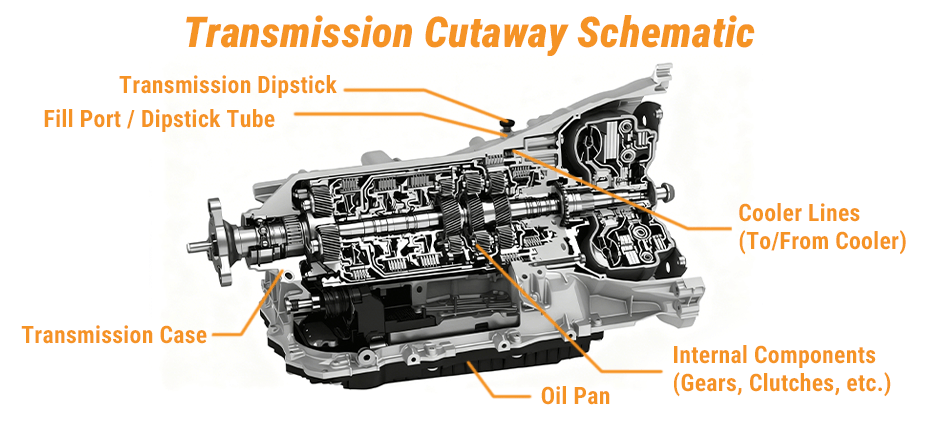
Before You Begin: Preparation and Safety
Tools and Supplies
- Clean, lint‑free rag or paper towel
- Long‑necked funnel
- Correct ATF or hydraulic transmission fluid (refer to your manual)
- Work gloves, safety glasses
Golden Rule: Always follow the specific instructions in your operator’s or owner’s manual. Some systems must be checked with the engine running, others with the engine off.
Safety Steps
- Park the machine or vehicle on level ground.
- Engage the parking brake and chock wheels or tracks.
- Let the engine and transmission reach normal operating temperature.
- Beware of moving parts and hot surfaces.
Checking Transmission Fluid
Step 1: Warm Up & Cycle Gears
Start the engine. Allow 5–10 minutes of operation under light load to warm the fluid. Shift slowly through all gears (or forward/reverse ranges) for a few seconds each to circulate the oil, then leave the transmission in neutral or park.
Step 2: Locate and Remove the Dipstick
Most automatic or power‑shift systems have a dipstick labeled “ATF” or “TRANS OIL.”
- Rear‑wheel drives: usually near the firewall.
- Front‑wheel drives or smaller utility machines: often near the front.
Pull the dipstick, wipe it clean, reinsert it, then pull it again to check the true level.
Step 3: Evaluate the Level, Color, and Smell
| Indicator | What It Means |
|---|---|
| Level | Should be in the “HOT” or “FULL” range. If low, refill carefully. |
| Color | Bright red / amber = good. Brown = old. Black/opaque = burnt. |
| Smell | Slightly oily is normal. Burnt toast smell = overheated components. |
Step 4: Add Fluid (If Required)
Use a funnel to pour small amounts (¼ qt / 250 ml at a time). Re‑check after each addition. Too much fluid can foam and cause pressure issues, just as bad as running low.
Warning: Avoid spilling transmission fluid on hot exhaust components — it’s flammable and can produce strong fumes.
What If There’s No Dipstick?
Many modern pickups and construction machines — including Toyota Tundra (2nd Gen & newer), Caterpillar loaders, or Komatsu dozers — use sealed or “maintenance‑free” transmission systems.
Here’s how those are typically checked:
- Lift or level the vehicle/machine.
- Use diagnostic software or a scan gauge to monitor transmission fluid temperature (usually 95–113 °F / 35–45 °C).
- With the system warm, remove the check plug on the bottom or side of the pan.
- A thin drip of fluid means the level is correct. No drip = low; steady stream = overfilled.
Because the correct temperature is critical, sealed systems are best inspected by a qualified technician or a maintenance shop equipped with diagnostic tools.
Manual and Hydrostatic Transmissions
Manual and hydrostatic transmissions use fill and drain plugs rather than dipsticks.
- Remove the fill plug (upper plug).
- The fluid should sit right at the bottom of the opening.
- If not visible, top up until it reaches the plug lip.
- Always replace the crush washer or sealing gasket to prevent leaks.
Recognizing Warning Signs of Transmission Trouble
- Slipping or delayed engagement when shifting gears
- Whining, grinding, or clunking noises
- Unusual heat or burning smell around the transmission or torque converter
- Fluid leaks under the vehicle or around seals
If any of these occur, stop operation and inspect immediately. Continued use with contaminated or low fluid can destroy clutch packs and seals quickly.
Maintenance Frequency
For normal conditions: check fluid every 500 operating hours or every 6 months.
For off‑road or severe conditions (dust, towing, heavy load): check every 200–300 hours and change every 1,000–1,500 hours or roughly 30,000 miles.
Extreme climates — hot, dry, and dusty — accelerate oxidation, as Arizona or mining sites do. Clean air filters and cooler fins help maintain fluid life.
Choosing the Right Transmission Fluid
Manufacturers design transmission fluids to exact viscosity, additive, and friction standards. Using the wrong fluid can lead to immediate failure.
Common types:
- TO‑4 / TO‑4M: Off‑road and construction machinery
- DEXRON / MERCON: Common automotive ATFs
- CVT / DCT: Specialized for variable or dual‑clutch systems
Always verify the spec code stamped near your dipstick or on your transmission tag, or cross‑reference in your FridayParts parts catalog before purchase.
Quick Troubleshooting Reference
| Symptom | Likely Cause | What to Do |
|---|---|---|
| Fluid looks milky | Water contamination | Drain immediately and inspect seals |
| Fluid smells burnt | Overheating or clutch slip | Check the cooler and change the fluid |
| Foamy fluid | Overfill or wrong ATF | Drain to the correct level |
| Slow or harsh shifting | Low-level or clogged filter | Top off / replace filter |
A Note on Toyota and Other Sealed Systems
Owners of Toyota Tundra, Tacoma, or many modern SUVs may notice there’s no transmission dipstick at all. Owners of these models often handle other common maintenance issues, such as diagnosing a P0455 EVAP leak code. (Inserted Link) That’s intentional — Toyota’s “World Standard” ATF system is designed to be service‑free under normal use.
If leaks or towing demands occur, service intervals are typically every 60,000–90,000 miles. Checking requires plug access and a scan tool to confirm temperature, as discussed in the Tundra owner forums.
So if you’re asked, “How do I check transmission fluid?” — for many Toyotas, the honest answer is: “You don’t — a technician does, at the right temp and fill port.”
Keep Your Machines Ready with FridayParts
Regular fluid checks are small habits that make a big difference — fewer breakdowns, longer clutch life, and better performance when your equipment matters most. Whether your needs involve off‑road transmissions, heavy‑equipment filters, or high‑quality seals and lines, choose reliable components built to last in harsh conditions.
FridayParts supports owners and mechanics around the globe with durable replacement parts for transmissions, drivetrains, and hydraulic systems — helping you work harder, longer, and smarter.
