

Quick Answer: Komatsu PC200 Weight
So, how much does a Komatsu PC200 weigh? The honest answer is a range. The newer PC200LC-8 sits at the heavy end at 23,503 kg, while the standard PC200-7 is lighter and easier to move.
| Model | Operating Weight | Notes |
|---|---|---|
| PC200-7 (700 mm shoes) | 19,750 kg / 43,540 lb | Standard build |
| PC200-7 (800 mm shoes) | 20,010 kg / 44,110 lb | Wider track shoes |
| PC200LC-8 | 23,503 kg / 51,815 lb | Long-crawler, max config |
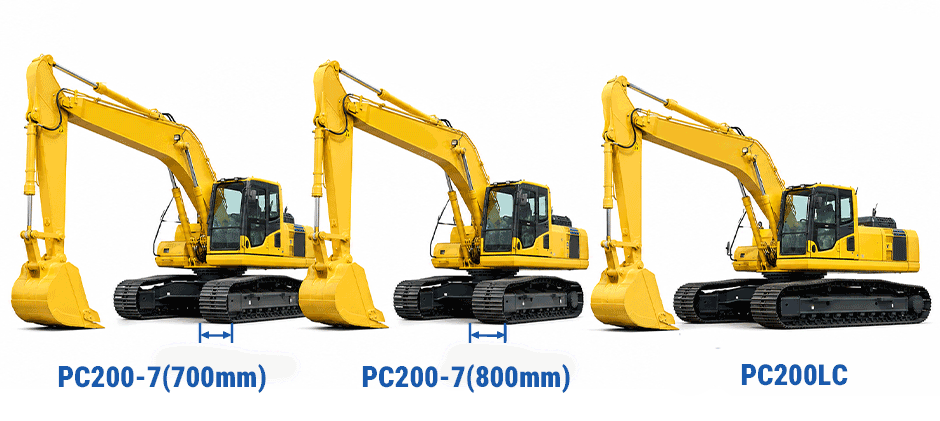
In short, the LC-8 sits at the heavy end of the range, while the standard -7 build is lighter and easier to move. So, How Much Does a Komatsu PC200 Weigh in Real Terms?
Komatsu PC200 Weight by Model
PC200-7. This series runs from about 19,750 kg to 20,010 kg. The only difference between those two figures is shoe width—more on that below. It is generally considered a 20-ton-class excavator, but actual transport requirements still depend on trailer rating, attachment weight, and local permit rules.
PC200LC-8. The LC-8 is heavier, with a max operating weight near 23,503 kg (51,815 lb). The “LC” stands for long crawler, meaning a longer, wider track frame. The extra steel makes the machine heavier, but it also helps with stability.
Pro tip: The standard model favours mobility and tight sites. The LC version trades some of that for a bigger footprint and steadier lifting.
If your job involves frequent moves between sites, the standard frame is friendlier. If you lift loads over the side or work on uneven ground, the LC frame earns its extra weight.
Why Komatsu PC200 Weight Varies?
A single model number can hide a wide weight spread. These are the main reasons two PC200s on paper can weigh differently:
- Series (-6, -7, 8). Each generation brought structural and equipment changes, so newer units tend to weigh more.
- Standard vs LC. The long-crawler frame is longer and wider, which raises the total weight.
- Track shoe width. Wider shoes add steel. On the PC200-7, going from 700 mm to 800 mm adds about 260 kg.
- Boom and arm setup. A heavy-duty arm, a long-reach front, or a bigger bucket all shift the number.
- Attachments. Hammers, pulverisers, and couplers change the working weight once mounted.
Condition matters too. Undercarriage wear can change how evenly a machine sits and travels, so the state of components like the track rollers is worth checking when a field scale reading doesn’t match the published spec.
What Does Operating Weight Mean?
Operating weight isn’t the bare machine. It includes a full fuel tank, coolant, lubricants, an operator, and standard equipment. That’s why the factory number rarely matches a scale ticket exactly—your fuel level, attachment, and added options all move the needle.
Shipping weight is different. It usually leaves out fuel and the operator, so it reads lighter. When you compare figures across listings, make sure you’re looking at operating weight rather than shipping weight before using the number for permits.
PC200-7 Weight and Ground Pressure
Shoe width does more than add a few hundred kilograms. It changes how the machine sits on the ground:
| Shoe Width | Operating Weight | Ground Pressure |
|---|---|---|
| 700 mm (28″) | 19,750 kg / 43,540 lb | 39.2 kPa / 5.69 psi |
| 800 mm (31.5″) | 20,010 kg / 44,110 lb | 34.3 kPa / 4.98 psi |
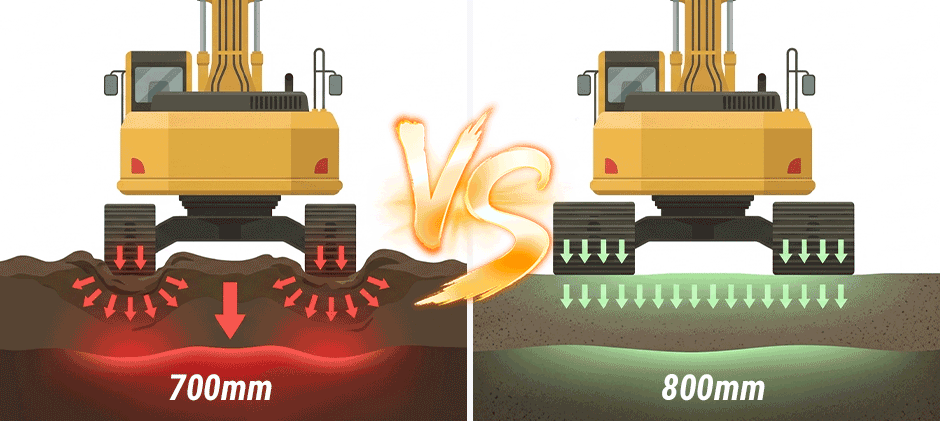
The wider 800 mm shoes weigh slightly more, yet they spread that weight over a larger surface area. The result is lower ground pressure, which means less sinking on soft, wet, or loose soil. A longer undercarriage can also improve stability by spreading the machine over a larger footprint.
Field performance depends on contact condition as well as width. If traction drops on soft sites, the track chains are worth a look too, since worn links can let the track slip even when the published ground-pressure spec hasn’t changed.
PC200LC-8 Weight
The PC200LC-8 carries a max operating weight of about 23,503 kg (51,815 lb). It’s heavier for a few clear reasons:
- The long-crawler frame uses more steel.
- Compared with earlier configurations, later-series machines can be heavier because of undercarriage, structure, and equipment changes.
- Stronger structural members handle the bigger footprint.
This build suits steady, heavy work—deep trenching, lift-and-place jobs, and soft or uneven ground where stability matters more than quick relocation. The trade-off is transport: at over 51,000 lb, it pushes harder against trailer and road limits than the lighter -7.
Why Komatsu PC200 Weight Matters?
The correct operating weight affects transport, permits, site bearing, and lift planning.
- Transport. A 20-ton machine and a 23.5-ton machine may need different trailers. Match the unit’s actual weight to your trailer rating before loading.
- Permits. Permit requirements depend on local weight thresholds and trailer setup. The LC-8 is more likely to cross those thresholds.
- Site bearing. Slabs, bridge decks, and soft fill have load limits. Confirm that the ground can carry both the machine’s weight and its ground pressure.
- Lifting plans. Crane and rigging selection uses operating weight plus a safety margin. The wrong figure here is a safety risk, not just a paperwork error.
Plan transport and lifting around the heaviest realistic configuration, not the lightest brochure figure. Trailer balance also depends on how securely the front attachment is supported.
How to Check the Exact Weight of Your Machine?
Catalogue ranges get you close, but your unit has one true number. To find it:
- Read the machine plate. It lists the model and base weight for that exact build.
- Check the original brochure for your series and arm setup.
- Note the undercarriage type—standard or LC changes everything.
- Confirm track shoe width, since each step up adds weight.
- Account for attachments mounted at the time of weighing.
Once those details line up, the number is usually accurate enough for permit checks and lift planning. FridayParts carries aftermarket undercarriage and wear parts for Komatsu excavators, including older PC200 units, if you need replacements down the line.
FAQ
How much does a Komatsu PC200 weigh in tons?
It runs roughly 19.7 to 23.5 metric tons, or about 21.7 to 25.9 US tons. Where your machine falls depends on its model and setup.
Is the PC200LC heavier than the standard PC200?
It is. The long-crawler frame packs in more steel, which is why the LC-8 hits around 23,503 kg while the -7 standard build stays near 19,750–20,010 kg.
What is the operating weight of a PC200-7?
On 700 mm shoes, it’s about 19,750 kg (43,540 lb). Step up to 800 mm shoes, and it climbs to 20,010 kg (44,110 lb).
How heavy is a PC200LC-8?
Its max operating weight comes in around 23,503 kg (51,815 lb).
Does the track shoe width change the weight?
Yes—and in two ways. On the PC200-7, jumping from 700 mm to 800 mm adds roughly 260 kg while also lowering ground pressure.
What’s the difference between operating weight and shipping weight?
Operating weight counts fuel, fluids, an operator, and standard equipment. Shipping weight usually drops the fuel and operator, so it reads lighter.
Will I need a permit to haul a PC200?
Often, yes—especially with the LC-8. It comes down to local weight thresholds and your trailer setup, so check both before you load.
Conclusion
The Komatsu PC200 Weight ranges from about 19,750 kg on a standard PC200-7 to 23,503 kg on a PC200LC-8, with shoe width, arm setup, and attachments accounting for the difference. Always verify the figure against your machine plate before hauling or lifting. If you’re maintaining an older unit, it also helps to stay ahead of undercarriage and front-end wear parts. FridayParts is one aftermarket source for replacement parts.
