

When off-road machinery starts losing power, stalling on slopes, or taking too long to start, the issue is often in fuel delivery. This guide targets the real-world fuel pump problems seen on excavators, loaders, skid steers, tractors, telehandlers, and generators—what causes them, how to diagnose them safely, and how to fix them without guessing so you can get back to work with less downtime.
Common Causes of Fuel Pump Failure
A fuel system on off-road equipment lives a harder life than most on-road setups: more dust, more vibration, longer idling, heavier loads, and more chances for water or debris to enter the tank. Most failures come from a few repeat causes below.
1) Fuel contamination
Contamination is one of the most common roots of fuel pump problems, because pumps depend on clean fuel for smooth flow and internal lubrication.
- Dirt/silt can score pump internals and clog strainers.
- Water can cause corrosion and poor combustion; in diesel, it can also trigger injector damage later.
- Rust flakes from an aging tank often show up after refueling or machine movement.
- Microbial growth (diesel “bugs”) creates slime that blocks pickup screens and filters—common in machines that sit.
Why it kills pumps: restrictions force the pump to work harder to maintain fuel pressure, raising temperature and wear.
2) Restricted filters, strainers, or tank pickup
A partially clogged primary filter, water separator, in-tank strainer, or pickup tube can mimic a weak pump.
Typical triggers in off-road work:
- Running in dusty environments without strict service intervals
- Dirty bulk fuel storage or jobsite transfer tanks
- Filter changes skipped during busy seasons
Key point: a restriction upstream of the pump can cause cavitation (tiny vapor bubbles) that sounds like whining and erodes components.
3) Electrical supply issues
Electric pumps on modern machines (and many gensets) are sensitive to voltage drop.
Common electrical causes:
- Loose grounds from vibration
- Corroded connectors from moisture or pressure washing
- Chafed harness near frame rails
- Weak relay, blown fuse, failing key switch circuit
What you see: intermittent stalling, random no-start, a pump that runs sometimes but not always.
4) Overheating from low fuel level or constant high demand
Many in-tank electric pumps rely on fuel for cooling. In heavy work cycles—high load, high RPM, high ambient temp—running near-empty increases pump heat.
This tends to show up as:
- Works fine cold, fails hot
- Stalls and restarts after sitting 5–20 minutes
- Noise from the tank/pump area gets louder over time
5) Air leaks on the suction side
In diesel supply systems, a small leak may not drip fuel out—but it can pull air in.
Where air enters:
- Cracked rubber lines
- Loose hose clamps
- Flattened O-rings on filter bowls
- Poorly sealed water separator drain
- Primer pump/check valve leaks
Result: hard starting, uneven idle, bubbles in clear lines, and low/unstable fuel pressure.
6) Mechanical wear and vibration-related damage
Off-road machines vibrate. Mounts loosen. Brackets crack. Fuel lines rub through.
Wear accelerators:
- Pump mounted with missing isolators
- Misrouted lines contacting sharp edges
- Excessive return-line restriction is causing an extra load
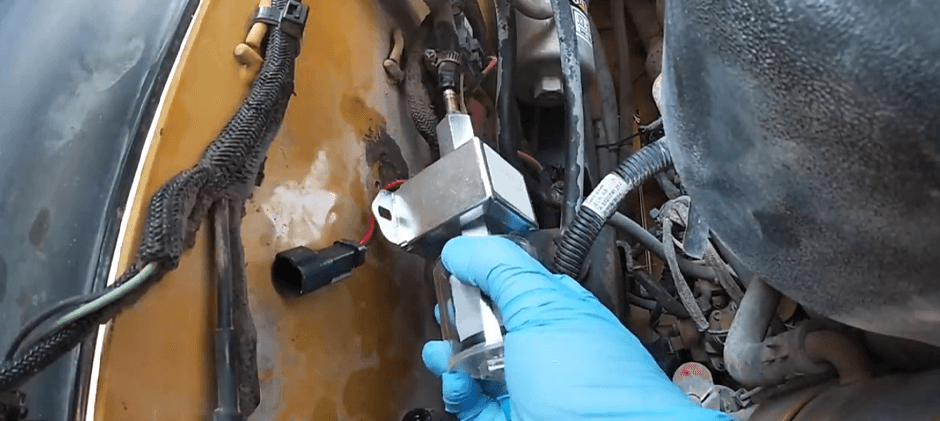
How to Diagnose Fuel Pump Issues?
Diagnosis should separate pump failure from fuel delivery restriction and control/electrical faults. The goal is to prove the cause with simple checks before swapping parts.
Safety first
Fuel is flammable and harmful to breathe. Before testing:
- Work in a ventilated area
- Keep ignition sources away
- Catch and clean spills immediately
- Depressurize systems as required by your machine manual
Step-by-step diagnosis
1) Confirm the symptom pattern
Write down:
- Hot vs. cold behavior
- Fails under load vs. at idle
- After refuel vs. after washdown
- Any recent filter/pump replacement
Patterns reduce guesswork.
2) Listen and look
- Electric pump: Do you hear it prime when the key is turned on?
- Any wetness around fittings, filter bowls, primer pump, or lines?
- Any kinked hoses or crushed steel lines?
3) Check filters and water separator condition
A restricted filter is cheaper than a pump. Check:
- Service date/hours since last change
- Water in the separator bowl
- The filter element collapsed or is dark with debris
If you cut open a used filter (where safe/allowed), heavy debris supports contamination as the root cause.
4) Measure fuel pressure and/or flow
Use the proper test port or inline gauge per the equipment manual.
- Low pressure at all times → restriction, weak lift/transfer pump, or air ingress
- Normal at idle, drops under load → clogged filter/pickup, failing pump, or tank vent issue
- Pressure fluctuates → air leak, cavitation, electrical drop (electric pumps), or sticking regulator/check valve
If the system has a return line, a measured return-flow check can also reveal restrictions.
5) Electrical checks
Use a multimeter:
- Verify supply voltage at the pump connector while cranking/running
- Check ground quality (voltage drop test is better than continuity alone)
- Inspect relay/fuse and connector pins for heat marks
Rule of thumb: a pump that tests “bad” on the bench can be fine; a pump that’s starved of voltage will act bad in the machine.
6) Air-in-fuel checks
Look for:
- Clear-line bubbles (if equipped)
- Loss of prime after sitting
- Primer pump that never gets firm
- Wetness around suction-side fittings (sometimes minimal)
How to Fix a Fuel Pump Problem?
Fixing fuel pump problems is about restoring clean fuel, correct pressure/flow, airtight suction, and stable power.
Fix path A: Restriction/contamination
- Replace the fuel filter(s) and drain the water separator
- Inspect/clean the tank pickup screen (if accessible)
- Check tank venting (a blocked vent can create a vacuum and starve the pump)
- If contamination is heavy:
- Clean the tank (best practice when rust/water/sludge is present)
- Flush lines where appropriate
- Replace soft lines that shed rubber internally
Tip: If debris is found, a new pump alone is a short-term fix. The new pump will ingest the same contamination.
Fix path B: Air leaks on the suction side
- Replace cracked hoses and hardened O-rings
- Reseat filter bowls and verify seals
- Tighten clamps correctly (not “as tight as possible”)
- Bleed/prime the system fully after repairs
If your machine has a hand primer, it should build resistance and hold. If it slowly goes soft, air is still entering or a check valve is leaking.
Fix path C: Electrical faults
- Clean and protect connectors (dielectric grease where appropriate)
- Repair chafed wiring and add loom protection
- Replace weak relays or heat-damaged fuse holders
- Restore grounds (remove paint/rust at ground points; torque correctly)
Fix path D: Replace the pump
Replace the pump when:
- Pressure/flow is below spec with no restriction found
- The pump is noisy, and the current draw is abnormal
- The pump intermittently stops despite a good voltage supply
- Internal check valve won’t hold prime (where applicable)
Mid-job downtime is expensive. If your diagnosis points to the pump, source a compatible replacement designed for heavy equipment duty. If you’re selecting a replacement part, start with a dedicated heavy-equipment catalog like this fuel pump category so you can match by engine/equipment model and avoid near-fit parts that fail early.
Common Problems After Changing the Fuel Pump
A lot of “new pump failures” are actually installation or system issues that were already there.
1) No start or low pressure after install
Common on diesel: air pockets prevent a stable fuel supply.
- Cycle priming steps until air-free fuel returns
- Confirm filter bowls are filled where the procedure requires it
2) Leaks at fittings, filter bowl, or seals
Usually caused by:
- Reusing old crushed washers or flattened O-rings
- Cross-threaded fittings
- Misaligned hose ends
Even small leaks can pull air in and create hard-start conditions.
3) Wrong pump type or wrong direction of flow
Off-road equipment may be used:
- lift/transfer pump (low pressure) feeding an injection pump
- electric inline pump vs. mechanical diaphragm style
- specific connector and mounting styles
A pump that “fits” physically can still be wrong for pressure/flow spec.
4) Noise, vibration, or early failure
Noise after replacement often indicates:
- restriction upstream (pump cavitating)
- pump mounted rigidly without isolators
- suction hose collapsing under load
- clogged filter installed at the same time (yes, it happens)
5) Fault codes or derate after replacement
If your machine monitors fuel pressure:
- Verify sensor readings and connectors
- Confirm the regulator/relief valve isn’t stuck
- Recheck harness routing near hot parts
How To Avoid Common Mistakes When Installing A Fuel Pump?
A careful install prevents repeat breakdowns.
Installation checklist
1. Match the part to the exact engine/equipment spec
- Confirm pressure/flow range, connector, mounting, and fuel type (diesel vs gasoline).
2. Keep dirt out during the job
- Clean around fittings before opening lines
- Cap lines while waiting
- Don’t set new parts on dusty surfaces
3. Replace filters when replacing a pump
- A restricted filter can kill a new pump fast.
4. Inspect the tank and pickup
- If sludge/rust is present, plan tank cleaning. Otherwise, the new pump is on borrowed time.
5. Route hoses and wiring for vibration
- Add clamps, loom, and abrasion sleeves
- Keep lines away from sharp edges and exhaust heat
6. Prime/bleed correctly
- Follow the machine’s bleeding sequence
- Don’t “crank forever” as a bleeding method—starter and batteries pay the price
7. Verify pressure/flow after install
- A quick test confirms the fix before the machine leaves the yard.
If you’re picking up parts as part of a planned repair (pump + filters + seals), using a broad heavy-equipment inventory can reduce delays and compatibility issues. The fuel pump selection is a practical starting point when you need an aftermarket option with wide fitment coverage.
Quick Reference Table
| Symptoms of off-road machinery | Most likely cause | Best confirmation test | Fix that usually works |
|---|---|---|---|
| Long crank / hard start (diesel) | Air leak on the suction side, weak lift pump | Bubble check, prime-hold test, pressure test | Reseal/replace hoses & O-rings; bleed system |
| Power loss under load | Clogged filter/pickup, weak pump | Pressure drop under load; filter restriction | Replace filters; clean pickup; replace pump if needed |
| Stalls when hot, restarts after cool-down | Pump overheating or electrical drop | Voltage at pump when hot; current draw | Fix wiring/grounds; replace pump if confirmed |
| Loud whining near the tank/pump | Cavitation from restriction, failing pump | Check filter, tank vent, and suction hose | Remove the restriction; replace the pump if it is noisy with a good supply |
| Runs rough / surges | Pressure unstable, air ingress | The gauge shows fluctuation; air in line | Fix air leak; check regulator/return restrictions |
Conclusion
Fuel delivery issues don’t have to be guesswork. Most fuel pump problems on off-road machinery come from contamination, restrictions, air leaks, or weak electrical supply—not the pump alone. Test pressure/flow, verify clean fuel and tight seals, then replace parts with the right spec. For planned repairs and fast sourcing, FridayParts supports heavy equipment owners with affordable aftermarket parts, wide compatibility, and a large inventory—helping reduce downtime without overpaying.
