

Not all off-road equipment operates under the same conditions, which is why choosing the right oil viscosity is so important. One machine may start in freezing temperatures, another may run for long hours in summer heat, while a third spends most of its life under heavy diesel load. This Engine Oil Viscosity Chart guide explains how to read common oil grades such as 5W-30 and 15W-40, how temperature affects oil performance, and how to use a practical viscosity chart to select the right oil for your equipment.
Quick Answer
Just need a fast starting point? Here’s the short version:
- Colder starts – lower winter grades like 0W-20 and 5W-30 generally flow better
- Mixed seasonal use – 5W-30 and 10W-30 are often practical choices if the OEM approves them
- Broad temperature ranges (diesel) – 5W-40 is a common option
- Warm-weather heavy-duty diesel – 15W-40 remains one of the most common grades
Always check both viscosity grade and oil specification in your machine manual
How to Read an Engine Oil Label in the Engine Oil Viscosity Chart?
Engine oil labels usually tell you two important things: the viscosity grade and the service category. Both matter when choosing oil for off-road equipment, diesel engines, or general machinery use.
SAE Viscosity Grade
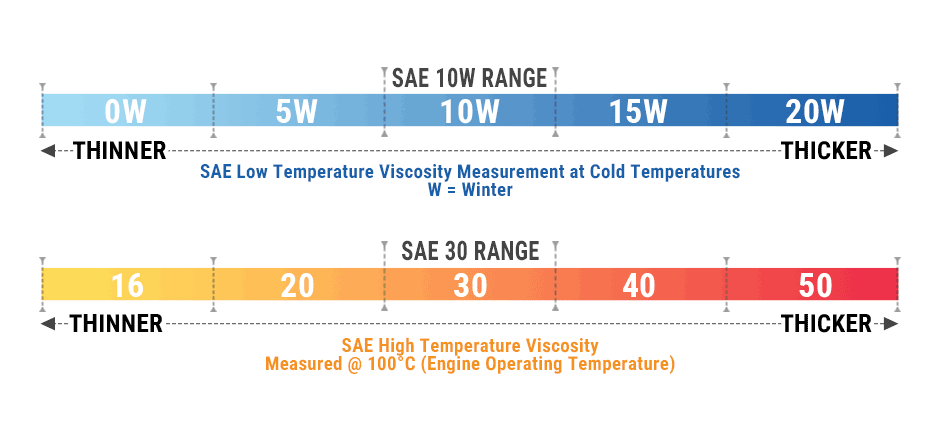
An oil grade such as 5W-30 describes how the oil behaves in cold and hot conditions.
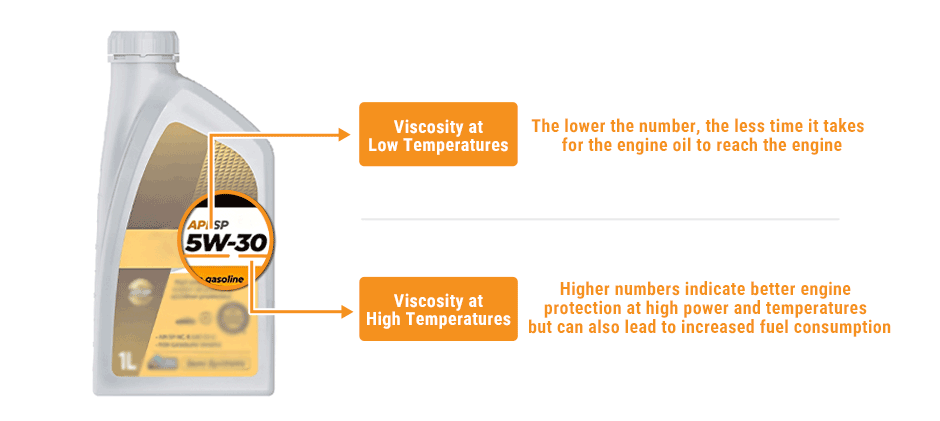
- The first number refers to low-temperature performance
- The W stands for winter
- The second number refers to viscosity at operating temperature
In simple terms, a lower number before the W usually means the oil flows more easily during cold starts. The second number helps indicate how thick the oil remains after the engine reaches normal operating temperature.
API Service Category
A lot of people only look at viscosity, but there’s usually another piece to oil selection: the API service category. SAE tells you how thick the oil is. API tells you what performance standard it meets.
For diesel engines, common API categories include CK-4, CJ-4, and FA-4 — depending on the engine design and the manufacturer’s requirements. These categories cover things like wear protection, soot handling, oxidation control, and compatibility with modern engine systems.
Here’s a simple way to remember it:
- SAE = how thick the oil is
- API = what performance standard the oil meets
A correct oil choice normally needs to match both the required viscosity grade and the required service category listed in the equipment manual.
Engine Oil Viscosity Chart by Temperature
Most people looking for an engine oil viscosity chart just want a quick way to compare grades by temperature. The table below shows how common grades typically behave in real-world use.
| Oil Grade | Typical Cold-Start Suitability | Typical Ambient Temperature Use | Practical Notes |
|---|---|---|---|
| 0W-20 | Excellent | Very cold to mild | Mostly seen in lighter-duty applications |
| 5W-30 | Very good | Cold to warm | Common all-around grade in many applications |
| 10W-30 | Good | Cool to hot | Common in diesel and equipment use |
| 5W-40 | Very good | Cold to hot | Broad temperature coverage for diesel engines |
| 10W-40 | Fair | Mild to hot | Better suited to warmer operating conditions |
| 15W-40 | Limited in cold starts | Warm to very hot | Very common in heavy-duty diesel service |
* Temperature suitability varies by engine design and manufacturer recommendation. This chart is a practical comparison guide, not a universal rule.
This chart is useful for fast comparison, but the final choice should still match the OEM manual, expected startup conditions, and equipment workload.
The comparison table above gives a quick reference, but some readers prefer a more visual way to understand how oil grades overlap across different temperature ranges. The chart below helps show how common viscosity grades are typically matched to ambient conditions in practical equipment use.
Engine Oil Viscosity Chart: How it Changes with Temperature?
Engine oil does not stay at one fixed thickness. As the temperature rises, the viscosity decreases, which means the oil becomes thinner and flows more easily. This is why temperature has such a strong effect on oil selection.
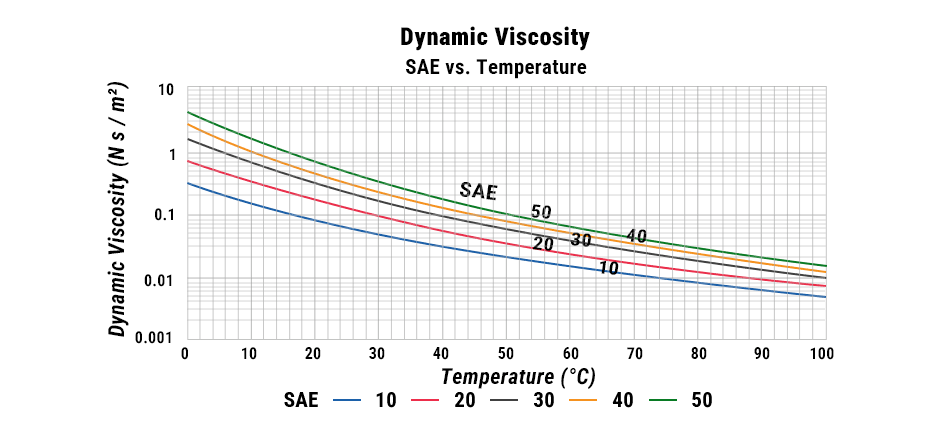
This matters in real equipment use for two reasons:
- At low temperatures, oil must still flow quickly enough during startup
- At high temperatures, oil must remain thick enough to maintain a protective film under load
A multigrade oil is designed to balance these two needs. In simple terms, the winter number helps with cold-start flow. The second number tells you how the oil behaves once the engine is hot.
That’s why picking oil isn’t just about grabbing a familiar grade like 10W-30 or 15W-40. You need an oil that can flow at startup and still protect the engine at normal operating temperature.
Common Oil Grades by Equipment Type
How are these grades commonly used across different types of equipment? The table below shifts the focus from oil properties to practical equipment patterns.
| Equipment Type | Common Oil Grade | Why It Is Often Used |
|---|---|---|
| Compact tractor | 10W-30 | Works well in mixed seasonal use |
| Skid steer loader | 10W-30 or 15W-40 | Choice often depends on climate and operating load |
| Excavator | 15W-40 | Common in warm, heavy-duty diesel operation |
| Backhoe loader | 10W-30 or 15W-40 | Often selected by season and duty cycle |
| Diesel equipment in cold climates | 5W-40 | Better low-temperature flow with strong hot protection |
These are common usage patterns rather than fixed rules. Final oil selection should still follow the OEM manual, the required oil specification, and the machine’s actual working conditions.
Example Scenarios
Real-world examples help make oil selection clearer. The cases below aren’t universal rules, but they show how viscosity choice often changes with climate and how you run the equipment.
Cold-climate diesel equipment
A machine that works through freezing winter starts may benefit from 5W-40 if the OEM allows it. The easier cold flow improves startup lubrication while still giving you solid hot protection.
Mixed-climate compact equipment
A compact tractor or utility machine used across spring, summer, and fall will often run on 10W-30 — as long as the manufacturer lists it for year-round or broad seasonal service.
Warm-climate heavy-duty operation
An excavator or loader working in high heat and long cycles? That usually calls for 15W-40, especially in heavy diesel service where keeping viscosity stable in warm weather really matters.
These examples are only practical scenarios. The correct oil still depends on the machine manual and the required oil specification.
How to Choose the Right Oil Grade?
After comparing the charts above, the actual decision usually comes down to four checks.
1. Start with the equipment manual
This is the most important step. The OEM recommendation reflects the engine’s design, clearances, operating needs, and emissions-system requirements.
2. Consider startup temperature
If the machine starts in colder weather, low-temperature flow becomes more important. Lower winter grades can help oil move faster during startup.
3. Consider operating heat and load
Machines that run long hours, heavy loads, or high ambient temperatures may need a grade that maintains stronger viscosity at operating temperature.
4. Confirm the required oil specification
Viscosity alone won’t cut it. The oil also needs to match the required API category and any OEM specs the engine calls for.
Many owners also check filters and seals during a routine oil change — that’s just good preventive maintenance. But when it comes to picking the oil itself, start with viscosity and specs.
Common Mistakes When Choosing Engine Oil
Even with a chart, some mistakes are still common.
Assuming thicker oil is always better
A thicker oil is not automatically safer. If the oil is too thick for the engine design or startup conditions, lubrication may be slower when the engine first starts.
Choosing by climate alone
Temperature matters, but it is not the only factor. Engine design, workload, emissions-system compatibility, and manufacturer guidance all affect the final choice.
Looking only at SAE and ignoring API
Two oils can share the same viscosity grade but still have different performance standards. That is why the API category matters, especially in diesel applications.
Treating common grades as universal rules
A commonly used grade, such as 15W-40, may be right for many heavy-duty diesel machines, but not for every engine, season, or emissions-system design.
FAQ
Can I use 15W-40 instead of 10W-30?
Sometimes, but not automatically. That depends on the engine design, startup temperature, and manufacturer recommendation. A thicker hot-grade oil may not be suitable for every machine or climate.
Is 5W-40 good for summer?
Yes, in many cases. 5W-40 is often used where both cold-start flow and strong high-temperature protection are needed. Whether it is the right choice for summer still depends on OEM approval and operating conditions.
Can thicker oil improve engine protection?
Not always. A higher-viscosity oil can offer stronger oil film strength at operating temperature in some conditions, but oil that is too thick can reduce cold-start flow and may not match the engine’s design.
Does colder weather always mean I need a lower winter grade?
Not always, but colder starts often make low-temperature flow more important. The correct winter grade still depends on the engine design and the manufacturer’s approved viscosity range.
Can two oils with the same viscosity grade still be different?
Yes. Two oils can share the same SAE grade, such as 10W-30, but still differ in API category, additive package, and intended application. That is why viscosity alone is not enough.
Reference Basis
The practical guidance in this article is based on general viscosity classification principles and common equipment maintenance practices. Exact oil requirements vary by machine, but viscosity definitions are based on SAE J300, while oil performance requirements commonly follow API service categories and OEM maintenance guidance.
Conclusion
An engine oil viscosity chart is only useful when it actually helps you match a grade to real working conditions — not just throwing numbers at you. What matters is startup temperature, engine load, and what the manufacturer says about SAE and API specs. When you’re not sure, go by the equipment manual. For owners doing regular maintenance, FridayParts also carries replacement parts and service components you might need at oil change time.
