

Caterpillar® excavators are versatile machines for construction, mining, landscaping applications and municipal works. Its lineup spans everything from compact minis to massive machines. With the right size and setup, a single machine can take on all kinds of tasks, saving you time, labor and fuel across the board. But with so many options, how do you choose the right one? This CAT excavator sizes guide helps you narrow the search and get to work faster.
Major CAT Excavator Sizes
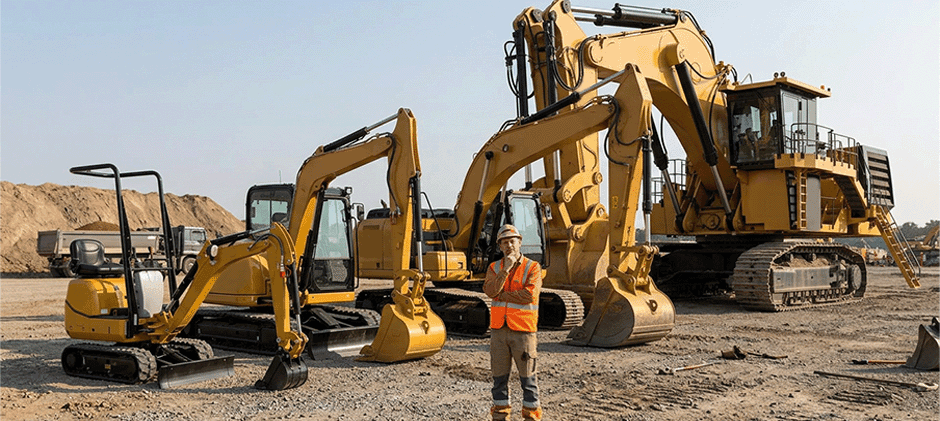
When it comes to versatility on the jobsite, nothing can beat the Caterpillar® excavators. Caterpillar organizes its lineup into four clearly defined size classes: mini, small, medium and large. As machines move up in class, operating weight, horsepower, and digging capability increase to support larger-scale applications. The smallest excavator weighs just over 2,000 pounds, while the biggest excavator weighs nearly a quarter of a million pounds. Understanding how each size class differs helps operators and fleet managers choose the right machine for the job.
How CAT Organizes Its Excavator Lineup?
Caterpillar identifies each machine using a numeric naming structure that directly reflects size and capability. Lower model numbers correspond to compact machines, while higher numbers indicate greater operating weight and hydraulic power. The 300 Series, for example, comprises compact excavators, with models in the 313–335 range falling into the small-to-midsize category. Units in the 336–395 range represent large production machines built for high-output applications.
CAT Excavator Size Comparison
| Size Class | Operating Weight | Net Power | Max Dig Depth | Popular Models | Common Applications |
|---|---|---|---|---|---|
|
Mini Excavator |
1 to 6 tons
2,000 to 12,000 pounds |
13 to 55hp | 6 to 8 feet | CAT 303, 304, 305, 305.5, 306, 300.9D | Used for landscaping, municipal work, utilities, and urban work |
|
Small Excavator |
6 to 12 tons
12,000 -24,000 pounds |
55 to 100hp | 19.8 to 21 feet | CAT 308, 308B, 308E | Subdivision work, road shoulders, light demolition |
| Medium Excavator | 12 to 35 tons
24,000 to 70,000 pounds |
100 to 275hp | 22 to 23.8 feet | CAT 310, 315, 320 |
Commercial construction, utility projects, and demolition |
| Large Excavator |
35 tons and above over 70,000 pounds |
275 to 542hp |
26 to 31.9 feet |
CAT 336, 349 |
Mass excavating, like civil infrastructure or mining |
How to Choose the Right CAT Excavator Size?
With so many sizes and functions to choose from, how do you pick the exact right excavator for your projects? Here are some factors to consider when selecting your equipment.
Worksite Size and Access
The size of the jobsite is often the first factor to consider. If it is a broad commercial or industrial site, a medium or large excavator may be ideal. If you work in enclosed work areas like residential yards, narrow alleys and tight urban areas, you should choose a mini or small CAT excavator. Also, measure gate openings, overhead utilities, and the available working radius before finalizing machine size. A larger excavator may offer greater production capacity, but limited access can restrict movement or prevent delivery altogether. Tight setbacks or confined work zones often make maneuverability just as crucial as digging performance.
Project Goals
Think of the overall goals of the project. Estimate how much material you need to move per day and how deep you need to dig. If the project involves short trench runs or light grading, a compact unit may be sufficient. If you’re trenching long utility lines or loading trucks continuously, step into a mid-size class. For bigger projects, you’ll likely need either a large excavator or a long-reach machine.
Soil and Material Conditions
Not all ground behaves the same. Rocky, compacted or abrasive soil needs more breakout force and stronger hydraulics, so a medium or large excavator is a better choice. For lighter soils, shallow trenches and finish work, a small-sized excavator may suffice.
Available Attachments
CAT excavator can do so much more than dig with many available attachments. Think of all the ways you may use your excavator and whether you want the attachments for it on hand. If you want to cut or crush materials, look for a model that is compatible with those work tools.
Rent or Buy
The last thing to consider is whether to rent or buy it. Choose to buy an excavator if you work on the same size and type of job. It’s a more cost-effective and efficient option. If your tasks vary or you take on various projects, renting may be the more appropriate choice. You can rent a demolition excavator for one big project and a mini excavator for another.
Transport and Hauling
For some small and mini CAR excavator models, they can be moved with a pickup truck and trailer. Larger-sized Cat excavators may require commercial hauling or oversized permits. Transport limitations may influence whether a mini, small, medium or large Cat excavator is the best fit for your needs.
Wrapping up
Choosing the right CAT excavator sizes directly impacts how smoothly your project runs. Either a mini excavator or a large excavator they have their own benefits and limitations. You should consider the project goals, working conditions and transportation as well when buying or renting an excavator. If you suffer from an unexpected breakdown, FridayParts provides a great variety of high-quality excavator replacement parts to get your equipment back to the battlefield. Also, you can explore our blogs for more knowledge about excavator troubleshooting, maintenance and repairs.
